Africa-Press – Angola. Member States of the Southern African Development Community (SADC) are establishing IT Incident Response Teams, which will be responsible for building the necessary capacities and promoting a national cybersecurity culture, as well as raising awareness of the risks and consequences of cyberattacks.
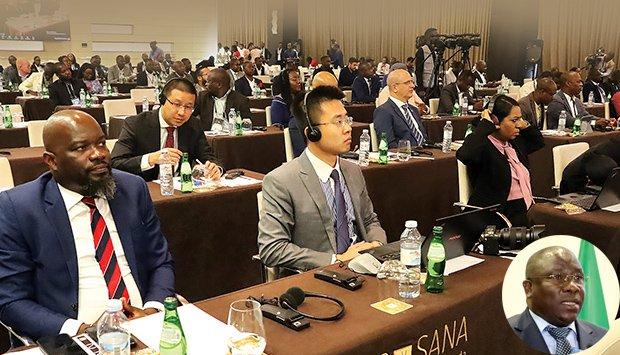
The information was released yesterday in Luanda by the Secretary of State for Telecommunications and Information Technologies, Pascoal Alé Fernandes. Speaking at the opening of the 2nd edition of the “CyberSecur Summit 2022”, an event on Corporate Investigation and Cyber Security in Angola, he highlighted that, in 2012, SADC approved the harmonized legal and regulatory framework on cyber security. The package consists of three model laws: model laws on electronic commerce/electronic transactions, data protection and cyber security. Pascoal Alé Fernandes said that Angola continues to be an active participant in CyberSecurity in SADC), stressing that trust and security in the use of ICTs are vital for building an inclusive, secure and global information society, but cyber criminals are seriously undermining the growth and potential of the online environment. For the Secretary of State, the dissemination of criminal networks is organized in different countries, and criminals who launch cyber-attacks often use decentralized models, which makes it difficult to adequately resolve any national or regional legal framework. “With the evolution of constant risks in line with technologies, cyber-criminals also seek to exploit vulnerabilities and gaps in technological systems”, he said. Due to the aforementioned context, the Secretary of State pointed out the need to from the narrowing of with criminals launching cyber-attacks often using decentralized models, which makes it difficult to adequately address any national or regional legal framework. “With the evolution of constant risks in line with technologies, cyber-criminals also seek to exploit vulnerabilities and gaps in technological systems”, he said. Due to the aforementioned context, the Secretary of State pointed out the need to from the narrowing of with criminals launching cyber-attacks often using decentralized models, which makes it difficult to adequately address any national or regional legal framework. “With the evolution of constant risks in line with technologies, cyber-criminals also seek to exploit vulnerabilities and gaps in technological systems”, he said. Due to the aforementioned context, the Secretary of State pointed out the need to from the narrowing ofrelations between the countries of the region, as a way of minimizing the impact of cyber crimes on the political, economic and social life of nations.
Strategic challenges
through the National Directorate of Cybersecurity and Digital Services, it prepared the proposal for a National Strategy that will soon be available for public consultation. The National Cybersecurity Strategy plan in the country was designed to improve the security, trust and resilience of the Infrastructure of vital services. “The objective of the National Cybersecurity Strategy is to promote the conscious, free, safe, efficient use of cyberspace, fundamental rights, freedom of expression, personal data, citizens’ privacy, in order to guarantee the security of cyberspaces and infrastructures. national critics”, he informed. The National Cybersecurity Strategy plan in the country was designed to improve the security, trust and resilience of the Infrastructure of vital services. “The objective of the National Cybersecurity Strategy is to promote the conscious, free, safe, efficient use of cyberspace, fundamental rights, freedom of expression, personal data, citizens’ privacy, in order to guarantee the security of cyberspaces and infrastructures. national critics”, he informed. The National Cybersecurity Strategy plan in the country was designed to improve the security, trust and resilience of the Infrastructure of vital services. “The objective of the National Cybersecurity Strategy is to promote the conscious, free, safe, efficient use of cyberspace, fundamental rights, freedom of expression, personal data, citizens’ privacy, in order to guarantee the security of cyberspaces and infrastructures. national critics”, he informed.
Lack of professionals leaves the country vulnerable
The Director of Information Security at CyberSecur, Alberto Afonso, in his approach, pointed out the lack of qualified professionals, counter-measures and failure to identify real threats in the face of various signs, such as the main security vulnerabilities in the country. The Second Edition of the “CyberSecur Summit”, which ends today, aims, in addition to the thematic approach on cybersecurity, to provide strategies to combat computer crimes. The organizers consider that the issue of Cyber Security is dominant and has led to the idea that the ideal is to stop exposing companies in cyberspace. However, they claim that the trend of digital transformation of business demonstrates the complete opposite. The Luanda event has more than 20 national and international speakers.
For More News And Analysis About Angola Follow Africa-Press