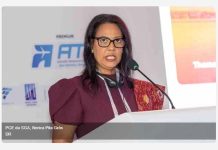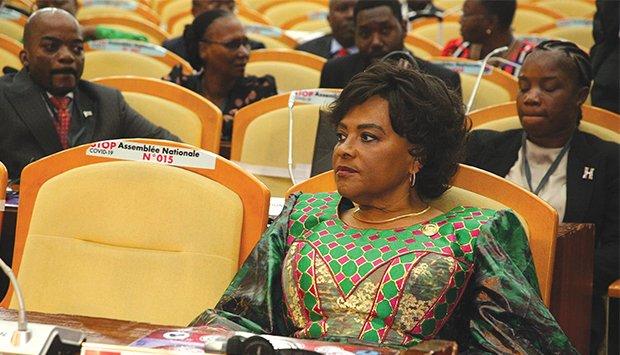
Africa-Press – Angola. The president of the National Assembly defended, yesterday, that the SADC Palamentos must approve legal instruments that promote regional peace, considering that it becomes increasingly necessary to achieve the specific objectives of the Forum
Carolina Cerqueira said, in Kinshasa, that Angola, due to its history, is committed to the stability of nations, for this reason it assumes the vocation for peace and security as a duty of the State and a right of all with respect for the Constitution, by international treaties.
Speaking at the 52nd Plenary Assembly of the SADC Parliamentary Forum, he referred that everyone should reflect and bring solutions to the problems of the Southern Region of the African continent, because it will continue to be characterized by the sovereign respect and fundamental right of the citizen, by the sovereignty of the countries and maintenance of peace and security, indispensable conditions for the political and social stability of the member countries.
“Each of the Member States of our organization must see these objectives materialized by their Parliament, with the duty and task of designing, analyzing, approving and enforcing in their legal systems instruments that serve to strengthen peace and security”, he appealed, reminding deputies that the role of parliaments is not limited to making laws, but to promoting dialogue and political mediation, to solve common problems in the region, through parliamentary diplomacy.
He referred that the Parliaments must ensure that their internal laws review punishments for acts that threaten Independence and national integrity such as high treason, provocation of war and espionage for acts against the realization of the State, namely, rebellion and sabotage, as well as terrorism and its financing.
He added that everyone has an important role in promoting internal reconciliation and peace processes, through the approval of laws on amnesties and criminal pardons, as well as laws that allow the integration of members of opposing forces within the framework of peace processes.
The president of the National Assembly reiterated the experience of the common past forged in the solidary tradition of the founding countries of SADC and the certainty of the way to go in the present and the joint expectation, in a better future for the region, demanding that there are no failures with the citizens and future generations.
“Violence destabilizes institutions, promotes population immigration, causes the loss of children and resources of nations and reduces investor confidence. We must reinforce solidarity with populations that are victims of armed conflict, whose children are the most vulnerable people”, he reinforced.
Carolina Cerqueira stressed that solutions should be thought of for the security situation in northern Mozambique, reiterating the support and engagement in “helping this brotherly country, so rich in natural gas”, so that it can experience peace and, consequently, economic development and social stability.
The same attention, he continued, should be given to the DRC, whom he congratulated for the Summit on Peace and Security, promoted by the President of the Republic of Angola, to maintain dialogue between the Democratic Republic of Congo and Rwanda.
He said that the timetable for the implementation of priority actions with a view to the cessation of hostilities, in general, and, in particular, the attacks by the military organization M23 against DRC forces and the return of internal refugees to their areas of origin, as well as dialogue are important steps towards effective peace in the region.
He recognized the DRC as the largest country in SADC with the most natural resources on the continent, therefore, he underlined that the promotion of peace in the Democratic Congo means allowing greater development for the entire southern region.
“As parliamentarians, we must assume this as a priority for our countries. The moment is for action, to act with our eyes on the right direction. We are all called to assume a serious commitment with the promotion of peace and security in the DRC and to effective solidarity, because the populations are watching us, our decisions and the recommendations we are going to make. We cannot defraud those who expect solutions from us”, he observed.
Angola’s intervention was positive
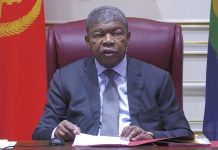
The President of the Democratic Republic of Congo, Félix Tshisekedi, admitted, at the opening ceremony of the 52nd Session of the SADC Parliamentary Forum, in Kinshasa, that following the latest resolutions in Luanda, in the meeting held with the Head of State, João Lourenço, there is calm on the various fronts with the M23 group.
Tshisekedi said that they have never stopped and will never stop condemning, denouncing the unjust aggressions of which their country is the victim by Rwanda: “Therefore, we defend the cessation of support for Rwanda to the rebel group M23 and we declare its immediate and of the Democratic Republic of Congo. It is just and it is the declared will of the founding countries of the African Union, based on the intangibility of the borders inherited from colonization”.
The Congolese President thanked the support of the “brother countries of Africa” and, in particular, those of the Southern African Development Community (SADC) which on more than one occasion demonstrated: “I hope that at the end of these meetings, the Plenary Assembly of the Forum give us renewed support.”
On the other hand, Tshisekedi spoke of food security in the sub-region with the context of his country, while highlighting the theme “the role of parliaments in strengthening legislative frameworks to ensure peace and security in the SADC region”.
He considered them complementary because of the food crisis to which the world is subject since the recession of the economies caused by the occurrence of the Covid-19 pandemic, as well as its worsening following the Russian-Ukrainian war, with the deterioration of the social conditions of the fellow citizens of the subregion.
He informed that food insecurity continues to be a great challenge for all SADC member countries to be faced collectively: “I remain convinced that the union of our public policies within the framework of a real, effective and sustainable economic integration will allow us to remove this evil in the entire sub-region”.
He considered that parliamentarians, with their participation, are contributing to the realization of the great dream of the SADC Parliamentary Forum, which is the establishment of common democratic values and practices, which should lead to the advent of a more united and society oriented towards peace and the collective well-being of peoples.
SADC member countries, in four days, will reflect on the theme “The role of Parliament in strengthening the legislative frameworks for peace and security in the SADC region”, to promote a broader and deeper reflection on issues of regional integration and cooperation.
Today, the Session is prepared for the presentation of reports, with emphasis on the recommendations of the 51st Plenary Assembly, normative and administrative issues, among other matters.
The specific objectives and expected outcomes of the 52nd Plenary Assembly are the promotion of inter-parliamentary cooperation, diplomacy and solidarity among SADC member Parliaments, celebrating the identity of the Region, taking stock of legal frameworks for peace and security, at both inter-state and intra-state levels, deliberate on the role and contributions of parliamentary action in the discourse of peace and security in SADC.
Due to the complementary efforts already made by Organs relevant bodies, it is also a mission to consider the ways in which Parliaments can contribute to promoting regional and international peace, with a view to pursuing the Africa 2063 Agenda and the Sustainable Development Goals, especially the SDG 16 on promoting peaceful societies, among others.
Contextualizing legislative frameworks for peace and security Since its creation by the SADC Summit of Heads of State and Government in August 1997, the SADC Parliamentary Forum has been working tirelessly on issues intended to serve as a firm basis for peace and security. security in the region, through the elaboration of progressive regional norms in the form of laws that promote the regularity and fairness of electoral processes.
There is also the resolution of social issues, such as gender-based violence, HIV/AIDS, premature marriages, and public finance management, and contributing to the healthy ecosystem, necessary for peace and security. In addition, the Forum, as an institution of SADC, is also bound by the SADC Treaty and respects the principles established in the Charter of the United Nations and in the Constitutive Act of the African Union, which establish the need for peace and security at national level and between States. sovereigns.
According to the press release, the concept of peaceful settlement of disputes enshrined in the UN Charter and the commitment to preserving peace and unity set out in the African Charter on Human and Peoples’ Rights and accompanying protocols demonstrate that the introduction and the enjoyment of human rights by all, without discrimination, depends on efforts to consolidate peace between countries and preserve internal security.
For More News And Analysis About Angola Follow Africa-Press