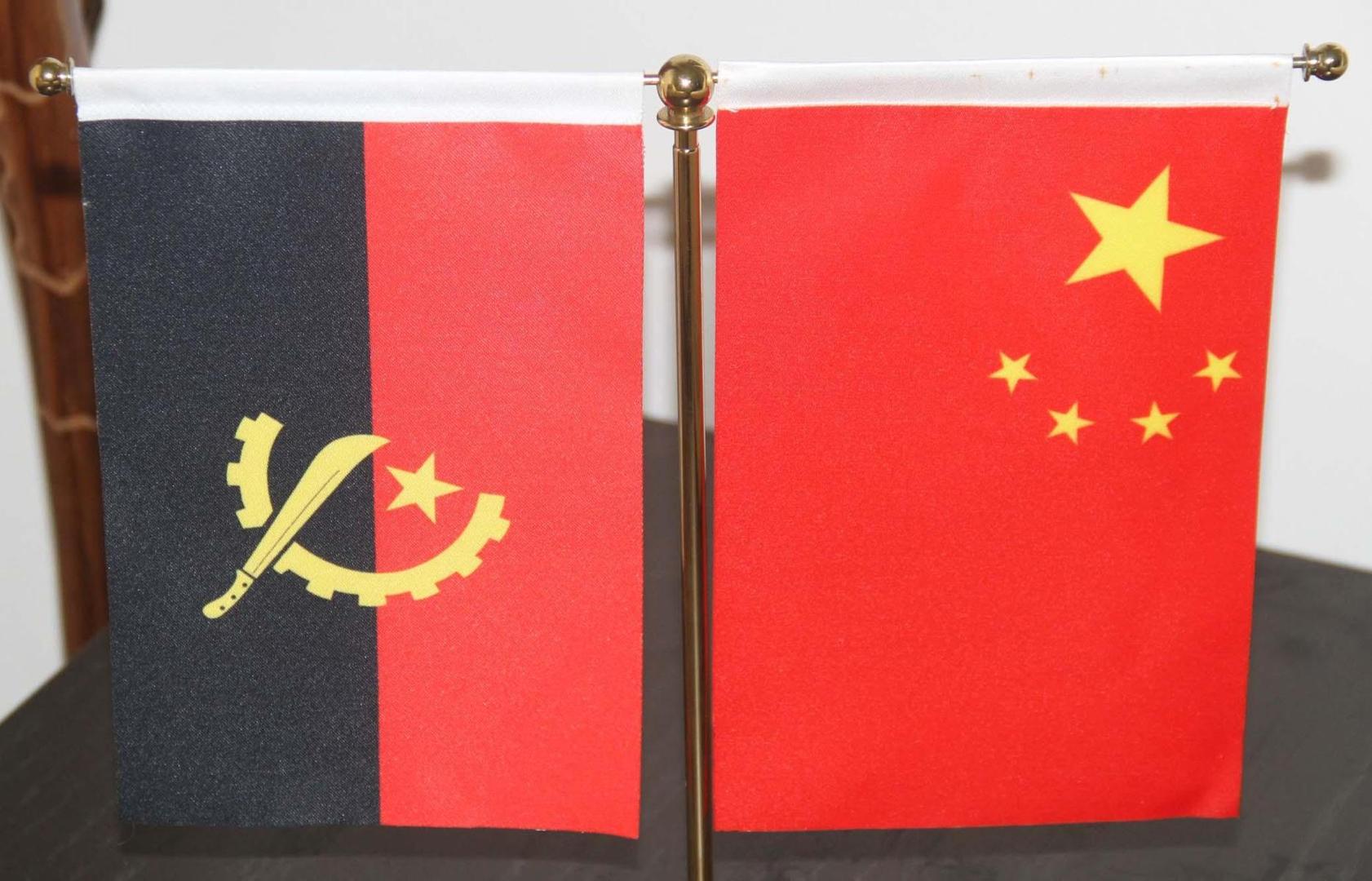
Africa-Press – Angola. Friendship, solidarity, sincerity and mutual trust are the main pillars that have always guided relations and bilateral cooperation between Angola and China, which, on January 12 of this year, complete 40 years, 13 of which marked by a strategic partnership.
The political-diplomatic relations between the two countries, formalized in 1983, progressively galvanized as a result of dialogue, mutual respect and reciprocal support on fundamental issues that, over time, helped the parties to get to know each other better and to bet on a cooperation that contributes to the socio-economic development of the two States and to the well-being of their populations.
It is a cooperation in several domains and based on assertive communication, respect and observance of the legislation applicable in each of the States, equality and reciprocity of advantages, since the economies of the two countries complement each other, due to the potential of each.
Despite having the mineral and energy resources that China needs to maintain its economic and technological power, Angola also needs the financial means, technology, knowledge and experience of the Asian giant, with a view to diversifying its economy, industrialization, reducing social asymmetries and the realization of the dream of a developed country, with a moderately prosperous society.
On the other hand, the biggest challenge before 2019 was the need to transition from the existing bilateral economic and financial cooperation model to a more universal and comprehensive one for the private sector, replacing the one that consisted of granting credit packages to Chinese public companies for the execution of works in Angola.
It is recognized that the old model, also known as ‘Recurso-Crédito-Projecto’, achieved notable results in the reconstruction phase of Angola in the post-war period, but, with the economic reforms and political transformations registered in the country, its innovation it became inevitable and, to do so, implied a change in the way of thinking and acting of the actors on both sides.
With the emergence of Covid-19 in January 2020, the economies of all countries were deeply affected, and, in the post-pandemic phase, both Angola and China redefined development strategies and goals, giving new impetus to economic cooperation which also encourages two-way private investment flow.
Increased trade volume between the two countries
Angola recovered, in 2022, the position of China’s second largest partner in Africa, lost in 2020. The trade volume between the two countries was more than 22 billion US dollars, from January to November 2022.
This volume represents an increase of over 26 percent over the same period of the previous year, according to the ambassador of the People’s Republic of China in Angola, Gong Tao, in an interview.
The Chinese diplomat points out that, in 2022, Angolan exports to China were more diversified compared to previous years, because, in addition to oil, Angola exported coffee, fruits, metallic minerals and ornamental stones.
Gong Tao recalls that his country offers customs tariffs ranging from zero to 98 percent of all products exported by African countries to the Chinese market, within the framework of the Africa-China Cooperation Forum, and Angola can take advantage of this opportunity to diversify its exports to the Asian giant.
Among the exportable products, the ambassador highlights coffee, since, for the diplomat, the new Chinese generation tends to drink more coffee than traditional tea. Angola, being a country with a tradition in coffee production, can explore this opportunity to export to the Chinese market.
“We applaud and increasingly encourage the export of good quality Angolan products to the Chinese market”, emphasizes Gong Tao.
On the other hand, the fact that the Benguela Railways have connections with the railway lines of the Democratic Republic of Congo and with Zambia also helps China in importing minerals and other goods from those two countries from Angola to the Chinese market, through the Port of Lobito.
Greater demand for Chinese products in the Angolan market
However, it should be noted that Chinese exports to Angola also became more diversified in 2022, due to the entry of new brands and models of vehicles, in which electric cars, motorcycles and motorized passenger and cargo tricycles stand out.
There was also greater demand for Chinese products in the Angolan market, probably because they offer lower prices compared to other foreign competitors.
However, the Chinese ambassador believes that the increased demand for Chinese cars is due to the “great development” of the automobile industry in China, the maintenance guarantee, the availability of spare parts and the good after-sales service, combined with good quality. that matches the price.
On the same subject, the president of the Angola-China Chamber of Commerce (CAC), Luís Cupenala, is pleased with this trend and says that Chinese businessmen are placing new cars on the Angolan market for all budgets, giving even people the opportunity to with less resources to buy a new vehicle that offers a guarantee on the roads at the same amount that was previously spent for a car that had been used for more than 15 years in other countries.
More investment-friendly business environment
Political stability and investment conditions in the country have become more favorable since the President of the Republic, João Lourenço, took power in 2017, and this factor has encouraged the active participation of Chinese businessmen in Angola’s economic diversification process, for its harmonious development.
Over the past five years, several legal provisions have been approved that aim to improve the business environment in Angola and encourage growth and the full diversification of its economy, notably, among them, the new Private Investment Law, the Competition Law and ratification of the Trade Facilitation Agreement.
Bilaterally, the Governments of Angola and China signed, in 2018, an agreement that eliminates double taxation and are currently working on the last details of another one that aims to reciprocally protect the investments of both States.
In view of the current situation, the Chinese ambassador assumes that “entrepreneurs in his country are in favor” of the Angolan market, as they know that the prospects for Angola’s development are very positive”.
The leader of the Commercial Association of Chinese Companies in Angola (ACECA), Fan Juntao , is of the opinion that the re-election of President João Lourenço, in the election of 24 August last year, had a great positive effect on the continuous development of bilateral relations and in deepening Sino-Angolan cooperation.
Excess bureaucracy reduces investment attractiveness
On the other hand, the president of the CAC, Luís Cupenala, denounces that “there is still, in some public institutions, a great penumbra” embodied in “artificial bureaucracy, created to propitiate the environment of corruption”, mainly in the process of registering companies.
According to the official, the lack of speed and excessive bureaucracy reduce the attractiveness of large investors looking at Angola as a good destination to make “major investments”.
Other difficulties are obtaining work visas. “We are working with the Migration and Foreigners Service (SME) to quickly grant visas to those who need to come to the country to invest, as well as with the Private Investment and Export Promotion Agency (AIPEX), so that registration and the certification of companies should be carried out as soon as possible”, he underlines.
There are even embarrassments related to arbitrary inspections and large fines applied to Angolan companies with Chinese capital.
The president of the CAC recognizes that there are weaknesses and companies that commit some excesses, but calls on the authorities to mitigate and work more on the didactic aspect in terms of knowledge about current legislation, with a view to allowing investors and businessmen to hit the step and all those institutions that look to Angola as a space for their investment can do so in accordance with the law.
The interlocutor adds that the CAC is interested in seeing the country increasingly open to foreign investment and better cooperating with companies that are already installed here, since these institutions can serve as spokespersons to convey to others that Angola is a good territory to invest and do business.
“Our inspectors from the Ministry of Labor, the AGT and other institutions must work more on the didactic issue and on dialogue, instead of acting only as instruments of repression, applying heavy fines that, ultimately, destroy an essential asset, which is employability”, suggests Luís Cupenala.
“We are talking about a business environment that, in general, constitutes several factors of an economic, social and political nature, whose context allows the speed or reduction of the attractiveness of investments”, he stresses.
On the same subject, the president of ACECA, Fan Juntao, recalls that Chinese companies pay close attention to the process of economic reform in Angola and hope that the business environment in the country will become better and better, in order to increase their confidence and to attract as much Chinese private investment as possible.
Repatriation of capital and dividends
The repatriation of capital and dividends was one of the main concerns presented by Chinese businessmen until 2020. However, this situation is outdated, since, in the various forums and meetings in which the CAC participated recently, there were no complaints about it.
According to the president of the CAC, Luís Cupenala, many of these companies with Chinese capital are not yet interested in transferring their dividends to their country of origin, but rather in reinvesting in Angola, to expand their businesses more and more, acting in some key areas of the Angolan economy, with a view to strengthening its strategic position in the local market.
This initiative by Angolan companies with Chinese capital is healthy for the country, as it prevents capital flight, helps the economy grow and contributes to self-sustainability, self-sufficiency and stability.
The official states that, when foreigners reinvest their capital, it means that the economic environment is good, although it is necessary to make greater efforts to improve more and more, as markets are dynamic and each country must position itself politically, so that it has the best environment that attracts the greatest number of investors with resources that can be placed at the service of its economy.
Diversification of the national economy
Just as in the post-civil war phase, when China made available the financial, material and workforce resources that Angola needed to rise from the rubble caused by the internal conflict, it now resurfaces with entrepreneurs who create companies under Angolan law with Chinese capital, in order to actively participate in the diversification process of the national economy.
The Angolan ambassador to China, João Salvador dos Santos Neto, said, in an interview, that the country in which he is accredited has a high level of development, leads some sectors of technological innovation, has internationally renowned universities and is in a position to seriously contribute to the great challenge of diversifying the Angolan economy.
The entry of Chinese entrepreneurs with their own funding brings a new dynamic to the Angolan market, as well as knowledge and technology that can add value to the local product, contribute to the process of diversification and industrialization of the national economy, accelerate internal competitiveness and produce goods and services with exportable quality.
For the CAC leader, these are companies that have put their resources at the service of the Angolan economy, making an important contribution to the efforts of the Executive, which aim to mitigate extreme poverty and reduce unemployment.
On the other hand, it defends the need to change the paradigm and the concept of what is commonly called “Chinese companies”, which, in fact, are national, because they were created in the light of Angolan legislation, but with financial resources from the China. Thus, Angola can take advantage of the Chinese experience, within the scope of the broad program of diversification and industrialization of the national economy.
It underlines that, in 2021, the volume of Chinese private investment already pointed to 200 million US dollars and currently there is an exponential growth from the point of view of investment in factories, shopping centers, technological equipment, agricultural and fishing enterprises, whose values exceed 2.69 billion dollars.
Development and modernization of agriculture
Agriculture is among the main areas of production that the Executive led by João Lourenço aims to develop and modernize, within the scope of economic diversification. In this context, China has encouraged private companies in its country to invest in this area in Angola.
In an interview ambassador Gong Tao made it known that the Chinese Government is also available to train Angolan staff, in order to help Angola in the agricultural development it wishes to achieve, with a view to guaranteeing, as soon as possible, autonomy and self-sufficiency -food sufficiency.
“We found that the Angolan Government has given great importance to agriculture as one of the priority areas for the country’s economic development and we believe that China can make an important contribution, because it has tradition and millenary experience accumulated in this field”, he adds.
The head of the Chinese Diplomatic Mission in Angola says that there are currently two large agricultural farms: one in Huambo province and the other in Malanje, operated by private Angolan companies with Chinese capital, namely ‘Jiangzhou’ and ‘Lucky Man’, which produce cereals and fruits on a large scale.
Also with regard to cooperation between the two countries, a research project on the crossing of cereal seeds is being implemented at the Centro de Momostras de Desenvolvimento Agrário, in the locality of Mazozo, municipality of Catete, province of Luanda, where Angolan and Chinese researchers work. together in search of technological solutions to maximize agricultural production in Angola.
China has revolutionized its agriculture through the modernization of agro-industrial technologies and the improvement of agricultural management since the 1990s, as well as the elimination, by 2021, of absolute poverty in the country. This was one of the concrete results of the Asian giant’s agricultural development.
Reviving industry and adding value to national products
The private investment of national companies with Chinese capital in the Industry sector already allows Angola to locally produce many essential goods that, until 2017, were still imported and, consequently, to increase the supply for internal consumption, as well as to add commercial value to goods for the export.
The Chinese ambassador revealed, in an interview, that many mobile phones, motorcycles, bakery equipment, prepaid electricity meters, rechargeable batteries, detergents, furniture, plywood, tiles and mosaics are already produced locally by private entrepreneurs from his country. .
Still on the subject, the president of CAC informed that there is a substantial increase in investments by these companies for their self-sustainability in the Angolan market and that some already export their products to African countries.
According to the official, the export of these products allows the entry of foreign currency into Angola, which can encourage new investments in the country and make the national economy more dynamic and thriving.
Expanding trade and creating jobs
In terms of the expansion of formal trade, there has been the emergence of several projects aimed at building shopping centers in Luanda, with greater emphasis on the Benfica-Cacuaco road.
In addition to the well-known Cidade da China and the Kikuxi Integrated Shopping Center (being finished), two other shopping malls are under construction, one near the entrance to Zango and the other near the detour to Centralidade do Sequele, both on the initiative of Chinese businessmen.
A second City of China is also being built in the municipality of Cazenga, which is expected to be larger and more modern than the first. Luís Cupenala considers the initiative “a very sensible contribution”, in terms of the national economy, stimulating entrepreneurship and creating jobs.
A technology park is also under construction in the vicinity of Kilamba Centrality, with the aim of modernizing and digitizing commerce in Angola.
The official believes that Chinese businessmen have better understood the policy of the Angolan Executive, aiming at the need to diversify the economy, industrialize Angola, increase job opportunities and combat extreme poverty in the country.
In terms of employability, companies of Chinese origin have more than 10,000 Angolan workers in various professional categories, according to information provided to press by ACECA.
Quality of Chinese products
The increased demand for Chinese products in Angola also brings with it a dilemma about their quality, in terms of durability. On the other hand, it is important to know that China offers a variety of similar products, from low, medium to high quality, given the price that the consumer accepts to pay.
This factor also depends on the degree of market demand, the quality control capacity installed in the country and the purchasing power of the target consumer.
Regarding this situation, the CAC leader told that, when talking about products from China, it implies questioning what is the “depth of the pocket” of those who criticize the quality, that is, everything has to do with the financial capacity of each consumer.
However, the question of quality extends to infrastructures and there is much talk of some of them being defective, built by the Chinese. However, the president of the CAC believes that “the quality of these works goes into the pockets of those who negotiate the contracts, that is, the specifications speak of certain specifications, but those who negotiate say that high quality material does not need to be used. and he orders the amount referring to quality to be deposited into his account and, as a result, deficient infrastructures are received”.
Luís Cupenala argues that, before the Chinese are blamed, there are a number of issues that must be put to the table and clarified, such as full compliance with the terms of reference, prior discussions on quality, identification of the contract signatory by Angolan side and to whom civil and criminal responsibility is declined.
The Chinese diplomat opines that quality is a matter of evolution that also involves increasing the capacity of local specialists, through laboratory, technological and scientific training, in order to increasingly train national staff in the management of production chains, with a view to better control of the final product sold in Angola.
According to the ambassador, it is important to observe the points that need to be improved, because there are companies that produce in Angola and supply supposedly low-quality products, under the eyes of local technicians, which is why there is also a need to improve, internally, administrative practices, so that there is optimal monitoring of the quality of products and services.
Training of national staff and replacement of expatriates
The training and empowerment of Angolan staff assume strategic value for the country’s development in the medium and long term. In addition to contributing to the employability of native communities and reducing the turnover rate of expatriate personnel, they prevent emigration to destinations with more stable economies.
Ambassador João Salvador dos Santos Neto argues that the sustainable exploitation of the various natural resources available to Angola and their transformation into effective wealth will only be possible with “qualified men with a very strong patriotic sense”.
In addition to formal academic training, the diplomat sees professional improvement and the development of local Angolan talent as a factor with a direct impact on Angola-China economic cooperation, in favor of building a fairer society with less asymmetries.
In this context, the chairman of the CAC informed that there are already many companies with Chinese capital in Angola, where some Angolans work in key areas and learn complex trades and serious technologies.
As a result, according to Luís Cupenala, many companies are repatriating Chinese workers, giving priority to Angolans. One of the reasons, according to the source, is the reduction of costs, since maintaining expatriate labor becomes very costly.
“Many investors consider that the transfer of knowledge and technology to local workers will allow their companies to be more competitive and much more productive”, explains the CAC leader, before informing that, currently, it is estimated that, in a universe of 50 workers, there is only one Chinese expatriate who is responsible for transmitting and transferring knowledge to keep the company operational.
China can be a good source of inspiration
As noted above, political-diplomatic relations have been very consistent over the four decades, and it is expected that this consistency will extend to a technical and business level, aiming at achieving exchange between the two peoples and consolidating friendship. already existing.
The greatest demonstration of friendship and trust between the two countries reached new heights after the achievement of peace in Angola, when China helped finance 340 projects to support national reconstruction, launch socio-economic development and improve the living standards of the Angolan population.
The aid, which at the time involved around 50 Chinese public companies, enabled the construction of vital infrastructure in the country (schools, hospitals, water supply systems, energy production and distribution equipment, roads, bridges, -railway, ports and airports), the re-establishment of the movement of people and goods by land, the improvement of the living conditions of the populations and the creation of bases, in terms of essential infrastructures, for the attraction of foreign private investment.
China’s assistance and solidarity have been repeated over the past two years, with technical and material support during the critical phase of Covid-19 and with the construction of the Cafu canal, a system for capturing water from the Cunene River, which aims to mitigate the drought in the south of the country.
The Asian giant can be a good source of inspiration for Angola, since it had a higher level of poverty than that of many African countries, before the profound economic and social reforms that allowed it to quickly catch up with the most developed states in the world. planet.
However, to do so, it is necessary to know how to take better advantage of it, as Angola is dealing with a giant, which is the second largest economy in the world.
Over the past 40 years, China has surpassed many countries at various levels, carrying out profound political, economic and social reforms, which have transformed it into a highly developed territory.
For More News And Analysis About Angola Follow Africa-Press