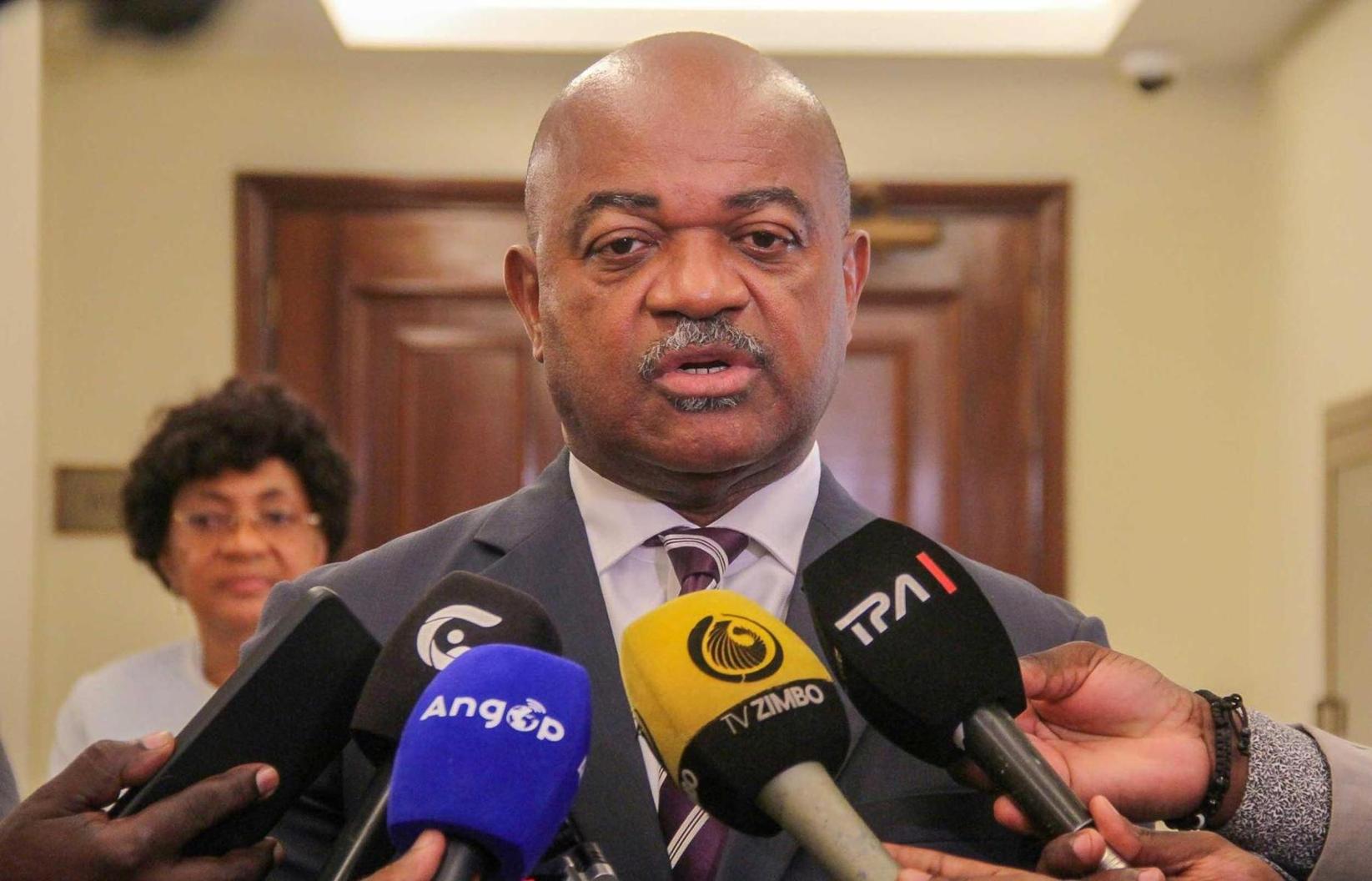
Africa-Press – Angola. Angola has invested, over the last 25 years, in fiber optic networks, both on land and underwater, in microwaves and in the space segment, reaffirmed the minister of Telecommunications, Information Technologies and Social Communication, Mário Augusto Oliveira.
In an interview with the website “The Business Year” on changes in Information and Communication Technologies (ICT) in Angola, the official referred that the country is strongly committed to diversifying the economy and, consequently, its telecommunications needs are essential to achieve this objective.
The sector, he said, is working on projects to expand the national fiber optic broadband network, cybersecurity and modernize health and education services driven by information technologies, as well as developing microwave networks.
On the other hand, Mário Augusto Oliveira stressed that ANGOSAT-2, an Angolan satellite, will provide services in the C band, in the KU band and in the KA band, systems that have successfully passed the test stage, with the next stage being prepared, which will be commercialization and provision of services.
According to the minister, with the investments of the last 25 years, the country managed to resist the Covid-19 pandemic, because at this time it was possible to maintain a certain stability in the economy and the services worked.
“Angola is a country of 1.2 million square kilometres, and beyond this vast area, its cities are displaced. Therefore, the end of the digital divide is one of the main services in which we are focused”, he stressed.
According to the minister, telemedicine is a huge reality in the provinces of Moxico, Bengo, Huambo and Bié.
ANGOSAT-2
He referred that with ANGOSAT-2 it will be easier to increase the national telemedicine network and also serve public schools and subsequently reduce the digital divide and increase digital literacy.
He added that the sector is developing a project to control the flow in rivers and possible fuel spills during oil exploration.
“With ANGOSAT-2 and the Earth observation project that we have going on, it will be possible to control the environment, including the migration of animals, the burning of forest fires, which is a phenomenon that happens throughout Africa, as well as the road control and railway development projects, urban planning, urbanization of towns, cities and migration”, he stressed.
In terms of mobile telephony, he said, that Angola only covers around 51 percent of the national territory, representing a significant growth margin.
He added that there is a technology technically called Mobile Virtual Network Operators (MVNOs), which we encourage operators to use, which involves virtual mobile operators in addition to a traditional mobile operator.
The minister also pointed out that in terms of information technologies he is also encouraging the main operators and creators, who may arise among young people, to create platforms that serve the national market, the national economy and national companies.
“Our young Angolans are highly creative, but sometimes they don’t have the necessary space to develop their creativity”, he emphasized.
He said that in terms of trained people, the sector supervises the Telecommunications Institute, which has a training center in its district, CFITEL, a center that even gives Cisco, Huawei and Microsoft certifications.
According to him, the technicians trained at that center have the opportunity to be certified by these major manufacturers.
On the other hand, he highlighted the inauguration, recently, of the center of excellence in research for training Huawei employees and encouraged other international operators to install and create training centers in the country.
He also recalled the business incubator, supervised by the Ministry, called Digital.ao., in which young people pay nothing and have access to the internet and some basic services, which allows them to think, create and do what they do in Silicon Valley .
He referred that one of the biggest concerns, alongside technology, is to enhance the knowledge base of young people to increase their employability.
“It has been proven that, all over the world, information technologies can make a huge contribution to reducing unemployment and this has a great impact on countries’ GDP”, he said.
He also spoke of the media subsector, which, according to the minister, is developing rapidly, with the modernization of public television and radio networks, as well as the press.
“We believe that the media should not only inform, but also educate. We also provide information about technologies that are being implemented around the world”, he stressed.
He ended by saying that social communication is being worked on, not only in terms of information, but also in training citizens in the most varied aspects of science, technology and citizenship.
For More News And Analysis About Angola Follow Africa-Press