Africa-Press – Angola. The cultural movement in the municipality of Icolo e Bengo, Luanda province, is starting to resurface, timidly, after two years of lethargy, caused by the Covid-19 pandemic.
In the last 24 months, the district had its exhibition spaces literally “fly”, without activities, visitors and without revenue.
In fact, the municipality has only one conventional room, for a universe of more than ten groups, which “reinvent” themselves to boost Culture and bring Icolo and Bengo to life.
Its main groups are Twenda Kukina, commonly known as Balé de Catete, Ceramistas Kukina and Kukina Kwetu (dance), while Etu Mudietu, Kamba Diami and Massunga Kota stand out in theatre.
Currently, most of the activities are carried out on the initiative of the groups themselves, either at Centro Cultural Dr. António Agostinho Neto, or in adapted spaces in the respective communes.
Meanwhile, the Cultural Center Dr. António Agostinho Neto has been, for most groups, the “lifeline”, although in the last two years he has also felt the impact of the pandemic.
During this period, the center recorded a sharp reduction in customers and the consequent decline in revenue.
Once the restrictions imposed by the Government have been lifted, to stop the transmission chain of the Covid-19 virus, that cultural center is starting to get back on track, in terms of programming.
However, despite this lightening of the measures, it is still far from reaching the usual levels.
Just to give you an idea, before the emergence of Covid-19 in Angola, in March 2020, the Center hosted, on average, 10 to 15 activities per month, numbers that dropped to an almost insignificant two to three cultural events, in each 30 days.
In this period of resurgence, cinema, theater and music are the areas most in evidence in the calendar of the cultural center, the main asset of Icolo e Bengo.
According to the center’s director, Isaías Cristóvão, the municipality has many groups willing to develop their art, but most of them are in distant communes and have difficulty going to the headquarters to carry out activities.
He made it known that they have already received several visitors again, including collective and individual people, interested in knowing more about the life and work of the first President of Angola, as well as proposals for cultural and other purely social activities.
With these requests, made by companies and institutions of the State, he believes it is possible to tread a new path, in terms of collection of emoluments in the center.
Therefore, he promised to intensify the dissemination of the objectives and the historical and cultural importance of the center, especially for the youth, in order to increase the number of visitors.
Depending on the source, despite the resurgence of activities, it is imperative that cultural manifestations be maximized, in order to gradually increase revenue, which is essential for its maintenance.
“There are months when we don’t raise anything, but there are others where we get between 50 and 100 thousand kwanzas “, informed the manager, for whom the amounts are quite insignificant. if you want, to meet the maintenance costs of the institution, inaugurated on February 4, 2009.
According to the source, the annual budget, the amount of which he did not reveal, only covers three to four months for security and cleaning, stressing that it falls short of the needs and expenses, especially with personnel
Just to pay the security guards, for example, he says 15 million kwanzas are needed per year, not counting the cleaning of the building, leisure area, gardening and weeding.
The center’s main objective has always been to study and disseminate the life and work of the poet, politician and former President of the Republic, António Agostinho Neto, a goal that has not yet materialized, despite the various attractions available in the cultural enterprise.
In addition to seeing a reduction in activities and, consequently, revenues, that infrastructure is currently struggling with numerous challenges, particularly that of maintenance.
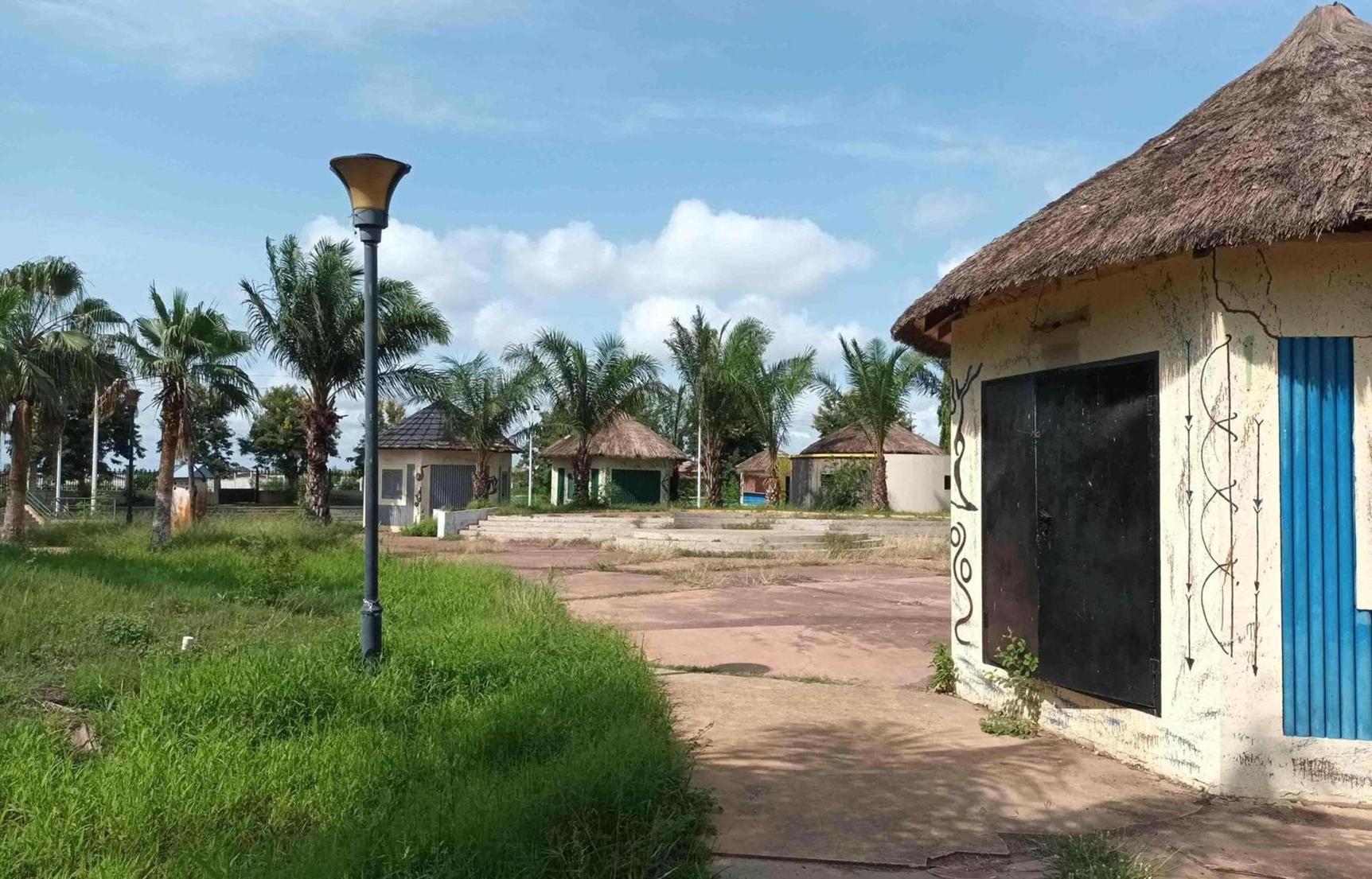
Who walks through Rua Dr. António Agostinho Neto, in the town/city of Catete, where the imposing center is located, easily observes the desolate appearance of the leisure area, made up of 32 kiosks, including shops and canteens.
Compounding the problem, they are surrounded by grass, which compromises the strategy of monetizing the spaces built around the perimeter of the centre.
These small establishments were meant to be rented out in order to promote self-employment and youth empowerment, but they are almost facing abandonment.
At the base of this, according to local sources, is the supposed lack of clients, a version that the director of the center refutes, claiming to be an apparent abandonment.
“What is happening is that the center was built in a space where, in times of rain, a lot of water accumulates, and this makes the growth of grass fast and constant. But we have done everything to, occasionally, keep the space clean”, explained.
At the moment, painting works are taking place on the fence wall, to give a better image.
Meanwhile, according to him, the locks and gates of that space need to be changed.
Press found at the site only one kiosk occupied by young people, who carry out the activity of cutting and sewing, and who regret the state of the enclosure, with a lot of rubbish, grass and in disuse, auguring for a change of the framework in the coming days.
“We don’t know how to explain why these kiosks are not occupied, even having the minimum conditions for the practice of commercial activity”, exclaimed one of the tailors.
Isaías Cristóvão lamented the fact that several kiosk occupants left without even finishing the lease term, leading to the unilateral termination of the contract.
Despite the financial shortage, the manager of the cultural center said that they have improved, whenever possible, the image of the infrastructure, with painting and grass cutting.
The Center has an amphitheater for 250 people, a museum with items that belonged to Agostinho Neto, such as hats, the text of the proclamation of National Independence, a cane, photographs that narrate his historical journey and a library.
Inside, it also has an exhibition area with articles referring to the national culture and a multipurpose field for basketball, futsal and volleyball.
For More News And Analysis About Angola Follow Africa-Press