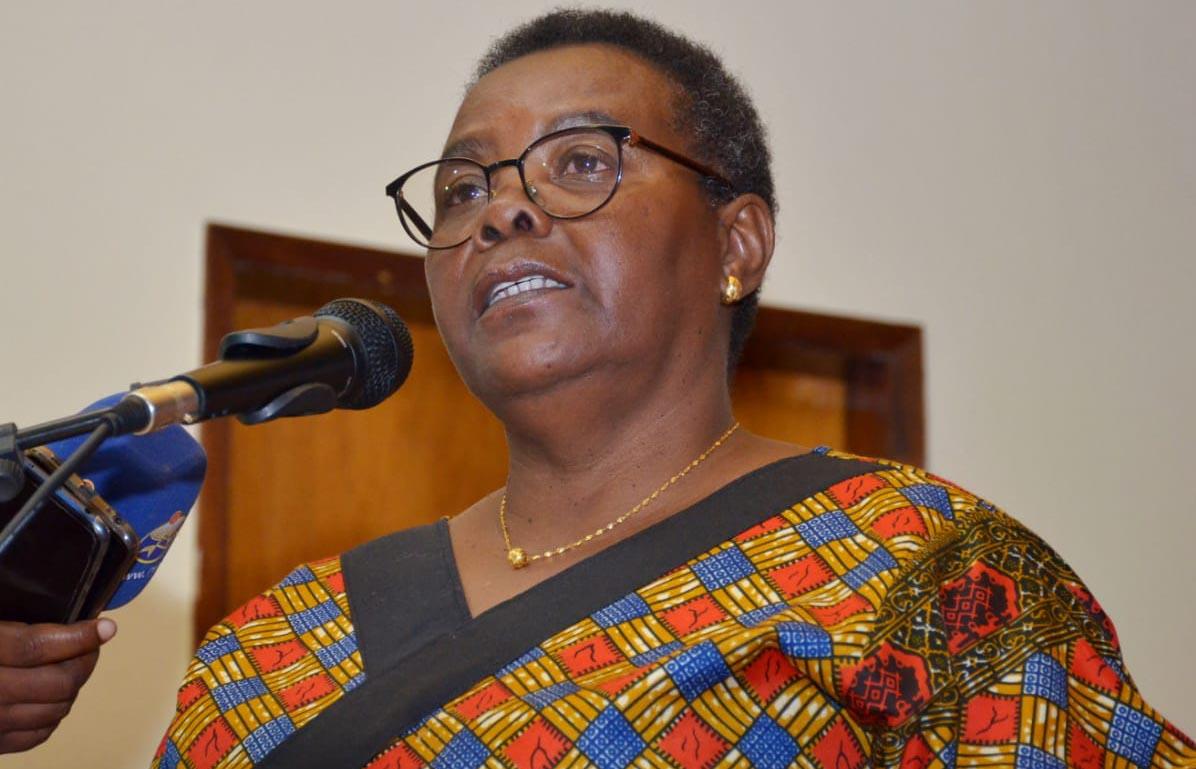
Africa-Press – Angola. Good governance should favor negotiation between peers, to counteract the diversity of interests and complex challenges in the process, defended Wednesday in Lubango, the vice-governor of Huíla province for the political, economic and social sector social, Maria João Chipalavela.
The official made this statement at the Women’s Forum, promoted by the Association of Young People Moved by Angola (AJOMA), where she spoke on the theme “Principles of Good Governance – a challenge for current and future Leaders”.
The event was aimed at women leaders of public and private institutions, churches, groups and associations, within the scope of the project called “Women engaged in good governance”, which aims to empower this fringe to play an active role in Angola.
The objective of the event was to help empower women for their active social participation and to influence good governance practices, in favor of local development, in an action that has funding from the Embassy of the United Kingdom in Angola and the support of the Government of Huíla .
On the occasion, the deputy governor underlined that good governance comprises mechanisms, processes and institutions, where citizens and groups can articulate their interests, exercise their rights, comply with obligations and mediate differences.
Among the problems that can be avoided in governance, with negotiation, Maria Chipalavela pointed to the lack of social inclusion, school dropouts, unemployment and lack of innovation in optimizing cooperation networks.
He stressed that it is important to always commit the communities interested in the success of planning and strategic programming, which should favor negotiation and commitments, as development is often confronted with a diversity of interests and complex challenges.
In this order of ideas, he referred that the sharing of decision-making processes with the citizens, promotes citizenship, active participation, stimulation of innovation and creativity of citizens.
For the person in charge, the concept of governance should not be confused with that of Government, as the Government is responsible for conducting general policy and for exercising public administration power in a Rule of Law, while the other consists of the decision-making process , involve not only the action of the first, but also of other partners.
“The new governance requires, given the context of the new public administration, a set of new capabilities and skills, such as negotiation, persuasion and orchestration”, he stressed.
For More News And Analysis About Angola Follow Africa-Press