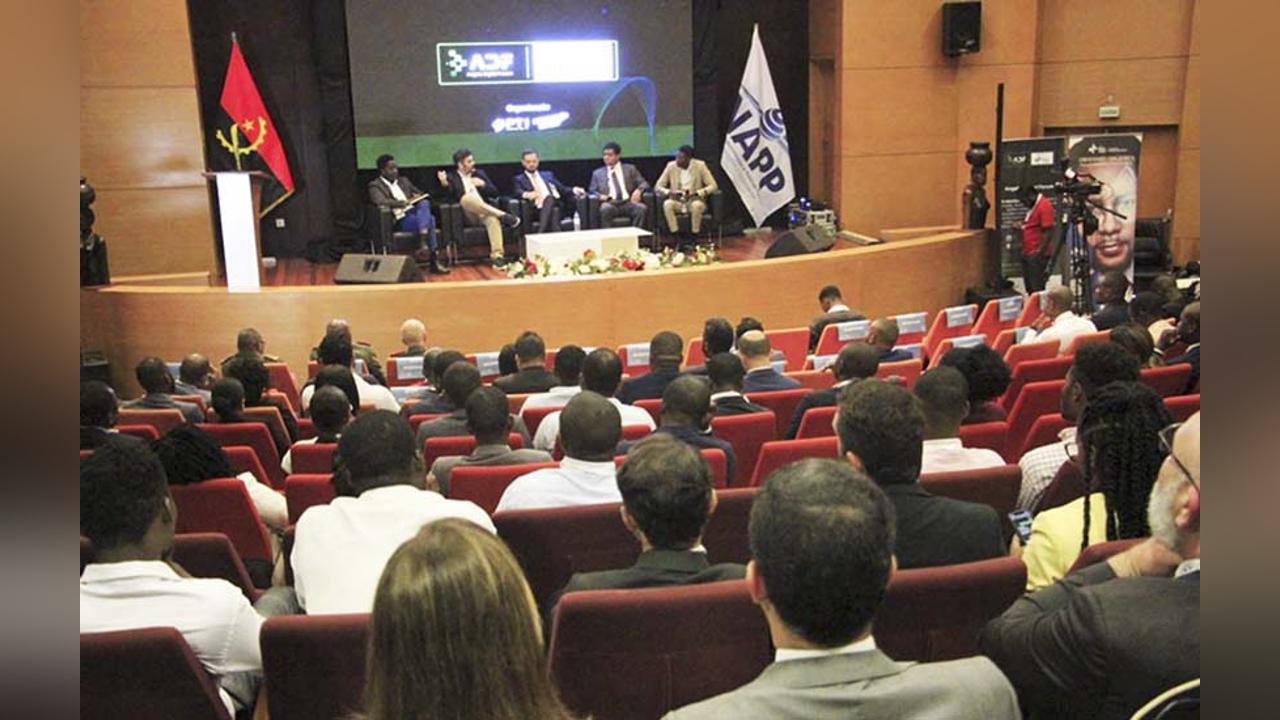
Africa-Press – Angola. Specialists linked to the field of information technology (IT) highlighted, this Thursday, the steps taken in the digitization of some public services and at the same time point out the existence of some sectors that need to have technological maturity.
The point of view was given by specialists who participated in the 2nd edition of the “Angola Digital Forum”, which brought together more than 20 companies from various segments of the ICT sector operating in the country.
When addressing the theme of “Digitization and Cybersecurity in Public Services”, the experts highlight the Ministry of Finance, the National Bank of Angola, which are “light year” in relation to other sectors with regard to the digitalization of public services.
In the list of sectors considered with “technological maturity” follows Justice and Human Rights, Public Administration, Labor and Social Security, Health, Education, among others.
These sectors provide some electronic services that eliminate the need for users to travel, as well as the accumulation of piles of paper.
Willian Oliveira, representative of TIS TECH, considers that the digitization of public services is still a major challenge.
In his opinion, the infrastructures that exist in Angola tend to the demand for digitalization, but the weights and counterweights of cybersecurity still create a ‘brake’ of digitalization services.
‘ The maturity of the entities are very different, they are not homogeneous. Standardizing the country’s technological infrastructure, I think, is a main challenge for everyone to have the same tools’, noted William Oliveira, maintaining that it is difficult to compare certain entities on their technological maturity and knowledge.
Placing the technological infrastructures and putting them on the same level is one of the challenges for the country, although there are improvements, according to Oliveira.
For another specialist Filipe Rekte from ETIC, Angola has invested a lot in technological infrastructures, but he said that it is fundamental to measure the maturity of institutions, as some are very technologically mature and others are not.
Ivo Martin, representative of the company Aurora Borealis, also says that the issue of maturity and the asymmetries that may exist between different institutions are different.
According to the expert, digital programs aim to reduce costs and transparency between the State, Government, citizens and companies.
“As a citizen and user of public services, I want my life to be simplified. I don’t want to be in a queue, for example at a counter to get a license or any declaration”, defended Ivo Martin.
At the level of Africa, he points out, as an example, Beni, which has a service portal available online, which allows the creation of companies on the spot and other documents.
Alcides Miguel from Banco Atlântico says that it is difficult to analyze technological maturity when you don’t have a ‘fremwork’ for which to analyze this maturity.
For the specialist, it is important that the State, through the INFOSI-National Institute for the Promotion of the Information Society- define a ‘fremwork’ that all public bodies should be regulated.
“We cannot say that this entity is more mature than the other if we don’t have a basis by which we are going to measure this maturity”, observes Alcides.
As for the technological infrastructures, he said it was important to look from the base to the top, taking into account the asymmetries and access to data and information.
In this edition of the Angola Digital Forum, more than 20 Angolan and foreign specialists from the technological sector left, who analyzed the impact of new technologies in various sectors of the country.
For More News And Analysis About Angola Follow Africa-Press