Africa-Press – Angola. Achieving political stability, integration and economic development of the Southern African Development Community (SADC) is one of the main challenges of Angola’s rotating presidency in this continental body.
Apparently, there seems to be more and more consensus, and well accepted, the idea that these issues constitute a “beacon” for the leadership of Angola, which for a year will have on its “backs” the weight of leading and materializing these aspirations of the Member States.
As of August 17, Angola begins a difficult journey in leading SADC, in the face of a complex political and economic framework, both in the region, in particular, and on the continent, in general, which will require firm and adjusted diplomatic action.
The peaceful environment in the region, considered by the Peace and Security Council of the African Union to be more stable than the North, Central, West and East regions, will be decisive for the desired industrialization and development of the southern zone.
Currently, the most visible stains in the region are in the Democratic Republic of Congo (DRC), which calls for a resolution of the border conflict with Rwanda, and in Mozambique, the scene of acts of terrorism, in the province of Cabo Delgado.
With a view to reducing the impact of those crises and the damage to the community and Africa in general, Angola has already taken firm steps by sending to Mozambique, in 2021, for example, a military component to integrate the SADC State of Alert Force.
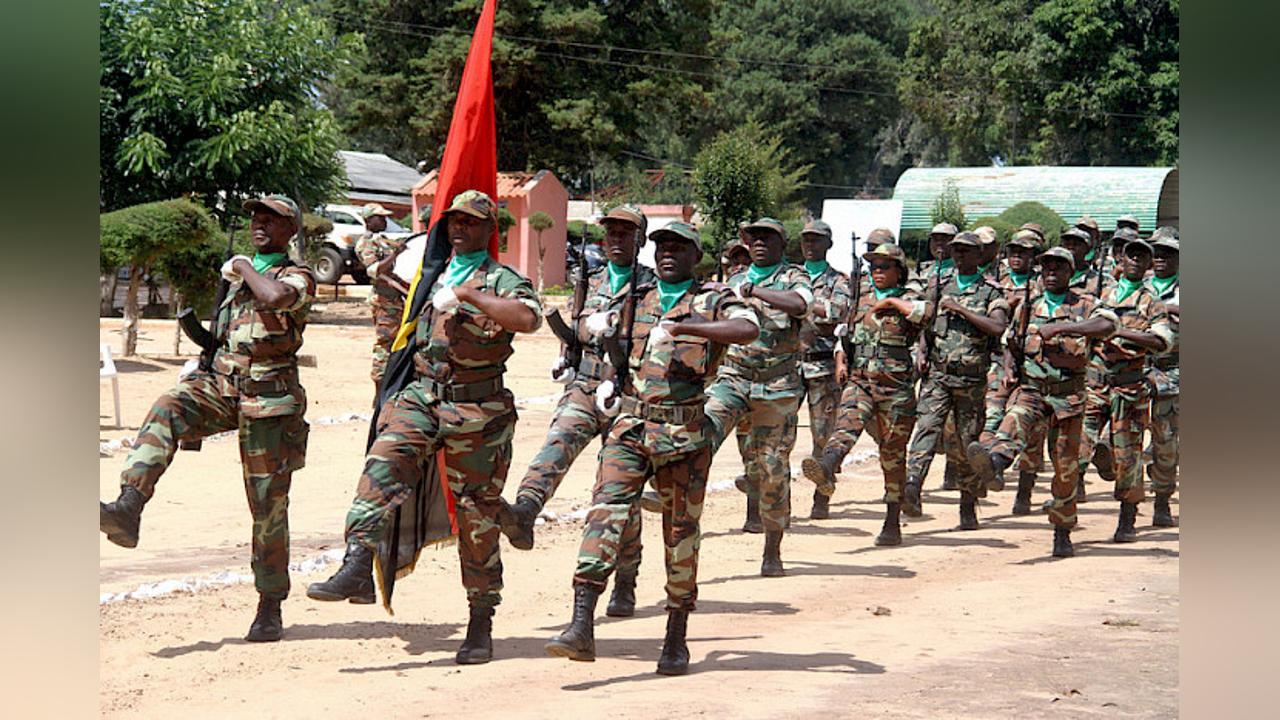
Also, in an exemplary way, as part of its conflict prevention and resolution efforts, 450 soldiers from the Angolan Armed Forces are currently waiting for conditions in the DRC, in order to be enlisted in peacekeeping operations and securing the cantonment areas. of the M23, in the east of the country.
Both gestures fit in with the spirit of lending its experience in terms of conflict resolution, pacification and stability, not least because the country holds the current presidency of the International Conference on the Great Lakes Region (CIRGL), where it is located. the DRC, and President João Lourenço is Champion of the African Union for Peace and National Reconciliation.
Meanwhile, Angola’s perception of the need for peace and stability as prerequisites for the economic and sustainable development of Africa, and in particular of the southern region, is not restricted to the current moment, nor to the Declaration and the Treaty of 1992, which created SADC.
It is enough to go back to the period after the proclamation of national independence (1975) and find the maxim pronounced by the first President of independent Angola, António Agostinho Neto, when he said: “In Namibia, Zimbabwe and South Africa there is the continuation of our struggle ”.
Consequently, with the deterioration of the security environment in the region and the desire of the South African Apartheid regime to extend its domain to all of Southern Africa, triggered the famous “Battle of Cuito Cuanavale”, in the Angolan province of Cuando Cubango , between November 15, 1987 and March 23, 1988, which culminated in the victory over the South African army, the heaviest defeat in its history, according to analysts.
The victory of the extinct Popular Armed Forces for the Liberation of Angola (FAPLA), governmental, supported by Cuban internationalists, over the extinct Armed Forces for the Liberation of Angola (FALA), assigned to UNITA, supported by the then South African regime, enabled negotiations that led to the New York Accords, the Independence of Namibia, the release of Nelson Mandela, the end of Apartheid and the establishment of a democratic regime in South Africa.
In recognition of the outcome of that battle, and, consequently, the benefits for the entire region, as well as the role played by Angola, March 23 is currently celebrated as “International Day for the Liberation of Southern Africa”.
“Ingredients” from Angola for the region
At a time when SADC is 31 years old, Angola is preparing to receive, for the third time, the witness of its presidency, held by the Democratic Republic of Congo, with the holding, in Luanda, of the 43rd Summit of Heads of State of the Southern African Development Community.
In this sense, statesmen from Angola, Botswana, Comoros, Democratic Republic of Congo, Eswatini, Lesotho, Madagascar, Malawi, Mauritius Islands, Mozambique, Namibia, Seychelles Islands, South Africa, Tanzania, Zambia and Zimbabwe will meet on August 17, under the motto “Human and financial capital: the main drivers of sustainable industrialization in the SADC region”.
In a climate full of peace in the country, achieved in 2002, the moment seems opportune for Angola to share with the 16 countries that make up the community all its potential, achievements and gains in terms of energy, technological infrastructure (telecommunications ), Railways, airports, among other investments made by the Angolan Executive.
In this regard, Angola intends to supply energy generated from hydroelectric power stations to countries in the region, and is committed to interconnecting its national energy system with that of the Southern African region.
In addition to Capanda (530 MW), Cambambe (960 MW), Laúca (2.7 MW), and the Soyo Combined Cycle Power Plant (750 MW), the Caculo-Cabaça Hydroelectric Facility will complete the energy mosaic with an average production/ year of 8,566 gigawatts, which should be the largest in Angola and the third largest in Africa, after Aswan, in Egypt, and Cahora Bassa, in Mozambique.
Also among the valences in favor of regional socio-economic development, particularly in terms of telecommunications, emphasis should be given to the construction of the ANGOSAT 2 Satellite, in orbit since October 12, 2022, and the expansion of optical fiber, in the path of the digital economy.
Recently, Botswana reiterated its interest in connecting with Angola via the fiber optic land line, which is already happening with the Democratic Republic of Congo (DRC) and Zambia. The Tswanese Government also expressed interest in contracting the services of ANGOSAT 2.
It should be noted that, since July 4, 2023, Angola, Zambia and the DRC have been connected via fiber optics, allowing the countries bordering the last two to have access to communications and electronics services through Angola.
Within the scope of national and regional economic diversification, the Angolan Government proceeded, also on 4 July, to officially hand over the management of the Lobito Corridor to the Lobito Atlantic Railway consortium, with the aim of boosting the mobility of people and goods. The infrastructure includes the Port of Lobito, the Mineiro Terminal, the Catumbela Airport and the Benguela Railway (CFB).
On the occasion, the Angolan Head of State, João Lourenço, was convinced that the Lobito Corridor will serve as a “regional hub” and an important artery for national and regional economic diversification, linking the Economic Community of Central African States (CEEAC ) and SADC.
Around US$3.2 billion were invested by the State in the rehabilitation of port and railway infrastructure, with the Lobito Corridor starting from the Port of Lobito, on the Atlantic Ocean, crossing Angola from West to East and covering the mining areas of Katanga province in DRC and Copperbelt in Zambia.
Another proof of the Angolan Executive’s commitment to increasing investment in infrastructure is the construction of the New Luanda International Airport, called “Dr. António Agostinho Neto”, which will certainly attract new international companies and also become an African hub.
It is in this context of advantages and openness to investment that Angola reaffirms the challenge of becoming yet another anchor for strengthening cooperation, economic development and regional integration among the 16 nations located in the south of the continent.
The fact that Angola received the baton of SADC command coincidentally on the date of creation of the Community (August 17th) may suggest a good omen for a good mandate.
Historic
The SADC (Southern Africa Development Community), in English, was born in 1992 from the transformation of the SADCC (Southern African Development Coordination Conference), created in 1980, and had as founding States Angola, Botswana, Lesotho, Malawi, Mozambique, Swaziland ( Eswatini), United Republic of Tanzania, Zambia and Zimbabwe.
SADCC was formed in Lusaka, Zambia on 1 April 1980, following the adoption of the Lusaka Declaration – Southern Africa: Towards Economic Liberation, while SADC was officially established on 17 August 1992 as a result of of the signing of the Declaration and the Treaty by the Heads of State of the countries of Southern Africa.
Like the defunct SADCC (Coordination Conference for the Development of Southern Africa), the SADC (Southern African Development Community) seeks cooperation in the socio-economic, political and security areas between its Member States, as well as the regional integration, with a view to achieving peace, stability and prosperity.
ANGOP
For More News And Analysis About Angola Follow Africa-Press