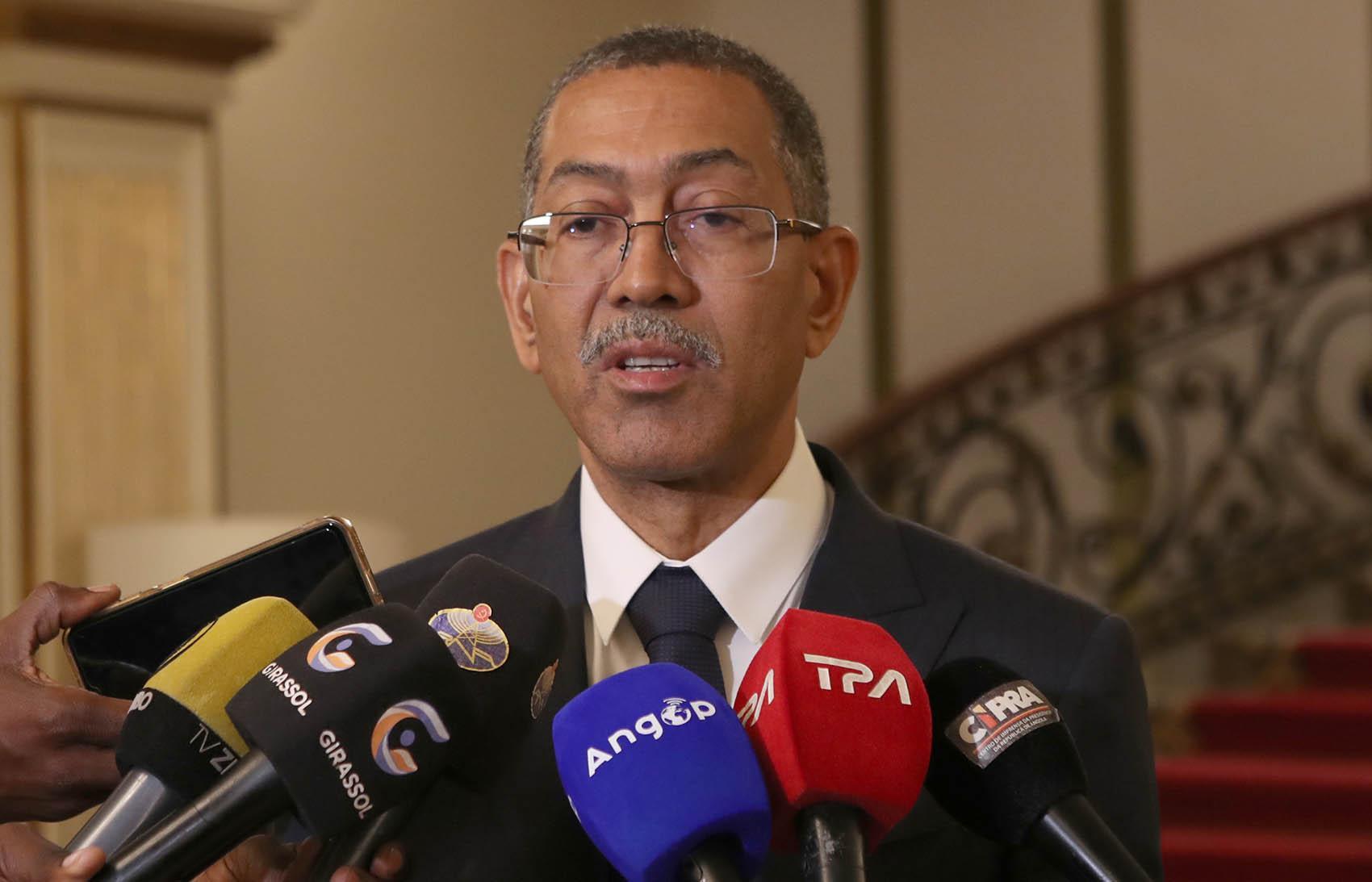
Africa-Press – Angola. The energy transition must be fair, equitable and take into account the needs of countries that hold minerals, for a better quality of life, considered, this Thursday, the Minister of Mineral Resources, Oil and Gas, Diamantino Azevedo.
The minister, who was speaking at the opening of the Workshop and exhibition on “Ornamental rocks of Angola”, stated that, currently, they want to transform the extractive industry considering fossil fuels as the “villain” of the entire climate situation that the universe is experiencing.
He stated that without fossil fuels and mineral resources we would not have the necessary quality of life, so the important thing is to have a balance between the need to use these resources and the survival of the planet.
Diamantino Azevedo stated that Angola supports the impartial energy transition and any other type that would only contribute to the increase in energy poverty in Angola and the African continent.
“No one wants to try to persuade us to stop exploiting our mineral resources. We want this blessing when used by men not to turn into a curse and for it to be put to good use,” he said.
The minister defended the need to look more carefully at environmental issues, reducing carbon and metal emissions, decarbonizing further and improving the production technology of all these gases harmful to the environment to promote a more sustainable activity.
According to the government official, it is not possible to make the energy transition without energy from fossil fuels and without the participation of mineral resources, as an example he spoke about the contribution of liquid and solid minerals in a car.
Diamantino Azevedo reinforced that the extractive industry is an essential component of economic diversification and combating the less good situation that the country is going through, as a country like Angola, in development, needs people capable of transforming the wealth it has.
The country, he said, produces the mineral resources necessary for the production of cement, steel, fertilizers and almost all petrochemical products, and in addition they are building refineries in Cabinda, Lobito.
In his view, the country is at a stage where storing fuel at sea, in floating conservation, is costly, which is why storage capacity is being increased to definitively eliminate this situation.
Along with the other works in progress, Diamantino Azevedo reinforced that his challenges, in addition to environmental and social issues, are aspects linked to the licensing of the activity, from controlling the exercise of the procedure correctly, from the point of view of safety and worker protection.
In turn, the president of the Association of Producers, Transformers, Traders and Exporters of Ornamental Stones of Southern Angola (APEPA), Marcelo Siku, said that the energy transition is possible, but the country does not need urgency, as it has several rivers that guarantee clean energy.
“We want the energy from Laúca and Cambambe to reach the South, to feed the factories with clean energy and to work 24 hours without fear of cuts like what happens in Huíla”, he asserted.
The Workshop and Exhibition on Ornamental Rocks of Angola (ROA-2023) runs until Friday under the motto “Angola towards excellence in ornamental rocks”
The event is debating five panels, namely institutional, social responsibility and governance, strategies for valuing ornamental rocks, mobility and logistics infrastructures, as well as the business and investment environment for the sector in question.
For More News And Analysis About Angola Follow Africa-Press