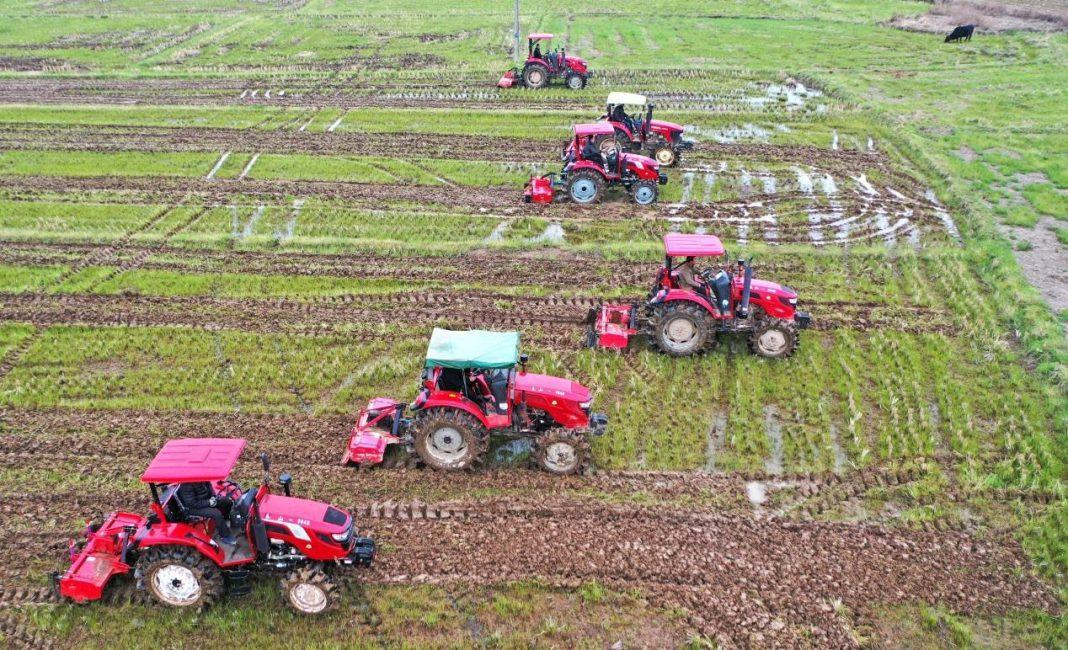
Africa-Press – Angola. More than 30 thousand families distributed in five municipalities in the province of Cuanza-Sul and, in another five in Huíla, benefited, between 2019 and 2023, from technical and financial assistance of at least 22 million dollars overall, within the scope of the implementation of the Family Agriculture and Commercialization Development Project (SAMAP).
This is an initiative of the Institute for Agrarian Development (IDA), representing the Government of Angola, and the United Nations Fund for Agriculture and Food (FAO).
Data obtained through a report, estimates that the current level of achievement of the planned goals is around 55 percent.
The study considers the goal of covering 60 thousand families, implementing more than 1,000 Farmers’ Field Schools (ECAs) and a budget available of just over 39 million dollars mobilized from the Fund and project partners.
SAMAP (Family Agriculture and Commercialization Development Project) operates in 10 municipalities, namely Amboim (Gabela), Cassongue, Cela (Waku Kungo), Conda and Quibala, in the province of Cuanza-Sul, and also in Cacula, Caluquembe, Caconda , Chicomba and Chipindo, in Huíla.
Family farmers who exploit up to two (2) hectares of land per family, including 50 percent women and 30 percent young people, dedicating themselves mainly to the cultivation of corn, beans, reindeer potatoes and vegetables are the groups- SAMAP targets. However, products such as cassava, sweet potatoes and coffee can also be supported, to the extent that they are, in certain municipalities, crops resilient to climate change.
The choice of crops is due to the contribution of each one to food security and increased income of families assisted by IDA (Agrarian Development Institute).
This program is projected until August 2024 and despite the delays recorded, considering a slowdown between 2020 and 2021 due to the Covid-19 pandemic, around 30,000 farmers joined together in almost 900 Farmers Field Schools (ECAs), with 48 percent women and 34 percent young people. The partnership with FAO allowed IDA to train 79 masters and 1,029 facilitators, thus preparing to continue the process. SAMAP coordination, in an assessment referring to 2023, showed that 73 percent of trainees applied techniques learned, increasing grain production and changing agricultural practices.
The results of the first level monitored by the IDA/SAMAP structures suggest that of the target of 60 thousand families benefiting from production factors, between 2009 and 2022, 33,926 were reached, corresponding to 57 percent.
As for the number of 60 thousand farmers to be taken to the ECAs, until July, 32,852 were reported, meaning a total of 35,013 (58 percent). Regarding the legalization of 60 percent of the agricultural cooperatives covered, by the end of July, 79 out of a total of 160 (50 percent) had been reported.
In total, this indicator already represents an increase to 151 (90 percent). It should be noted that 72 of the 165 technologies (44 percent) of the number of climate resilience technologies were registered and that 163 technological packages of the 150 that were recommended ended up being adopted, an extraordinary compliance of 109 percent.
Five (5) business plans were also submitted to the promoters for approval, against the expected 10 (50 percent) and 11 farmers accessed the financial services provided by the project, out of an estimated total of 20 (55 percent). During this period, of the 150 million dollars planned to be mobilized from partner financial institutions, 78 million dollars were allocated, representing a success rate of 52 percent.
Partnership boosts family farming
In the provinces of Cuanza-Sul and Huíla, the Family Agriculture and Commercialization Development Project (SADC-C&H-SAMAP) has been implemented, since 2018, by the Government of Angola, with financing from the International Fund for Agrarian Development (IFAD).
Contributing to the diversification of the economy, generating income and improving livelihoods, as well as strengthening food security for the most vulnerable families is the main objective of this project.
According to the promoters, the project’s development objective is also to increase productivity, production and marketing of agricultural products from selected crops, such as cassava, corn, beans, reindeer potatoes and prominent vegetables, in the areas covered by the Project.
“SAMAP is a project that is part of the vision of the Institute for Agrarian Development (IDA) of building a rural world free from hunger and poverty, in which rural communities are fully integrated into socioeconomic development, thus contributing to food and nutritional security of the country”, they advance.
The Institute for Agrarian Development (IDA)’s primary mission is to implement government guidelines, playing a decisive role in strengthening family farming, towards the diversification of the economy, making the country increasingly self-sufficient.
IDA is a strategic institute of the Ministry of Agriculture and Forestry (MINAGRIF) responsible for carrying out tasks such as strengthening the organization of rural communities; provide guidance and technical training to family farmers, both in mutual support groups and in agricultural associations and cooperatives and encourage the commercialization of surpluses from agricultural production.
Those responsible consider it to be for this reason that the Family Agriculture and Commercialization Development Project (SAMAP) represents, in this context, a valuable opportunity for the Agrarian Development Institute (IDA), which represents the Ministry of Agriculture and Forestry (MINAGRIF) to improve the institutional capacity of central, provincial and municipal structures, so that they are better prepared to carry out their tasks and develop effective training methodologies for farmers, aiming to expand and diversify production.
Among these approaches, the following stand out: Farmers Field Schools (ECAs); the implementation of Community Funds and the co-financing of investment subprojects in the rehabilitation of small irrigation systems, increased production, improved post-harvest processing and commercialization of agricultural surpluses.
“These measures contribute significantly to achieving the IDA’s objectives with regard to stimulating and strengthening family farming, playing a crucial role in guaranteeing the country’s food security”, states the study.
SAMAP operates in municipalities in two provinces with identified potential
SAMAP (Family Agriculture and Commercialization Development Project) operates in 10 municipalities in the provinces of Cuanza-Sul (Amboim, Cassongue, Cela, Conda and Quibala) and Huíla (Cacula, Caluquembe, Caconda, Chicomba and Chipindo).
SAMAP’s target groups are family farmers who exploit up to two (2) hectares of land per family, including 50 percent women and 30 percent young people, dedicating themselves mainly to the cultivation of corn, beans, potatoes and reindeer and vegetables. Cassava, sweet potatoes and coffee can also be supported, to the extent that they are, in certain municipalities, crops resilient to climate change, contributing to food security and increasing the income of families assisted by IDA, within the scope of SAMAP.
Subdivided into two technical components, the project defined training and institutional development as its goals, through 60,000 family farmers assisted through the establishment of Farmers Field Schools (ECAs), 165 reinforced farmer organizations, 150 trained extension technicians and 20 packages disseminated climate resilience technologies/techniques.
In component two (2) of support for increasing production and marketing, it was designed that 150 subprojects/business plans for agricultural production, transformation and marketing will be implemented. Also, that 10,000 beneficiaries of financial support for investment in agricultural production, processing and marketing, including 1,000 people assisted, see their small-scale irrigation systems rehabilitated.
The path taken and main achievements of the Project until August 2023
Considering the expected closure of SAMAP operations on September 30, 2024, Graph 1 inserted in this context provides a visual representation of the period already elapsed (86 percent) and the remaining time (14 percent), both in months and in terms percentages. In the subsequent section, it will be possible to explore in detail the main interventions of the Project throughout the period, presenting them in a more or less chronological way. At the end of this analysis, the challenges inherent in optimizing available resources will be addressed, aiming to achieve SAMAP’s central objectives in just 14 percent of the Project’s total duration.
Project Installation (First year – 2017/2018)
The first year was dedicated to the tasks of installing the human and physical conditions so that the Project could begin, on the ground, the actions for which it was designed, highlighting the signing of the financing agreement between the Government of Angola and FIDA; Designation of the Project Coordinator; Official launch of the Project in Luanda, on April 5, 2018, followed by the intervention provinces: Cuanza-Sul and Huíla;
In addition, the Implementation Unit (UIP) and Provincial Implementation Units (UPIPs) were also created; the preparation of the 1st Annual Work and Budget Plan; as well as the acquisition of essential logistics, such as offices and vehicles; start of operations in the field, with identification of villages and target groups and identification of partnerships or strategic alliances, including FAO, IIA, INCA, among other service providers.
First field actions (Second year – 2019)
The year 2019 marked the implementation of SAMAP’s interventions with families in the 10 municipalities where it operates, in the provinces of Cuanza-Sul and Huíla. During this period, a significant impact was observed through the first distribution of production factors. Furthermore, it is worth highlighting the signing of partnership agreements with renowned institutions, namely the Food and Agriculture Organization of the United Nations (FAO), implementation of Farmers Field Schools; the Agricultural Research Institute (IIA), for soil analysis and multiplication of corn, bean and garlic seeds and the National Coffee Institute (INCA), for the multiplication of plants and improvement of coffee processing and marketing.
This was a fundamental year for laying the foundations for a lasting impact, allowing local communities to benefit directly from the Project’s interventions.
Continuation of field activities and training of masters (Third year – 2020)
Despite the outbreak and spread of the Covid-19 pandemic, the year 2020 stood out for an important milestone in the Project: the training, carried out by FAO, of 79 ECA masters, completed in October of the same year. This created the basis for the beginning of the establishment of ECAs to train farmers in rural extension, one of the main focuses of the Project.
The achievements of the third year of SAMAP include achievements such as continued support to target groups in agricultural production factors; hiring consultancy companies to carry out studies (baseline, nutrition, mapping and characterization of value chain actors, identifying their needs and capabilities to access available financial services). Agreements were also signed with institutions such as the Studies, Projects and Statistics Office of the Ministry of Agriculture and Forests (GEPE/MINAGRIF), to carry out agricultural statistics, a market information system and the reformulation of public policies; the Action for Rural and Environmental Development (ADRA), the strengthening of producer organizations in the province of Huíla and the Angolan Association for Adult Education (AAEA), in consortium with the Spanish NGO CODESPA, the strengthening of farmer organizations in the province of Cuanza-Sul.
Beginning of establishment of Farmers Field Schools (Fourth year – 2021)
After overcoming the restrictions on free movement between Luanda and the provinces covered by the Project, which were one of the measures adopted to prevent the spread of Covid-19, the year 2021 marked the tangible beginning of the establishment of the Farmers Field Schools (ECA ) by FAO. This became possible thanks to the efforts of the Masters who, inserted in the Agrarian Development Stations (EDA), committed themselves to training the facilitators.
In this context of relief in public health issues, it is essential to highlight achievements such as continued support to target groups in relation to agricultural production factors; completion of studies that were started in the previous year and which were affected by the outbreak and spread of the Covid-19 pandemic; identification of partner financing institutions, including the Agricultural Development Support Fund (FADA) and the Family Farming Development Project (PDAC) and hiring a consortium composed of two national companies, JMJ and AGROPROMOTORA, to be the main provider of technical services in the formulation of subprojects/business plans.
Start of subproject formulation (Fifth year of the Project – 2022)
With the foundations laid in previous years, the SAMAP Project began to reap notable results in 2022, especially with regard to the growth in the number of ECAs created under the guidance of FAO.
Furthermore, other achievements are worth highlighting, such as continued support for target groups in relation to agricultural production factors, achieved through the implementation of an IFAD donation, within the scope of the COVID Fund (Facility to Stimulate the Poor Rural) and beginning of the execution of the contract with the JMJ/AGROPROMOTORA consortium, which acts as the main provider of technical assistance services in the support component for agricultural production and marketing.
Assessment of intermediate results (Sixth and penultimate year – 2023)
More than 35,000 family farmers have actively engaged in nearly 1,000 Farmer Field Schools (ECAs) and pre-ECAs groups, demonstrating remarkable inclusion with 48 percent female participation and 34 percent youth involved.
The distribution of agricultural inputs reached almost 34,000 families affected by droughts and the pandemic crisis. Furthermore, based on financial contributions from beneficiaries, it was possible to start capitalizing 157 community funds, managed by local agricultural associations and cooperatives.
An independent assessment, conducted in the first quarter of 2023, brought to light intermediate or second-level results, highlighting that 54 percent of respondents said they had received nutrition education, mainly through ECAs; 79 percent of respondents reported experiencing new or improved services from their organizations.
Among these, 71 percent were men, 29 percent women and 24 percent young people; 73 percent of people interviewed mentioned having adopted at least two improved practices related to production and post-harvest conservation, disseminated through ECA; 24 percent of respondents said they have access to rural financial services.
Financing for investments in the rehabilitation of irrigation systems, production, post-harvest conservation and commercialization should be made during the second half of 2023.
Lessons learned during the implementation of SAMAP
In some cases, externally financed agricultural projects (WB, ADB, IFAD, EU) face delays in initial installation, which requires untangling processes such as hiring and training central and provincial staff; acquisition of equipment and vehicles; implementation of management systems (financial, acquisitions, monitoring); hiring consultants for preliminary studies; identification of the target audience and dissemination of approaches; establishment of partnerships and contracts with service providers.
The creation of central coordination units, as was the experience of IFAD-funded projects in Angola (UCP), can accelerate the installation and operationalization of new projects, offering expertise in finance, acquisitions, monitoring and evaluation. This involves developing implementation manuals; Implementation of computerized systems; Training and technical support for central and provincial staff.
A relevant lesson involves the use of Project funds to acquire and distribute agricultural inputs, not initially foreseen in the financing agreement between IFAD and the Government of Angola.
In effect, emergency interventions were implemented to face droughts and Covid-19, using around 6.7 million USD to benefit 33,926 vulnerable families in the ten municipalities of the provinces of Cuanza-Sul and Huíla.
Acquisition and distribution followed the identification of needs by IDA; IFAD approval in the competition stages; centralized purchases and deliveries to municipal headquarters; distribution with involvement of IDA and municipal administrations and manual records of beneficiaries for subsequent digitization into Excel spreadsheets.
The distribution generated advantages such as emergency assistance to vulnerable groups; improvement of IDA’s image and positive promotion of the Project; moderate increase in production in areas less affected by droughts and the creation of initial capital for community funds via contributions from beneficiaries.
Among the disadvantages observed in the execution of the tasks highlighted are the diversion of the application of funds initially allocated to other purposes; reinforcement of assistance and dependence and the limited impact on productivity due to the inefficiencies of centralized acquisition processes (technical specifications that are not very objective, inadequate packages of inputs and delays in deliveries).
In this sense, the promoters recommend for future emergency interventions that emergency aid be restricted to what is necessary; combine production support with basic food baskets; use of uniform packaging to facilitate distribution; pre-registering beneficiaries digitally, whenever possible; provision of technical training; establishment of clear criteria for beneficiary contributions and greater involvement of communities and local authorities in planning and evaluation.
Community Funds in the areas of operation
According to IDA guidelines, projects financed externally and by the Government of Angola must involve beneficiaries through monetary and/or in-kind contributions to promote self-sustainable socioeconomic activities.
Presidential Decree No. 112/19 approved the Community Funds Pilot Project, led by the Institute for Agrarian Development, with the function of evaluating the viability of community funds by cooperatives or associations; offer technical support for the progress of the Pilot Project and carry out training for the development of community funds.
Within the scope of SAMAP, 157 Community Funds were established (66 in Cuanza Sul and 91 in Huila), with a total initial capital of US$295,571 in January 2023.
The positive results of the use of these funds, collected by farmer organizations and administered through Community Funds, are evidenced by achievements such as the improvement of facilities for processing and marketing agricultural products; acquisition of land and irrigation facilities for production fields and agricultural training schools and provision of micro loans to members of farmer organizations.
It was observed that the initial distribution of production factors resulted in the creation of working capital for community funds, which has been used to drive sustainable initiatives to increase and diversify production, transformation and marketing. These anticipated advances were only foreseen with the implementation of subprojects in component 2 (support for production and commercialization).
Active banks thus demonstrated the ability to accumulate savings and provide loans for economic and social activities, signaling the potential for them to evolve into future savings and credit cooperatives.
Alliance and partnership management
The implementation of SAMAP is based on the use of specialized service providers and partnerships with institutions. Achieving targets for ECAs and subprojects depends on the performance of two main providers: FAO for extension training and the JMJ/AGROPROMOTORA consortium for subproject support.
The agreement with FAO was expanded to reformulate agricultural development policies.
WFP collaborates with IDA on nutritional education to complement FAO’s actions in ECA.
In agricultural research, memorandums were signed with the IIA to analyze soils and seeds for corn, beans and garlic, and with INCA to improve coffee. GEPE/MINAGRIF supports IDA in agricultural statistics and market information. Agreements with NGOs strengthen farmers (ADRA in Huíla and CODESPA/AAEA in Cuanza Sul). An NGO will provide functional literacy to improve the management of ECAs and other farmer organizations by women and youth.
Managing complex alliances and partnerships requires trained personnel to deal with public and private contracts and agreements. Management involves understanding the Project, analyzing agreements and plans, and ensuring compliance. Technical dialogue during preparation, execution and evaluation is vital to the success of alliances. Below is a list of the main agreements signed by IDA for the implementation of SAMAP, excluding short-term consultancy.
ECA sustainability
Even though notable progress has been made in the establishment of ECAs, development of subprojects, creation and operation of community funds, the study promoters state that the challenge of consolidating and expanding the validation and graduation process of extension training units that , will be at the end of the Project, at levels 2 and 3. Furthermore, the monitoring of subsidized subprojects is also considered crucial, in which beneficiaries must contribute financially to the funds of the community funds.
“These require specialized assistance in setting up simplified accounting and management systems, as well as training of respective leaders and managers in good management and accountability practices”, justifies the study on the IDA and FAO partnership, developed in the provinces of Cuanza -South and Huíla, respectively.
jornaldeangola
For More News And Analysis About Angola Follow Africa-Press