By Victor Manuel
Africa-Press – Angola. Angola continues to be an example in terms of conflict resolution in Africa, where it stands out in intermediating several clashes, especially in the Great Lakes Region, as a result of its bitter experience of almost 27 years of war.
The country, which became a hub on the continent for mediating armed conflicts, managed to achieve effective peace through continuous and in-depth dialogue between brothers from the same country, after several failed negotiations.
The absolute “silence” of weapons served as a motto for the process of maintaining peace and national reconciliation, which is consolidated every day, with a view to building an increasingly united, peaceful and patriotic society.
Over the last 23 years, Angola has continued to improve the foundations of peace, full democracy and forgiveness, after three decades of abrupt war that produced, until 2002, thousands of deaths and refugees.
It was on April 4, 2002, that the Angolans, through the Government and the National Union for the Total Independence of Angola (UNITA), sealed their peace pact, in the province of Moxico, with the so-called Luena Memorandum of Understanding.
Despite several agreements signed previously and not fully implemented, the Luena Memorandum of Understanding unquestionably opened space for an unavoidable experience of negotiation and conflict resolution.
In fact, Angolans have always made it clear that, after suffering from a war lasting around three decades, they are sensitive to the horrors experienced by the continent’s populations affected by conflicts, which justifies their spirit of solidarity.
It is with this spirit of solidarity and peacemaking that Angola asserts itself among African nations as a good case study for resolving conflicts through dialogue.
The African continent marked this Wednesday, January 31st, for the second time in its history, the “Day of Peace and Reconciliation in Africa”, established in 2022, and Angola is exemplarily cited, in these celebrations, as the “main mediator” continental.
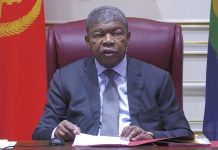
In fact, it was no coincidence that its President, João Lourenço, was designated, in the same year, by the African Union (AU), “Champion for Peace and Reconciliation in Africa”.
Angola, as a state in central-southern Africa, with decision-making capacity in the management of conflicts, terrorism and political diversification, is strongly linked to sub-regional organizations, namely the Gulf of Guinea Commission (CGG) and the International Commission of the Gulf of Guinea Great Lakes (CIRGL), created, among other reasons, to enforce peace agreements concluded in the region.
Angola is currently assuming the rotating presidency of the CIRGL, an organization that also includes Burundi, the Democratic Republic of Congo (DRC), Central Africa, Rwanda, Sudan, South Sudan, Tanzania, Uganda and the Republic of Congo.
What is certain is that Angola’s double consecutive mandate at the CIRGL contributed to enshrining the autonomy of its diplomacy and making it a privileged partner for African Peace and Security issues, both at regional and international level.
Emblematic cases are Angola’s interventions in the conflicts in CAR and DRC, where Angola, in the first case, played an important role in the entire peace and reconciliation process and in continuing consultations with the leaders of armed groups.
Angola’s intervention aimed, above all, at seeking a total renunciation of violence.
João Lourenço’s commitment to approving the Joint Roadmap for Peace in the Central African Republic should also be highlighted, as well as his availability and dedication to the reconciliation process and the search for a peaceful solution to the aforementioned conflict.
On the other hand, the President of the Republic, João Lourenço, is the main AU mediator of the conflict in the east of the Democratic Republic of Congo.
In July 2022, representatives from Angola, the DRC and Rwanda met in the country to sign the “Luanda Roadmap for Peace”, which aims to open dialogue and normalize relations between the DRC and Rwanda, create conditions for refugees to return to their homes and facilitate the withdrawal of the M23 rebel group from the occupied territories.
The roadmap foresees the cantonment of the M23 rebel groups and the sending of 500 Angolan soldiers to protect the cantonment areas.
Every two years, Angola hosts the Pan-African Forum for the Culture of Peace, an event sponsored by the United Nations and the AU, to promote cultural exchanges and explore strategies for preventing and mediating violence.
The last forum took place from 22 to 24 November 2023.
Located on the West Coast of Africa, Angola integrates two sub-regions in Africa, not limited only to the Southern African region, but also to the Central African region, being equally part of the regional organizations of these sub-regions, hence being member of the Southern African Development Community (SADC) and the Economic Community of Central African States (EEACS).
Africa is plagued by political events that negatively impact its daily lives, basically motivated by territorial disputes, coups d’état, tribal rivalries over ethnic or religious issues, and disputes over natural resources.
Many of these motivations date back to the era of colonization, with colonizers dividing the continent and ignoring ethnic, cultural and political differences in the territories, causing serious humanitarian, economic and political crises.
ANGOP journalist
For More News And Analysis About Angola Follow Africa-Press