Africa-Press – Angola. With 16 classrooms, the institution has state-of-the-art technical and technological resources, which allows it to offer higher quality courses in the specialties of Radio, Television, Press, Marketing and Advertising
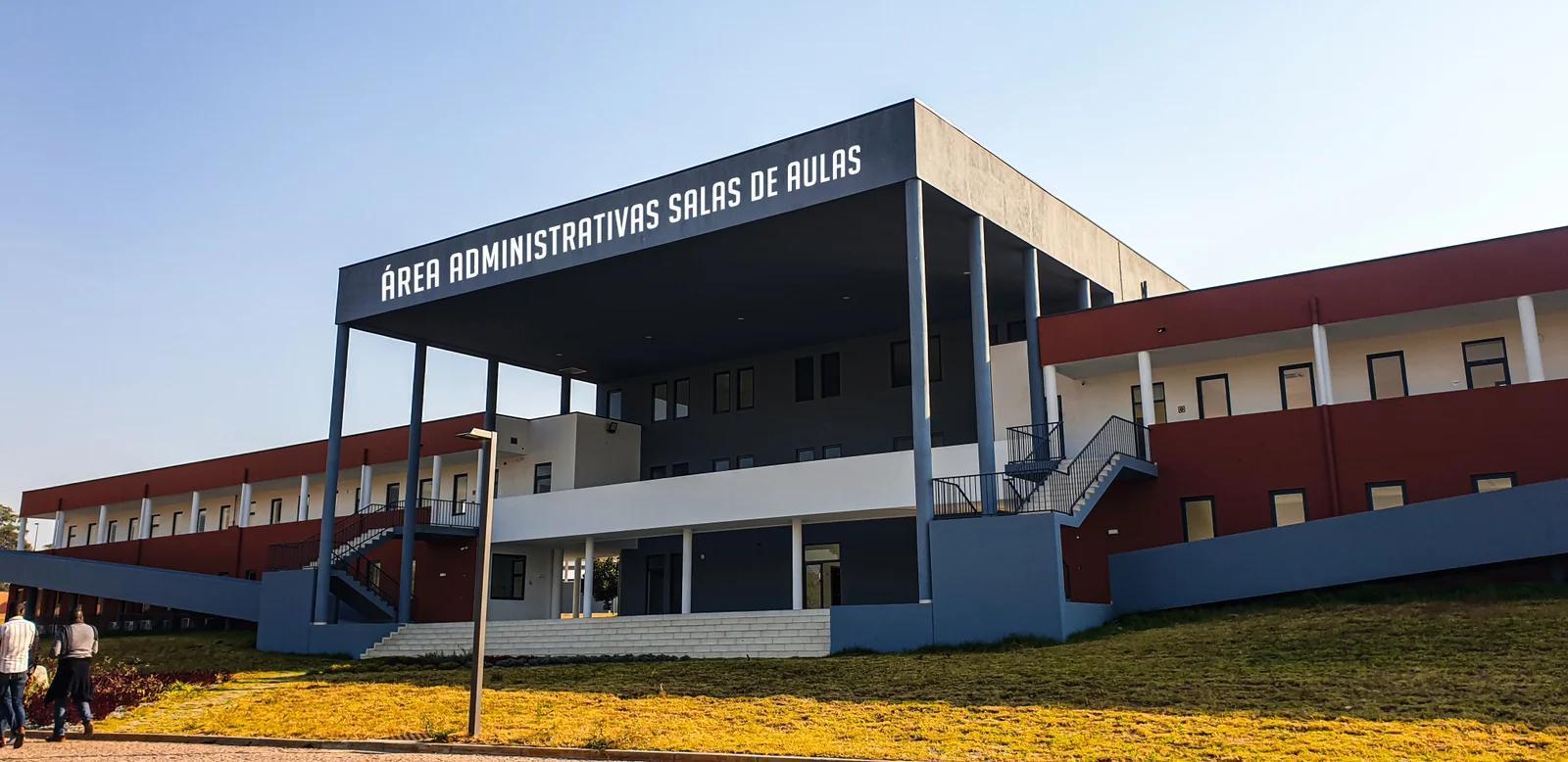
The Journalist Training Center (CEFOJOR) in Huambo, inaugurated on the 12th, by the President of the Republic, João Lourenço, presents itself as an excellent proposal for the training of journalists at the level of the Southern African Development Community (SADC) and the Community of Portuguese Speaking Countries (CPLP), given their potential. Located in the Macolocolo neighborhood, considered the second academic zone in the city of Huambo, the new Cefojor, with 16 classrooms with capacity for 30 students each, has state-of-the-art technical and technological resources, which allows it to offer higher quality courses in the specialties of Radio, Television, Press, Marketing, Advertising, Multimedia and Cinema.
The director of the institution, Ikuma Bamba, explained, during the inauguration ceremony of the national institution, that, with these facilities, young people from Huambo, neighboring provinces, as well as those from the SADC region will have a training center at their disposal. training with conditions existing in others spread across various parts of the world. “I am certain that with these infrastructures and the conditions created therein, Angola will be in a position to continue to stand out as a promoter of the youth empowerment process in the country and the region”, highlighted Ikuma Bamba.
Practical classes
Aware of the importance of the practical part for students, the Government has ensured, at the institution, well-equipped radio, television, photography and press studios, which will allow trainees to combine theory with practice. For trainees from other parts of Huambo province, as well as citizens from SADC and CPLP, the center has a boarding school with 88 rooms and six transit houses for visits.
Built on an area of 70 thousand square meters, Cefojor Huambo also has an auditorium with capacity for 300 people, a library, sports court, a music recording room, as well as other services.
Start of courses
At this moment, the management of the Journalist Training Center is concluding the administrative procedures to start, from February onwards, the first courses, whose prices will initially cost 10 percent less in relation to those offered at Cefojor de Luanda, as assured by Ikuma Bamba.
The institution will have a teaching staff made up of national and foreign professors, whenever necessary.
The Journalist Training Center, whose training portfolio went from 15 to more than 50 courses, was created 21 years ago and is the main reference when it comes to the technical training of professionals and different specialists in the areas of Communication, having already trained several generations of journalists spread across different newsrooms across the country.
Based in Luanda, the institution began its activity in September 2002, under the supervision of the then Ministry of Social Communication.
With advances in the field of Communication, taking into account new ways of thinking, acting and sharing information, the Government then decided to continue investing in the institution, with the aim of maintaining it as one of the main options in the training and development of citizens with a profile that is aligned with the demands of modern society.
This is why, to this end, he chose to build Cefojor Huambo, from scratch, in an academic city.
Main transformations
Among the main transformations defined in the project, the highlights are the building that houses the Radio, Press, Photography and Television laboratories, the music studio, the boarding school with 88 rooms, the six halfway houses, the building that houses the 16 rooms classroom and all offices for management and support services, a restaurant and a terrace with capacity for more than 300 people, around 200 parking spots, technical support area where two generator sets are installed for an alternative source of energy, a hydraulic system with the capacity to supply all properties with water daily and a modern auditorium with capacity for 300 people.
With the new, modern and fully equipped facilities, Cefojor now gains momentum to continue with its mission of ensuring the qualification and improvement of professionals and collaborators in the Social Communication sector in the areas of Journalism, Public Relations, Multimedia, Marketing and Advertising and Cinema.
Main reference
The professional Journalism course continues to be the institution’s main reference, without leaving behind the specialty of Public Relations, which will also continue to be one of Cefojor’s biggest focus areas, as a result of its importance for modern societies.
The idea, according to the institution’s management, is to help institutions invest more in the search for a good reputation, success and prosperity.
With other specialties, such as Marketing and Advertising, Multimedia and specific communication skills, the institution wants to continue training other specialists in communication matters, such as doctors, engineers, architects, jurists, police officers, economists, receptionists, ceremonial technicians and protocol and others.
In this equation, cinema is not left behind. With this training, the management wants to boost this sector of the seventh art in the country, with emphasis on the province of Huambo, whose historical data points to a province that, in times gone by, was already very well on its way in this area.
With the new facilities, Cefojor is better served and prepared to continue offering a set of courses and solutions in Customer Service, Report and Opinion Preparation Techniques, Executive Secretariat, Public Speaking, national and foreign languages, Management Human Resources and Labor Legislation, Communication and Human Resources, Archival Studies course, Librarian, Protocol Standards, Event Production, other training possible to be found at the institution.
The start of works at Cefojor Huambo generated a profound social impact in the region, given the hundreds of jobs it provided for local young people. The entire initial stage of the works involved the commitment and engagement of Angolan staff, most of whom trained in the country, particularly in the province of Huambo.
Digital.ao incubated at Cefojor
With the aim of stimulating the creative side of young people, especially linked to entrepreneurship, the Government decided to place within Cefojor Huambo an incubator “Digital.ao”. This public service, associated with the National Institute for the Promotion of the Information Society (INFOSI), allows users to carry out research with various aspects, with emphasis on the incubation of startups, that is, innovative technological projects developed over a period of two years until they are transformed into digital companies. Huambo is the second province, after Luanda, to be awarded with this institution.
Tribute to figures in Angolan journalism
More than a training center for journalists, Cefojor do Huambo is also a place to remember some figures who stood out in Angolan journalism, from teaching to exercising the profession itself. This is the case of Professor Gabriela Antunes, whose name was given to the institution’s main auditorium, with 300 seats. Born in Huambo, Gabriela Antunes stood out, in the field of Teaching, for the notable role played in Angolan Journalism, especially in the training and development of several journalists who are now references in its media outlets.
Television Studio
Celestino Kaeso is another figure honored at the center. His name was given to the television studio. A member of Public Television of Angola (TPA), Celestino Kaeso joined that Social Communication organization as a camera operator in 1981, after having worked at the Provincial Directorate of Agriculture. Among the functions performed, the highlights are provincial director of the TPA in Huambo and head of the Reporting Section. At the height of his profession, he covered the country’s first multi-party elections, in 1992, and several armed conflicts, with emphasis on the war in Huambo. After 42 years of service to the TPA, he was retired last year.
Press Studio
Another honoree is Joaquim Neves António, an Angop employee. Name of Cefojor Huambo’s Press studio, this professional joined Angop in 1982, in the province of Benguela, having completed his secondary course in Journalism in Havana, Cuba. In 1994 he was appointed provincial delegate of Angop in Huambo, a province where he also served as provincial director of Social Communication between September 2007 and June 2010. During his career, he stood out in covering the liberation of the city of Huambo , in the 1990s.
Radio Studio
For the Radio studio, the name chosen was that of Carlos Pereira, first director of the Huambo provincial broadcaster, in the period 1975-1986. Carlos Pereira was responsible for creating, establishing and strengthening the first embryo and the selectivity of the staff that gave shape to the official broadcasts of Rádio Nacional de Angola at the time. The majority of the generation he trained and guided, with pride, is at the end of their careers.
JORNALDEANGOLA
For More News And Analysis About Angola Follow Africa-Press