Africa-Press – Angola. The governor of the province of Cunene, Gerdina Didalelwa, recommended this Friday, in Ondjiva, to municipal administrations, to organize in advance the cattle vaccination campaign, scheduled for next March.
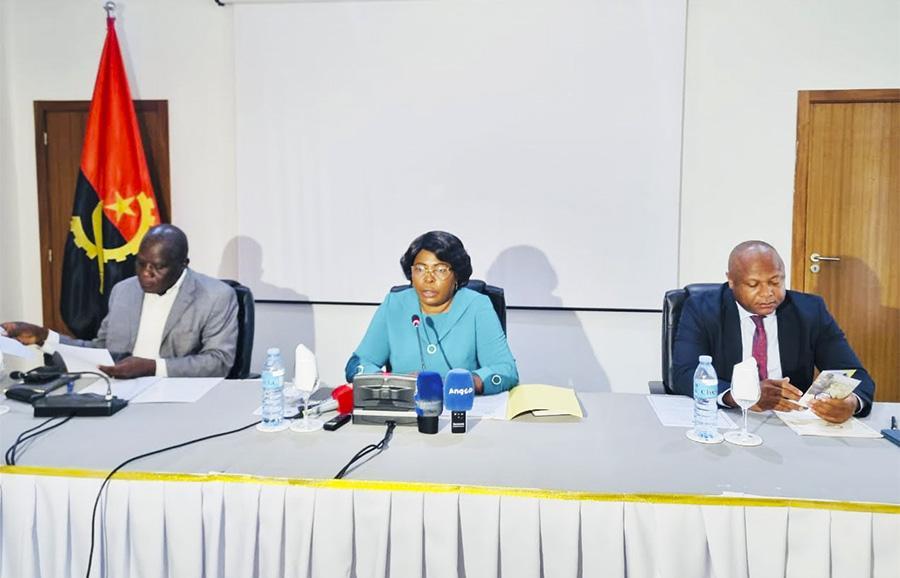
Speaking at the 1st ordinary meeting of the provincial government, Gerdina Didalelwa highlighted the need for administrations to create the conditions required for the successful vaccination of livestock, to prevent animal diseases.
“At this meeting, we want to define strategies for the next campaign, hence the need for administrators to ensure timely organization and preparation, in order to avoid low coverage of the animal vaccination process and prevent livestock from diseases”, he said.
He recalled that cattle represent the main wealth of families in this region, which is why it is the government’s responsibility to guarantee vaccination to safeguard animal health.
The governor asked members to propose solutions for the materialization of programs of collective interest, aiming to satisfy and improve the needs of the population.
During the meeting, OGE 2024 was presented, Proposed Presidential Decree that approves changes to the General Regime for Delimitation and Deconcentration of Competence and Coordination of Territorial Action of the Central and Local Administration of the State.
The new legal framework and adequacy of the local administrative apparatus and the current state of preparation and organization of the cattle vaccination campaign dominated the work agenda.
In the 2023 bovine vaccination campaign, only 134,150 head of cattle were immunized against symptomatic anthrax, hematic anthrax and dermatitis, out of the 900,000 planned.
Insufficient vaccine doses prevented the immunization of 765,895 animals, at a time when the province needed 700,000 doses.
The Veterinary Services control 335 vaccination sleeves, 290 of which are rustic and 45 permanent.
Data from the Government of the province of Cunene points to the existence of one million and 100 thousand head of cattle, 78% of which are owned by traditional breeders.
For More News And Analysis About Angola Follow Africa-Press