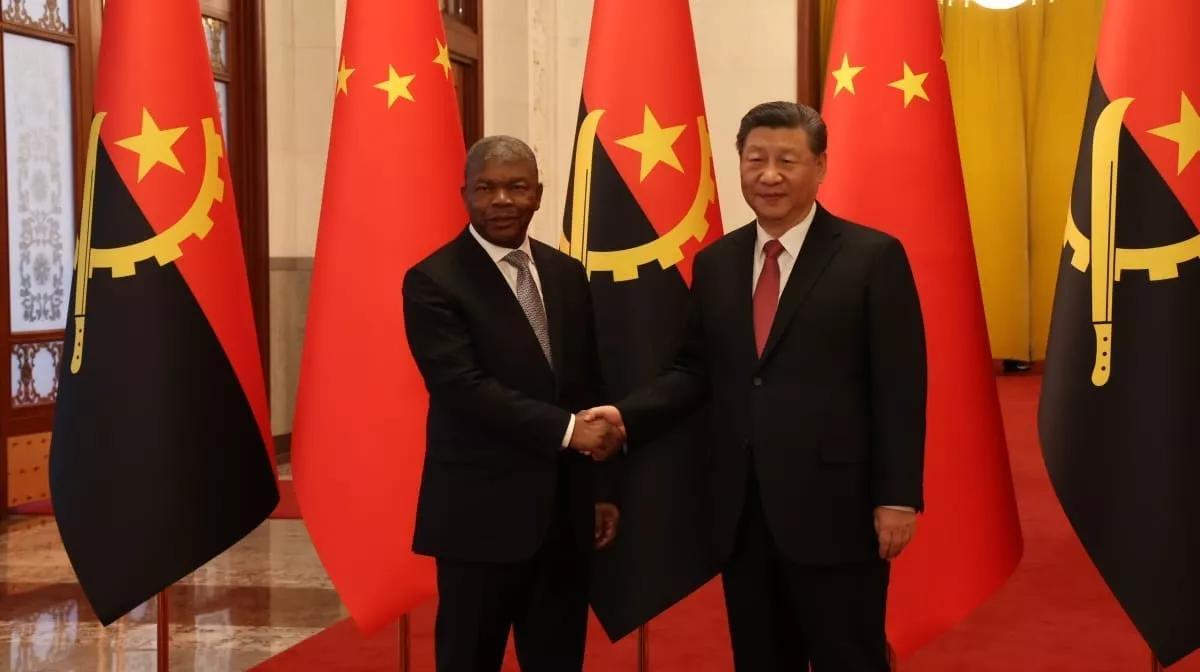
Africa-Press – Angola. The visit of the Angolan Head of State, João Lourenço, to China, as part of strengthening cooperation and strategic partnership between the two countries, marked the political news last week.
Since Thursday, in Beijing, for a 72-hour state visit, the Angolan President has participated in three high-level meetings, namely with his Chinese counterpart, Xi Jinping, the Prime Minister, Li Qiang, and the President of the Standing Committee of the National People’s Assembly (Parliament), Zhao Leji, as well as the opening of the “Angola-China Business Forum”.
Delegations from the two countries signed 12 agreements, in areas such as sport, trade, agriculture, sustainable development and digital infrastructures.
In his speech at the forum, the Angolan President considered his visit to the “Asian giant”, scheduled to end on Sunday, to be of great importance for deepening and consolidating ties of friendship and cooperation between the two countries and nations.
He invited Chinese businesspeople to invest in the Lobito Corridor in the production of food goods, including cereals and grains, sugar, livestock and fisheries. The President also invited, on Friday, his Chinese counterpart to visit Angola, which was promptly accepted.
During the visit, João Lourenço received Chinese businesspeople who operate in various sectors in the Angolan market, highlighting, among others, the chairman of the Board of Directors of Sinofarm, Liu Jingzhen, with whom he spoke about the prospects of the company, which he intends to set up in Angola, a pharmaceutical and vaccine production factory.
He also spoke with the presidents for sub-Saharan Africa of the Huawei Group, Issor Gao, and the Board of Directors of the China International Trust Investment Corporation, Xi Guohua, as well as receiving a group from the Association of the Angolan Student Community in this country.
Angola and China have a long history of cooperation, which is based on different areas, such as oil, health, infrastructure, staff training, among others.
Also marking political news over the last seven days was the Conference of Parliamentary Leaders, led by the president of the National Assembly, Carolina Cerqueira, which defined the agenda for the Plenary Meeting on the 21st and 22nd of this month.
At the end of the work, the first secretary of the Bureau of the National Assembly, Manuel Dembo, informed that the Proposed Law on Combating Illegal Mining Activity will be voted on and discussed, in general, on these dates, as will be discussed and voted on three requests legislative authorization from the President of the Republic on the VAT regions applicable in the oil and gas sectors.
During the week, the Vice-President of the Republic, Esperança da Costa, guided the members of the Multisectoral Commission for the Implementation of the Girls’ Empowerment and Learning for All Project (PAT II) to improve the execution of programmed actions.
The guidance was given during the second ordinary session of this multisectoral commission, aimed at presenting the degree of compliance with the recommendations of the first session, the assessment of the project’s activities, as well as the challenges and constraints on the Implementation of PAT II.
On the other hand, activities were carried out on the celebrations of the 63rd anniversary of the Day of the Expansion of the National Liberation Struggle (March 15), whose central event took place in the city of Cuito, province of Bié, guided by the Minister of National Defense, Antigos Combatants and Veterans of the Fatherland, João Ernesto dos Santos “Freedom”.
On the occasion, the minister reiterated the Government’s commitment to continue, despite financial difficulties, to make efforts to implement the program to improve the lives of those assisted, through the implementation of a set of social assistance and economic integration actions for this group..
The anniversary was also marked with activities such as lectures and round tables in some regions, in which there was talk of the need for greater publicity and recognition of the protagonists of March 15, 1961, expansion of the armed struggle for national liberation.
The historic action, mobilized by the then Union of the Peoples of Angola (UPA), involved several Angolan nationalists, who revolted against Portuguese colonialist power in some regions of northern Angola, such as the provinces of Uíge, Malanje, Cuanza-Norte and Zaire.
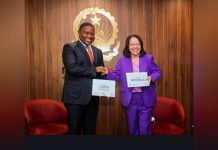
In turn, the Angolan Ombudsman’s Office and the Faculty of Law of the University of Coimbra (Portugal) signed a cooperation protocol for the training of Angolan staff at this Portuguese academic institution.
The signatories were the Ombudsman, Florbela Araújo, and the director of the aforementioned college, Jonatas Machado.
Florbela Araújo also participated, in Lisbon, in the solemn handover ceremony of the portfolios of the network of ombudsmen and national human rights commissions of the Community of Portuguese Language Countries (CPLP), as did senior staff from the Ombudsman’s Office of Angola shared experiences with technicians from the Portuguese counterpart in matters of procedural processing and complaints.
Also during the week, the National Directorate for the Prevention and Combat of Corruption (DNPCC) highlighted the necessary cooperation of national and international entities to combat crimes of an economic and financial nature, due to their specificity and complexity.
The position of the DNPCC was defended by the director of the institution, the deputy attorney general of the Republic, Pedro Mendes de Carvalho, who spoke, in Luanda, at the Workshop on Financial Investigations and Money Laundering Cases, representing the attorney general of the Republic, Hélder Pitta Gróz.
angop
For More News And Analysis About Angola Follow Africa-Press