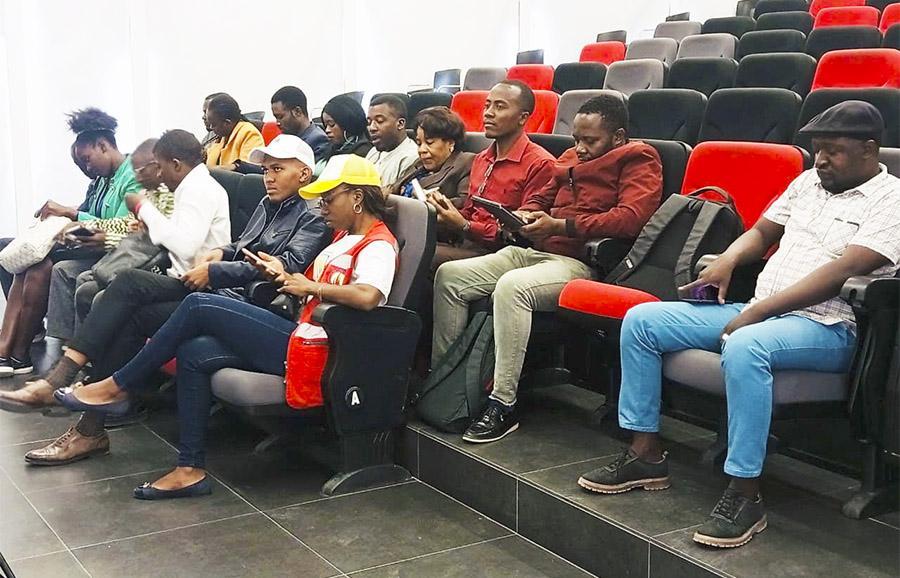
Africa-Press – Angola. Members of civil society organizations in the province of Cunene addressed, this Thursday, in Ondjiva, the role of academia and the increase in literacy on municipal power, aiming to increase citizens’ knowledge about the importance of local governance.
The debate took place during a lecture promoted by the non-governmental organization Kubango Agricultural Beneficence Mission, Inclusion, Technologies and Environment (MBAKITA).
Mbakita’s program coordinator, Simão Faria, said that the event allowed reflection and sharing of knowledge among the academic class, towards strengthening and interaction in the context of local authorities.
He mentioned that the perspective is to strengthen the capabilities of civil society organizations to better monitor local government electoral processes.
This time, he highlighted that teachers constitute an important class in the participation of local authorities, which is why they must be equipped with subjects related to the legislative package, in order to have control.
When discussing the topic, jurist Júnior Paulino took a legal-legal and constitutional approach to local authorities, in whose process academics are called to collaborate through the production of content and research to make it effective.
He pointed out the need for greater control over the elements that instruct society to have a direct participation in the process, in order to understand what local authorities are and who the mayor can be, as well as their institutionalization.
“Although there is timid dissemination, it is clear that the population lacks knowledge and real information regarding the benefits of the municipal system”, he said.
The municipal literacy project is national in scope, with MBAKITA working in seven provinces, namely Cunene, Namibe, Huíla, Cuando Cubango, Moxico, Lunda Norte and Sul, while the remaining 13 are under the responsibility of the organizations Centro Nacional da Counseling and Rede Terra.
The project’s target group is academics, journalists, members of civil society, churches, civic associations, traditional authorities, political parties and students.
For More News And Analysis About Angola Follow Africa-Press