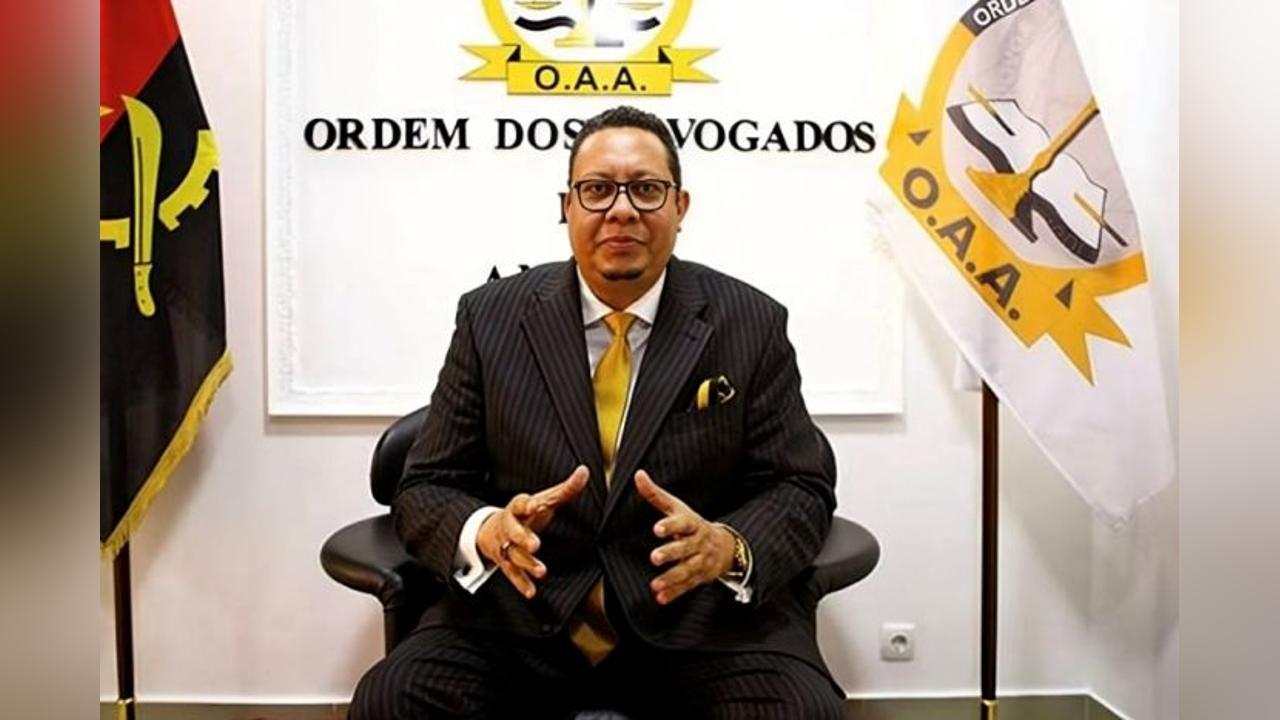
Africa-Press – Angola. Luís Paulo Monteriro, former President of the OAA, in response to the President’s proposals to amend three electoral laws, advocates reforming the country’s entire electoral legislation in order to ensure fairness and transparency in the 2027 elections. He therefore suggests adopting the Brazilian electoral model. Here is his argument.
The Council of Ministers considered, in its 3rd Ordinary Session, held on 27 March of this year, the proposed legal diplomas listed below and forwarded them to the National Assembly for approval, namely:
1. Proposal for a law to amend Law no. 36/11, of 21 December – Organic Law on General Elections;
2. Proposal for a law to amend Law no. 12/12, of 13 April – Organic Law on the Organisation and Functioning of the National Electoral Commission;
3. Proposal to amend the Law on Official Electoral Registration. Law no. 8/15 of 15 June – republished by Law no. 21/21 of 21 September.
It is immediately clear that some important legal instruments that make up the so-called electoral package were left out of the aforementioned assessment and were not sent to the National Assembly, namely, Law No. 22/10, of December 3 (Law on Political Parties), Law No. 10/12, of March 22 (Law on the Financing of Political Parties), Law No. 11/12, of March 22 (Law on Electoral Observation), Resolution No. 7/12, of March 23 (Electoral Code of Conduct), among others, aimed at ensuring the fairness of the entire electoral process.
To ensure the fairness and transparency of the elections, it is necessary that the entire package of electoral legislation be reviewed (electoral system), as well as the so-called phases of the electoral process for the credibility of the elections and for the good of the Angolan people, especially the voters.
For a correct analysis of this topic – elections – it is necessary to know the difference between the electoral system – a set of complex rules aimed at transforming votes into mandates, and the electoral process – the acts carried out in the different phases of the elections.
Elections are the most precious asset that the Angolan people have, if we take into account the long years of civil war that impeded the course of Angola’s republican history.
Elections should serve to bring peace and development to society, not to create a climate of permanent turmoil. A close example is the electoral crisis in Mozambique. Distrust in institutions and disbelief in economic investment.
Regarding the current TPE proposals sent to the National Assembly, it must be said, in all fairness, that they only aim to change some articles of the electoral system, with no express and substantial revocations to be recorded in the functioning of the electoral system and process itself.
Positive note on the proposal to eliminate the requirement to be a judge to be President of the National Electoral Commission.
The fact that citizens can vote with their ID card (expired) or after voting cannot remain near the polling stations at a distance of less than 1000 meters will not bring credibility to the elections.
The creation of mobile tables is an indicator of unreliability in existing data and inefficiency of data certification work.
The elimination of the summary report will also not bring credibility to the elections. It will result in the reduction of a guaranteeing control mechanism.
What Angola needs is a reform of the rules regulating elections, as well as the creation of new electoral institutions to ensure the credibility of the electoral process.
The changes taken to the National Assembly do not have a positive impact, as there is one in the electoral process.
Voters want independent bodies, as well as modern and transparent legislation. Voters want credible elections.
My proposal is to reform the entire electoral system in force, from top to bottom, by creating, from the outset, a new and independent entity responsible for organizing the entire process, called electoral justice, similar to the Brazilian model.
This means that the executive’s administrative bodies (MAT and MINJUSTDH) would no longer be involved in the Electoral Registration work, for obvious reasons. As long as ministerial departments have direct involvement in the electoral process, it will not be seen as independent and transparent.
On the other hand, the validation of candidacies and the entire electoral process would be transferred to a new court to be established, the Electoral Court.
This procedure would dilute all political speculation and accusations of early electoral fraud that have been spread, almost as common sense among voters.
With this new electoral model, we would have independent and stronger bodies, that is, bodies devoid of the depreciative history that current electoral bodies have.
To implement this reform of the entire electoral system and the electoral process, a political pact is necessary between the main parties with seats in the National Assembly.
The gains would be enormous for society, as well as for the political parties themselves, starting with the credibility of the Electoral Justice and Electoral Court institutions.
Consequently, the Constitutional Court would no longer deal with electoral and political matters, transferring these powers to a specialized court, the Electoral Court.
If there is political will, common sense advises that “the time remaining until the 2027 elections” works in favor of reforming the electoral system, as it is not an election year.
«What Angola needs is a reform of the rules regulating elections, as well as the creation of electoral institutions»
«My proposal is to reform the entire electoral system in force, from top to bottom»
For More News And Analysis About Angola Follow Africa-Press