Africa-Press – Angola. Angola highlighted on Tuesday in Rabat, the need to strengthen support and resilience mechanisms for African victims of terrorism.
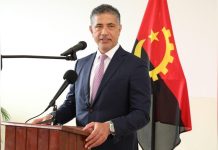
The position was expressed by the Deputy Director of the Criminal Investigation Service (SIC), Pedro Lufungula, who is representing the country at the 1st International Conference on African Victims of Terrorism that ends Wednesday.
According to the official, the continent faces serious human consequences caused by terrorism, a fact that requires coordinated and sustainable actions for prevention, protection and assistance to the affected populations.
Pedro Lufungula stated that the initiative promoted by the Ministry of Foreign Affairs, African Cooperation and Moroccans Abroad, with the support of the United Nations Offices on Counter-Terrorism (UNOCT), places victims at the center of strategic debates on combating violent extremism and building more effective African responses.
Official opening of the conference
At the opening ceremony, the Moroccan Minister of Foreign Affairs, African Cooperation and Moroccans Abroad, Nasser Bourita, called for the adoption of an ambitious and determined continental approach, based on the dignity of victims, justice and collective responsibility in the face of the resurgence of the terrorist threat.
The minister stated that the conference constitutes an important milestone in the reconstruction of African strategies, by placing survivors at the center of public policies and regional efforts to combat violent extremism.
He also stressed that victims should be seen as active agents in prevention and community resilience.
Bourita recalled that Africa continues to be the region most affected by terrorism, with a sharp increase in attacks, especially in the Sahel and West Africa, where the violence has caused thousands of deaths, mass displacement, school dropout, destruction of communities and weakening of social cohesion.
The opening session was attended by the UN Under-Secretary-General and head of UNOCT, representatives of several African governments, international and regional organizations, as well as researchers and experts.
The work is focused on the role of survivors in prevention initiatives, sharing testimonies and rebuilding affected communities.
Participants also address the human consequences of terrorism and the legal, institutional and socio-economic challenges inherent in supporting victims.
For More News And Analysis About Angola Follow Africa-Press