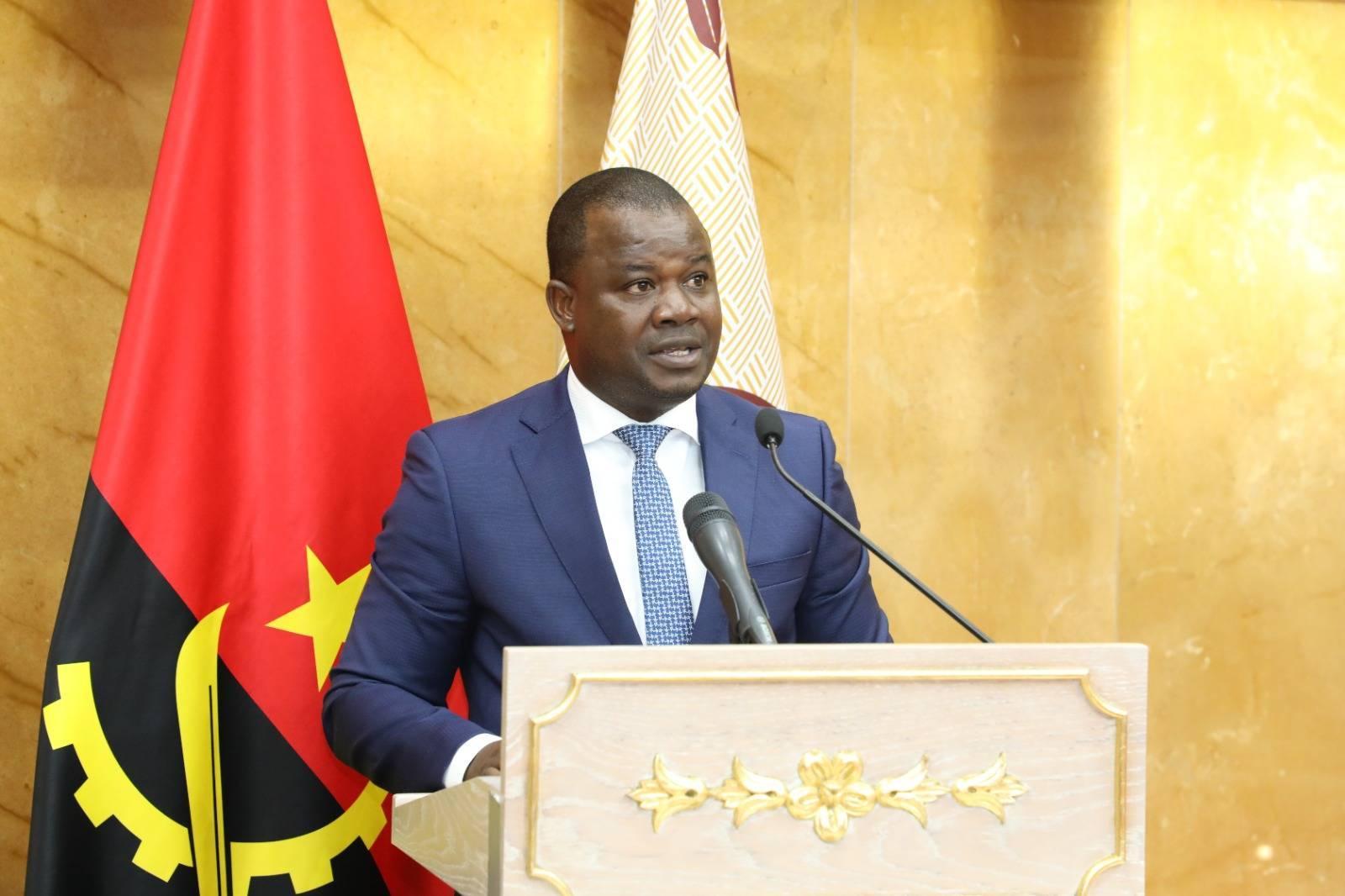
Africa-Press – Angola. The National Financial Inclusion Strategy (ENIF), launched on Friday, in Luanda, will reinforce the achievement of the target of inserting 65% of the Angolan population, estimated at 36.6 million inhabitants, into the formal financial ecosystem by 2027, in Angola, according to the Minister of State for Economic Coordination, José de Lima Massano.
When speaking at the official public presentation ceremony of the National Financial Inclusion Strategy – ENIF 2025–2027, the Minister of State recalled that recent data indicate that around 51% of Angolan citizens remain outside the formal financial system and only one in four has a good level of financial literacy.
He said that access to the formal financial system is concentrated in Luanda, on the coast and in the central region of the country.
He added that this reality is influenced by the structural constraints that still exist, having recognized that the obstacles need to be resolved together, in a structured and coherent way.
He highlighted that the implementation of the National Financial Inclusion Strategy is a response to this reality, by promoting financial literacy, providing citizens with skills to manage savings, credit and investment.
It also plans to expand microcredit and other financial instruments, supporting small and medium-sized entrepreneurs; boost digital and mobile banking, ensuring secure access to financial services in the most remote communities.
According to José de Lima Massano, ENIF is also based on strengthening partnerships with the private sector, civil society and international organizations to mobilize resources and knowledge.
He stated that financial inclusion is a cross-cutting priority of the National Development Plan and an essential pillar of the Economic Diversification Agenda.
“In a context in which Angola continues macro-economic consolidation, the modernization of financial infrastructures and the diversification of its economy in a socially inclusive way, ENIF intends to facilitate the integration of all segments of the population into the formal economic circuit”, he stressed.
He maintained that the strategy reaffirms the collective commitment to making the financial system an instrument of development and social and cultural transformation that finances the real economy, stimulates savings and productive investment, contributing to the construction of a more balanced, prosperous and fair Angola.
The public presentation ceremony of the National Financial Inclusion Strategy (ENIF) 2025-2027 was witnessed by members of the Government, representatives of financial institutions and civil society.
The ENIF is a public policy instrument approved by Presidential Decree No. 237/25, of 18 November, that aims to promote access, use and knowledge of financial products and services by the population and micro, small and medium-sized enterprises (MSME), with a focus on savings, financing the economy, expansion of economic activity, reducing social inequalities and improving the well-being of the population, as well as strengthening confidence in the financial system.
For More News And Analysis About Angola Follow Africa-Press