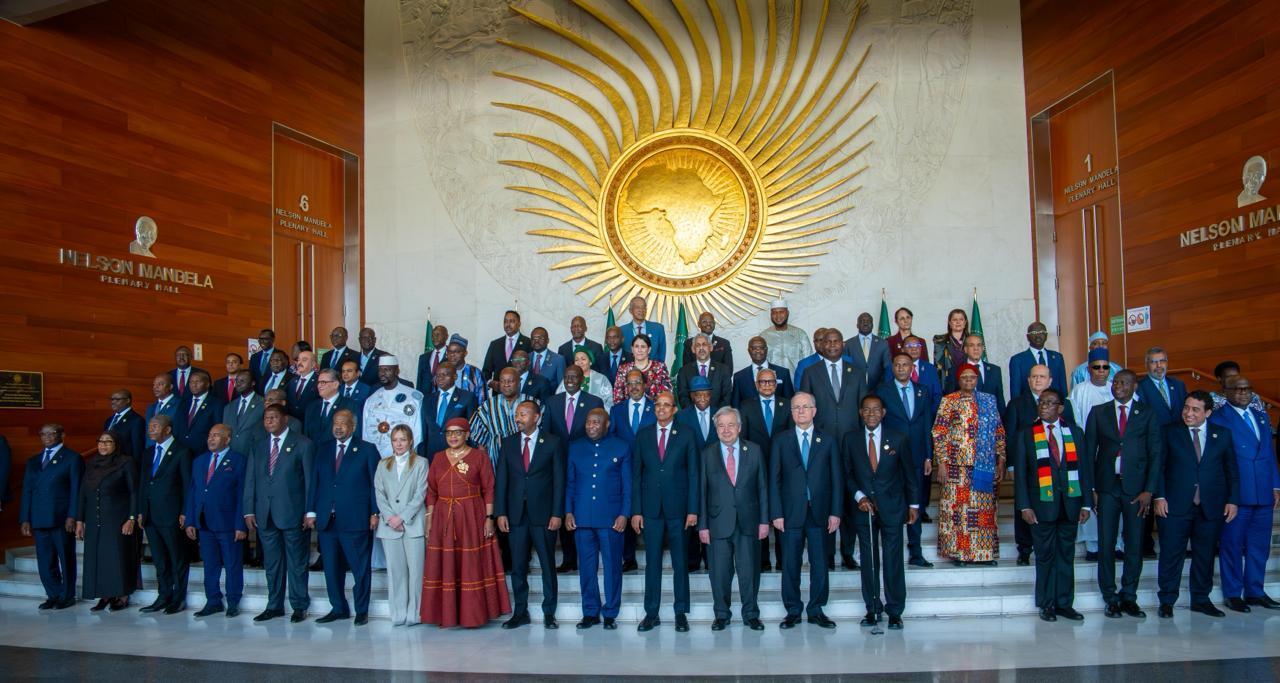
Africa-Press – Angola. The African Centre for Disease Control and Prevention’s (Africa CDC) subventions portfolio has grown from approximately 52 million US dollars in 2022 to 462 million US dollars in 2025, said Angolan President and Chairman of the Committee of Heads of State of the African Union, João Lourenço, on Saturday in Addis Ababa, Ethiopia.
The information comes from the Report of the 5th Ordinary Meeting of the Africa CDC, which was presented by President Lourenço following the 39th Summit of Heads of State and Government of the African Union.
He stated that budget execution had improved from 34 per cent to 95 percent, with ten financial audits carried out in 2025 yielding no outstanding findings, and that the number of employees had increased from 262 to 459, improving regional representation and gender balance.
Lourenço said that the institution had also reinforced accountability mechanisms by creating an Internal Oversight Office and designating risk champions throughout its structure, and he welcomed the remarkable institutional transformation of the Africa CDC over the past three years.
He considered that the Africa CDC is on track to become the first AU body to obtain ISO 9001 certification, reflecting its commitment to quality and transparency.
In terms of response to health emergencies, the Angolan statesman said that the virtual meeting held on February 9 this year constituted a milestone in consolidating continental cooperation in public health.
The Committee recognized a historic public health achievement: the lifting of the Mpox Public Health Security Emergency in 2025.
The Africa CDC’s coordination of technical, financial and vaccination support, the mobilization of the Incident Management Support Team, and national efforts led to this result, which also brought an end to the Ebola outbreaks in the Democratic Republic of Congo and the Marburg virus disease in Ethiopia.
According to the Angolan president, this development demonstrates Africa’s capacity to manage complex health emergencies when acting collectively.
Health Diplomacy
In the field of global health diplomacy, the Africa CDC has supported Member States in promoting unified African positions in key international negotiations, and has launched the Global Health Diplomacy Fellowship Program to train African negotiators and diplomats.
João Lourenço considered this effort essential to ensure that future global agreements on pandemics, access to medicines, and technology transfer reflect Africa’s priorities and rights.
In terms of health surveillance and intelligence, the capacity for genomic sequencing has expanded from seven African countries in 2022 to over fifty by 2025.
At least 25 Member States currently have fully operational National Institutes of Public Health, while another eleven are in the development phase.
In terms of funding, President João Lourenço highlighted the implementation of the Lusaka Agenda, which has mobilized over 40 billion US dollars for health security in Africa.
The African Fund for Epidemics has reduced the average response time from two months to two days despite having only 20 million dollars.
João Lourenço expressed concern about the heavy reliance of African health systems on external assistance, emphasizing the importance of strengthening the mobilization of internal resources, adopting innovative financing mechanisms and maintaining sustained political leadership.
Local Manufacturing and Digital Health
The report emphasized the importance of local manufacturing in the health security and sovereignty agenda.
Although Africa has approximately 574 pharmaceutical manufacturers and 25 vaccine manufacturers, it faces constraints related to intellectual property, limited technology transfer and fragmented procurement systems.
João Lourenço therefore called for measures to be adopted to expand local pharmaceutical and vaccine productions, increase procurement from African manufacturers, put into operation the African Joint Procurement Mechanism and mobilize institutions such as Afreximbank and the African Medicines Agency, in order to overcome limitations relating to intellectual property and funding.
In the field of digital health, the Africa CDC has set up a knowledge centre and prioritized positioning digital health and artificial intelligence as key components of the continental health security architecture.
To ensure high-level political leadership in these areas, the committee proposes the conference to endorse the nomination of two new African Union champions: Samia Suluhu, president of Tanzania, as AU champion for maternal and child health; and Abiy Ahmed, prime minister of Ethiopia, as AU champion for artificial intelligence and digital health.
João Lourenço stated that the report represents a call for the consolidation of Africa’s health sovereignty through sustained political commitment, domestic investment, and strategic solidarity.