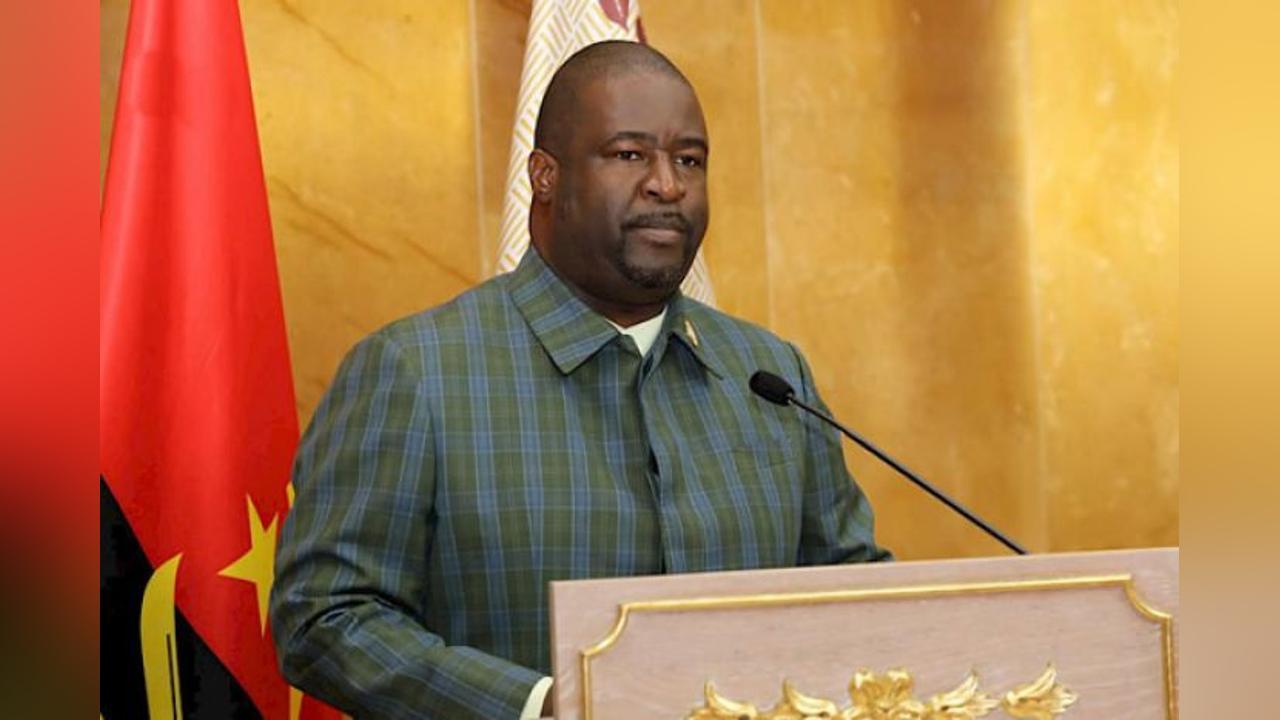
Africa-Press – Angola. The Minister of State and Head of the Civil Office of the President of the Republic, Dionisio Fonseca, advocated on Thursday in Accra, Ghana, for the creation of an international fund for reparative justice, supported by countries that benefited from slavery, under the auspices of the United Nations (UN).
Speaking at the High-Level Consultative Conference on the Next Steps of the Historic Resolution A/RES/80/250 of the United Nations General Assembly, the official explained that the fund would be used to finance programs for human development, education, health, and the reduction of structural inequalities in African and Afro-descendant communities.
The Minister of State, who was speaking on behalf of the President of the Republic, João Lourenço, defended the establishment of an international mechanism for remembrance of slavery and colonialism, with a mandate to systematize historical evidence, promote institutional recognition, and support national processes.
Dionisio Fonseca proposed the implementation of structured programs for the restitution and repatriation of African cultural heritage currently held in institutions outside the continent, based on the principles of cooperation and historical justice.
He stated that Angola advocates for the creation of a global platform for reparative justice, capable of articulating memory, restitution, institutional capacity building, and reform of international governance, as well as strengthening cooperation between the African Union and the Caribbean Community (CARICOM) and the mobilizing role of the United Nations.
“We advocate for the progressive restitution of African heritage unduly removed from the continent and that this agenda also contributes to correcting historical imbalances in the international architecture, reinforcing Africa’s voice in global decision-making centers,” he reiterated.
The official emphasized the need for the implementation of global reparative education initiatives, including the mandatory integration of the history of slavery and its consequences into school and university curricula, as well as support for academic and scientific production in this field.
He spoke of the need to develop international economic, technical, and technological capacity-building programs for affected countries and communities, with a special focus on youth, women, innovation, and entrepreneurship.
The minister reaffirmed the need for reform of the United Nations Security Council, with the integration of African countries as permanent members, stressing that this agenda has profound historical significance for Angola, given that the country was at the center of one of the most devastating mechanisms of the transatlantic slave trade.
He recalled that, for centuries, Luanda and Benguela were among the main ports of embarkation for human beings forcibly taken from their lands and sent to the Americas.
“Historical studies indicate that Angola was one of the largest regions of origin for trafficked people in the Atlantic space, with Luanda and Benguela occupying a central place in this system of violence, dehumanization, and indecent profit,” he emphasized.
The official explained that, for the Angolan people, this issue represents an imperative of national memory, historical identity, and moral responsibility towards ancestors and future generations.
“In evoking Luanda and Benguela, we are not only evoking geographical locations. We are evoking ports of forced departure, broken families, mutilated communities, and lives reduced to merchandise. We are also evoking the resistance of Africans and Afro-descendants who, despite everything, preserved their culture, spirituality, memory, and humanity. It is a memory that compels us to transform historical truth into political action,” he said.
He defended the creation of monitoring mechanisms, clearly defined priorities, and instruments of cooperation between African states and those of other continents, regional organizations, the United Nations system, academia, and civil society, based on a credible, inclusive, and results-oriented process.
The minister said that he expects that the Accra meeting strengthens African and global unity, deepening cooperation with the diaspora, and consolidating a common, firm, and respected voice on the international stage.
“May we honor the memory of those who suffered, not only with words, but with consequential decisions. And may our generation assume, with courage and clarity, the historical responsibility of building a more just, balanced, and humane future,” he concluded.
For More News And Analysis About Angola Follow Africa-Press