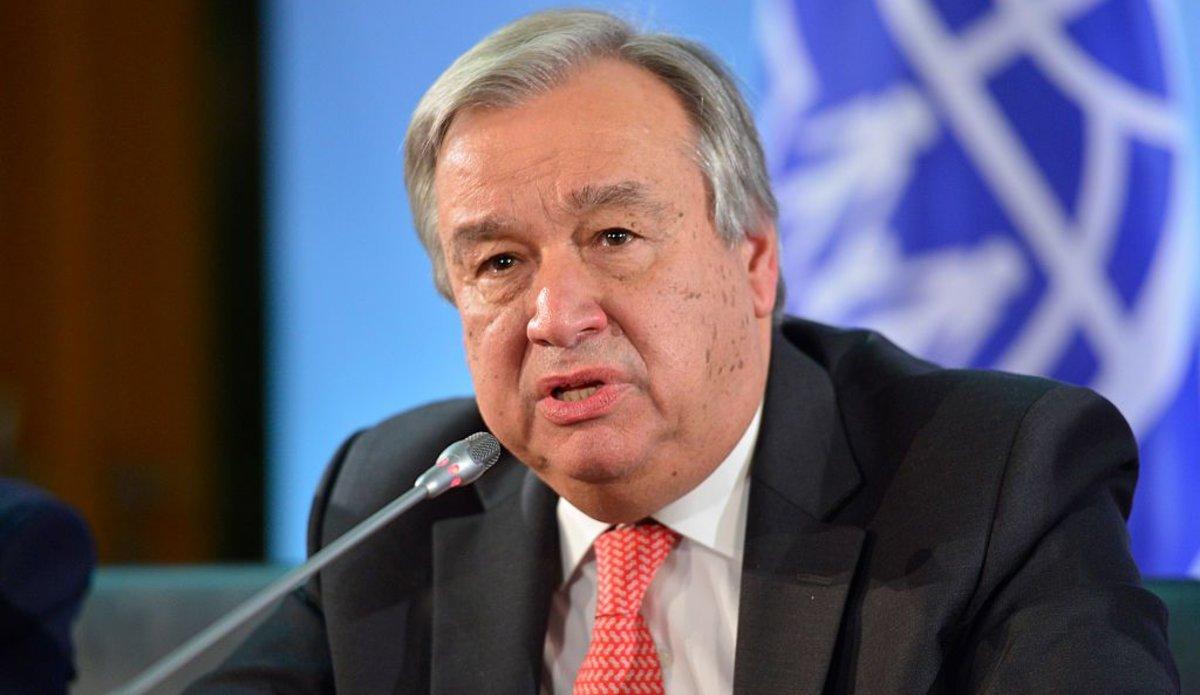
Africa-Press – Botswana. The Secretary-General of the United Nations, António Guterres, showed this Saturday that he was disappointed with the failure of the conference to review the Nuclear Non-Proliferation Treaty (NPT), which ended on Friday without an agreement, pointing out that the lack of consensus threatens collective security.
“While the Secretary-General welcomes the sincere and significant commitment of the parties to the NPT and the conference’s recognition of the treaty as the ‘cornerstone’ of the global disarmament and non-proliferation regime, he regrets that it has failed to face the pressing challenges ahead, which threaten our collective security”, said Guterres’ spokesman in a statement, quoted by Lusa.
The UN Secretary-General also stressed that the current international context and “the increasing risk of the use of nuclear weapons by accident or miscalculation requires urgent and decisive action”.
“A world free of nuclear weapons remains the top disarmament priority of the United Nations and an objective to which the Secretary-General remains firmly committed,” added the spokesperson.
At the end of almost a month of discussions, and after several hours of protracted debate in search of a consensus, the conference ended on Friday without the adoption of the final document due to Russian objections.
Russia blocked the agreement at the 10th treaty review conference, especially on issues related to the offensive in Ukraine and the occupation of the Zaporijia nuclear power plant.
The Moscow delegation was the only one to take the floor at the final session to oppose the latest project presented by the conference president, Argentine Gustavo Zlauvinen, and which the remaining 191 NPT signatories were willing to accept.
Russia claimed that out of the entire lengthy document, it only had problems with five paragraphs because it considered “to be politicized”.
Although the Russian delegation did not indicate which, diplomatic sources said that the differences, which emerged in recent hours, centered on references to the situation at the Ukrainian nuclear power plant in Zaporijia and the need for control to be returned to the competent authorities.
This plant, the largest in Europe, has been in the possession of Russian troops since the beginning of the offensive and in recent days has been the target of repeated attacks, of which Moscow and Kiev mutually accuse each other, which have raised alarms about a possible disaster.
The broad final declaration negotiated at the conclusion of the conference reviewed the implementation of the NPT and set priorities for the future, at a time when the UN has warned that the risk of nuclear conflict is at its highest point in decades.
Although the conflict in Ukraine made this meeting particularly complicated, it is not the first time that the periodic review of the NPT has ended without consensus, as happened in the last edition, held seven years ago.
For More News And Analysis About Botswana Follow Africa-Press