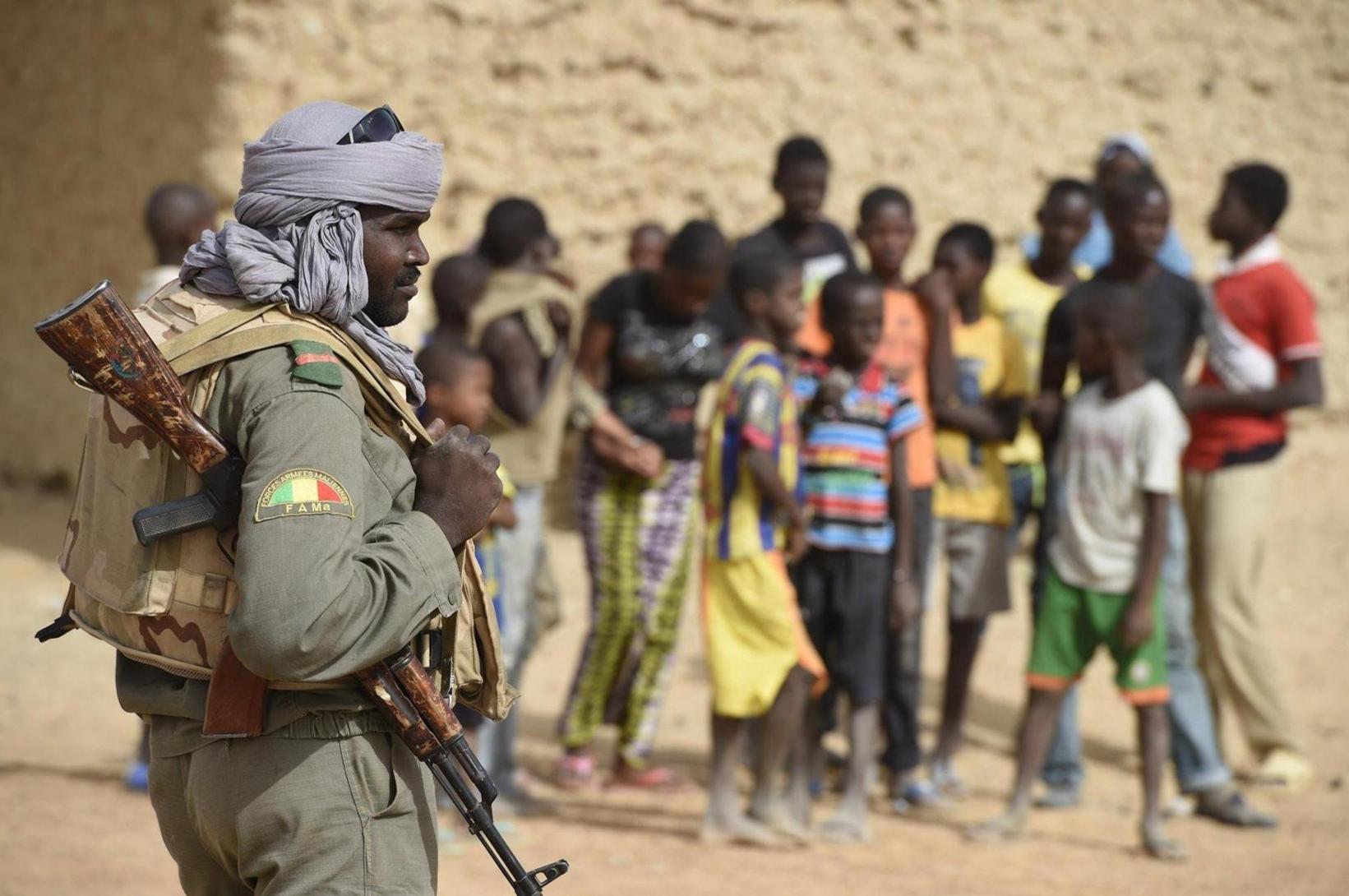
Africa-Press – Botswana. The violent extremism that plagues the Sahel region increasingly threatens the coastal countries of West Africa, which must learn from the mistakes of their neighbors and avoid an exclusively military response, argue experts.
What began a decade ago as a concern in northern Mali has spread to other Sahel countries such as Niger and Burkina Faso, and now extends to the north of several coastal West African countries.
In Côte d’Ivoire, Ghana, Togo and Benin, violent extremism “is at the door and is no longer just a threat”, Sampson Kwar-kye, a researcher at the Office of the Institute for Security Studies (ISS) for the West Africa, Sahel and Lake Chad Basin.
Côte d’Ivoire has suffered 17 attacks linked to groups affiliated with al-Qaeda since 2020, Benin has already been the target of 21 attacks this year, two of which are claimed by the group Jamanta Nusrat al-Islam wal-Muslimeen (JNIM), affiliated with the Al-Qaeda, and Togo lost eight soldiers in an attack claimed by the same group.
Ghana, the only one of the four coastal countries that has not yet suffered any attacks, has seen young people being recruited into extremist groups and authorities say they have already prevented attacks.
“The situation has become very worrying and is getting worse day by day,” warned Kwarkye.
After almost a decade of aggressive counter-terrorism efforts by national, regional and international forces, the presence of these extremist groups has not only remained but has expanded, which reveals the insufficiency of the military approach to put an end to the problem, defend researchers from the ISS, an institute based in South Africa.
According to the ISS researchers, the response of the Governments of all these coastal countries to the threat of extremism has been to strengthen security and increase the military presence at the borders, a strategy that “will be ineffective, as it was in the Sahel, because it reflects a bad framework of what is happening on the ground”.
The ISS says that the expansion of the extremists to the south of the Sahel is not comparable to an army that physically marches in formation and can be stopped with military force.
“Instead, they spread ideas and exploit people’s resentments to change local loyalties and behaviors. Extremist groups do not tend to dominate and govern areas, they try to control people and incite violence to destabilize governments,” the researchers write.
For ISS researcher Jeannine Ella Abatan, who coordinates a project on women and violent extremism in Mali and Niger, “the military response is important, especially if it prioritizes the protection of civilians”, but other solutions are needed, because the military response is insufficient to address the root causes of violent extremism.
Kwarkye goes further and even believes that the military missions, specifically the French Barkhane, who this month left Mali after nine years, but also national missions or the G5 Sahel, contributed to the spread of extremism.
These operations “put considerable pressure on extremist groups in the region, especially in the Sahel, and forced them to look for new operational bases,” he explained.
Furthermore, these operations “were not based on a correct understanding of the operational context” and ended up indiscriminately targeting both extremists and innocent civilians, fueling communities’ resentment against the authorities, Kwarkye warned.
Abatan recalls that among the root causes of extremism are precisely these resentments and frustrations, which extremists capitalize on, especially when communities feel abandoned by the state and deprived of access to essential services such as health and education.
“To win this battle, coastal states must have the community on their side. (…) And the only way for communities to side with the state is if they see it as being useful to them”, which has not what happened in the case of border populations in coastal states”, warned Abatan.
The State must “show its presence in the lives of local communities, especially in regions that have already registered attacks and that are seen as at risk”, he added.
As Policy Center researchers insist in their article, “the movement of people across borders is not the main problem.”
“As extremist groups attempt to catalyze conflict in West Africa, states must support civilians to resist these groups’ narratives and pressures. Communities and individuals under pressure are vulnerable, not because they are close to borders, but because of pre-existing internal dynamics”, they add.
All the researchers emphasize that coastal states, which are in the process of designing strategies to contain and combat terrorism, must learn from the mistakes of their Sahel neighbors, which contributed to the expansion of the threat.
In Kwarkye’s words, Governments “have to ensure that whatever strategy they choose, it has to be community-centred, it has to take into account the needs of the people, especially in remote and border areas.”
“If this is done, I think a lot of progress can be made,” he said.
For More News And Analysis About Botswana Follow Africa-Press