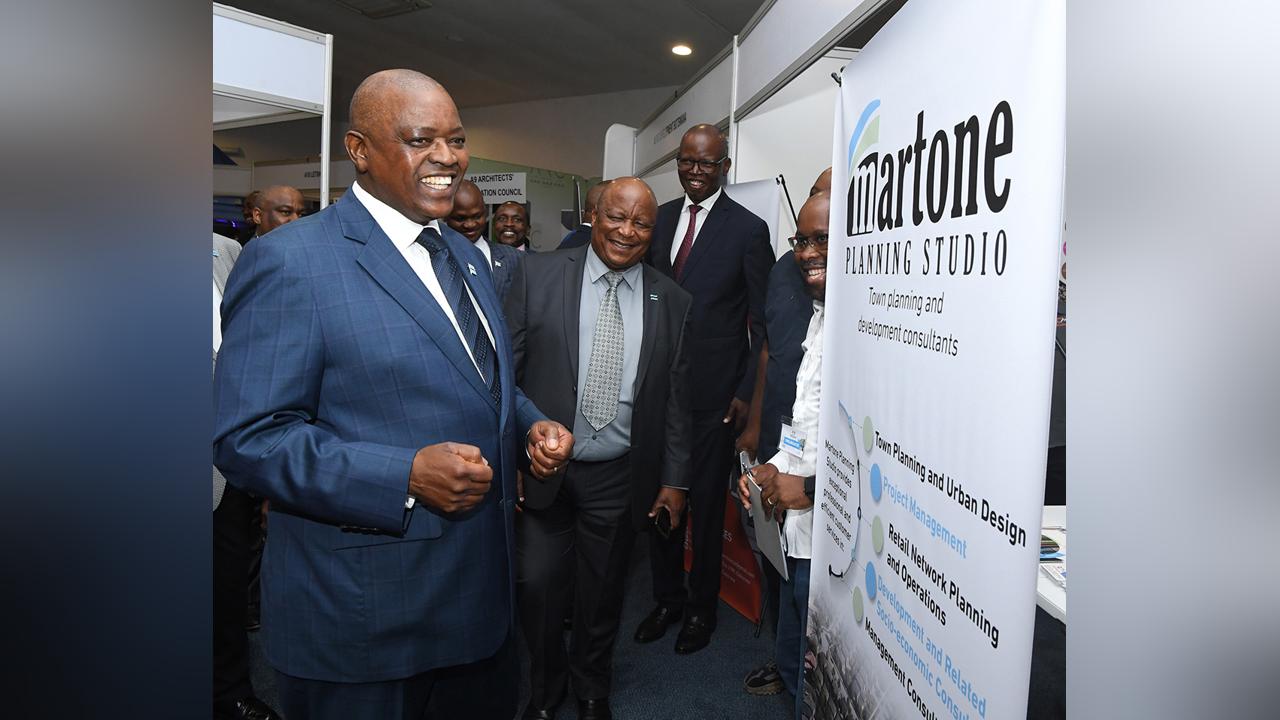
Africa-Press – Botswana. Not having an affordable decent home is an aspect of economic exclusion which will negatively affect other aspects of a person’s life, President Dr Mokgweetsi Masisi told a housing pitso in Gaborone wednseday.
He said access to adequate housing was integral to an inclusive society and sustainable human settlements that Botswana aspired to achieve by 2036 as espoused in the national vision.
“As a nation, we envision shared prosperity and an end to poverty in all its forms, including lack of housing,” said the President.
Talking about the benefits of quality housing, President Masisi said it improved educational achievements because children would have a secure place for studying and also had the potential to reduce delinquency as it enabled minors to spend quality time at home.
“Quality housing also improves healthy living and prevents or mitigates the risks of the spread of communicable diseases,” said President Masisi.
From a human rights perspective, he said, access to affordable, quality housing conferred human dignity on people, especially when they owned the property.
Dr Masisi said housing played a key and pertinent role in the achievement of the UN Sustainable Development Goals adding that shelter was also one of the organisation’s New Urban Agenda key commitments.
“Therefore, if we can get the planning, delivery and sustainable management of housing right, including the comprehensive care and maintenance programmes, we will invariably address related goals like zero poverty, good health, quality education, gender equality, clean water and sanitation, affordable energy and reduced inequalities,” he said.
The President said the pitso’s theme; “Affordable Sustainable Housing for All: A Collaborative Approach with the Private Sector”, came at an opportune time when government was exploring ways of encouraging and leveraging on private sector participation in the economy.
Saying private sector capacity should be leveraged to address the country’s housing needs, Dr Masisi explained that without the business community, the goal of providing adequate housing to Batswana could not be achieved.
Government, he said, had the responsibility of ensuring that a favourable environment for housing development existed.
President Masisi said the development of housing estates countrywide attested to the important role the business community played in the sector.
“It is therefore, befitting that this housing pitso be held in collaboration with the private sector,” he said.
Dr Masisi also recognised the role played by other actors in housing development.
“Civil society organisations, development agencies and partners play a key role in housing delivery through various lobbying efforts, donations and technical support,” said the President.
He said the pitso was aimed at reflecting on the housing situation in Botswana as well as discussing ways of addressing emerging issues and challenges in the housing sector.
The intention was to set the tone for the delivery of housing in alignment with the Reset Agenda as well as the Economic Recovery Transformation Plan, Dr Masisi said.
The President said the pitso was in keeping with the national drive for mindset change as Botswana sought new and smarter ways of implementing high impact projects.
He said such projects were appropriately targeted for economic inclusion of citizens.
“Accordingly, the purpose of this pitso is to find ways to utilise capacity in the private sector to provide solutions to housing shortage,” he said.
He said government’s desire was for an economic environment where there was ease of buying a house for the working class.
Dr Masisi stressed the need to promote investment in housing as it was an asset whose value appreciated over time.
He urged financial and commercial sectors to come up with systems, products and services that promoted affordable home ownership as a basic human need.
For More News And Analysis About Botswana Follow Africa-Press