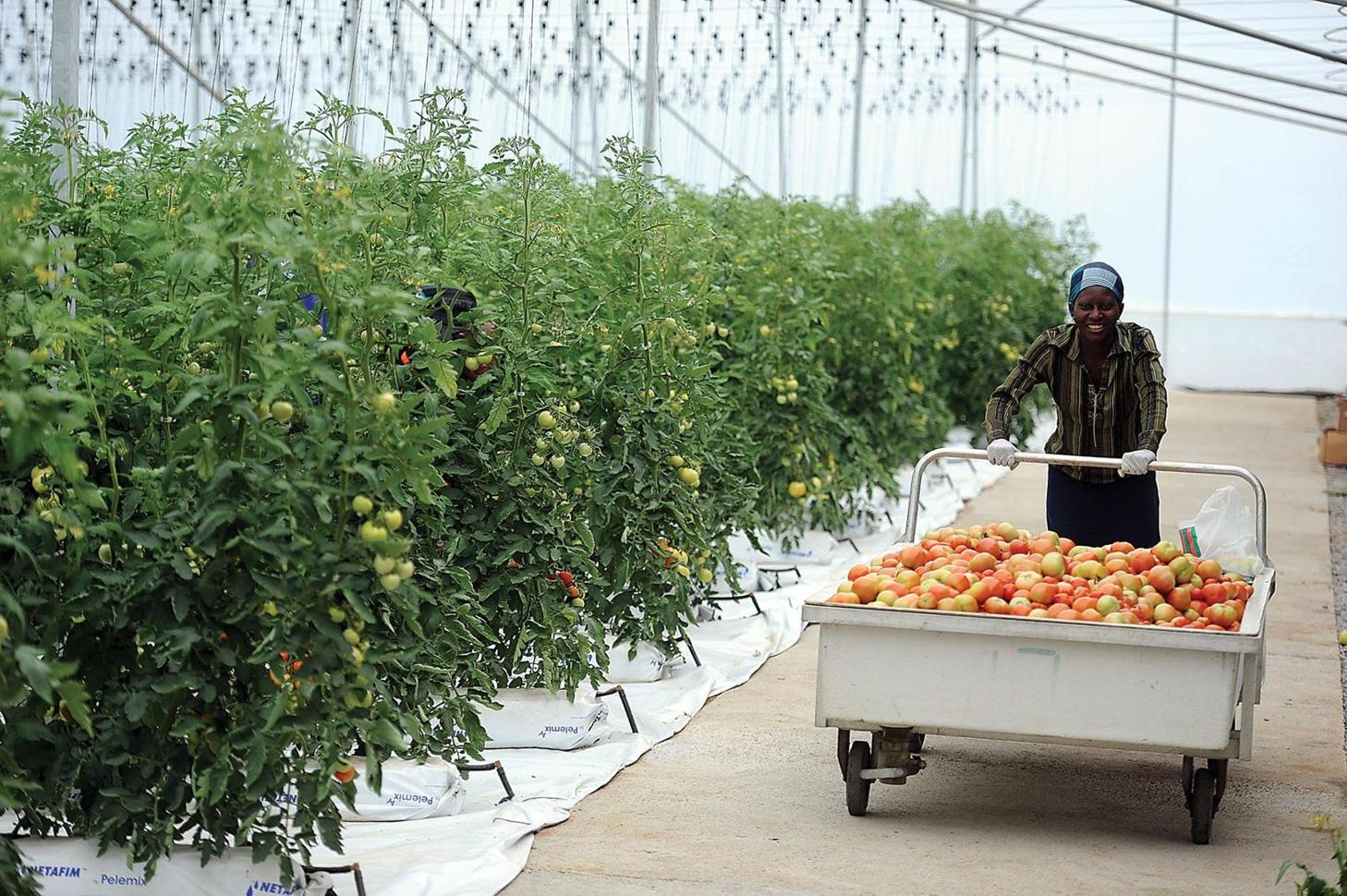
Africa-Press – Botswana. Horticultural farmers are understandably happy about the killing they have made on the back of a 13-month old import ban that the Ministry of Agriculture has imposed on 16 types of vegetables.
Thousands of kilometres away in Abidjan however, some unsettling questions are being asked about the safety of produce from these farmers.
Abidjan, the capital city of Ivory Coast, is where the African Development Bank is headquartered and over the past several months, the Bank has been studying Botswana’s food and agriculture delivery systems.
It has now summarised its findings in a report that it published last week.
While noting that “local production appears to be experiencing encouraging growth, assisted by a ban on the import of the biggest selling varieties from neighbouring South Africa”, the Bank also notes that Botswana’s horticultural sector is still dominated by small, often unprofitable farmers who lack the resources to invest in modern farming technologies.
“Many farmers are well educated and could readily improve production with training and support.
However, most have received no formal training and often fail to implement cropping plans, which reduces productivity and exacerbates issues of seasonality and poor produce quality.
They are also unlikely to be acquainted with the farming methods and technical and business skills associated with commercial horticultural production.
Many also lack the knowledge and experience to deal effectively with pests and diseases, which can result in the misuse of inputs, including the over-application of some chemical products that can leave unacceptable residue levels on produce and negatively affect soil health and water quality,” the Bank says.
Through WHO and FAO, the United Nations has developed the Code of Hygienic Practice for Fresh Fruits and Vegetables that addresses agricultural hygienic practices “that help control microbial, chemical and physical hazards associated with all stages of the production of fresh fruits and vegetables, from primary production to consumption.
” In Botswana, this task falls to the Food Control Division under of the Ministry of Health.
The Division is mandated to set standards for food processing, manufacturing, and promotion and for investigating and assessing risks, inspecting all food items made available to the public, and monitoring compliance with set standards.
In a particularly unsettling passage in its report, the Bank states the following: “Horticulture-related activities are limited to pesticide residue controls that are carried out on selected imports but rarely on domestic produce.
There are concerns around the levels of toxic metals affecting urban and peri-urban agriculture in Botswana due to high use of agrochemicals and of urban wastewater for irrigation.
” The report adds that while there are policies on the use of sewage effluent and agrochemicals, “they are not well enforced.
” On the basis of the latter, the Bank concludes that “[t]here is a lack of rigour in food safety standards for horticultural produce for the domestic market, whereas these are essential for the sector’s reputation and sustainable development.”
For More News And Analysis About Botswana Follow Africa-Press