Africa-Press – Botswana. Ethnic groups should pride themselves in speaking their native or indigenous languages and impart them to the next generation as well as document them for posterity.
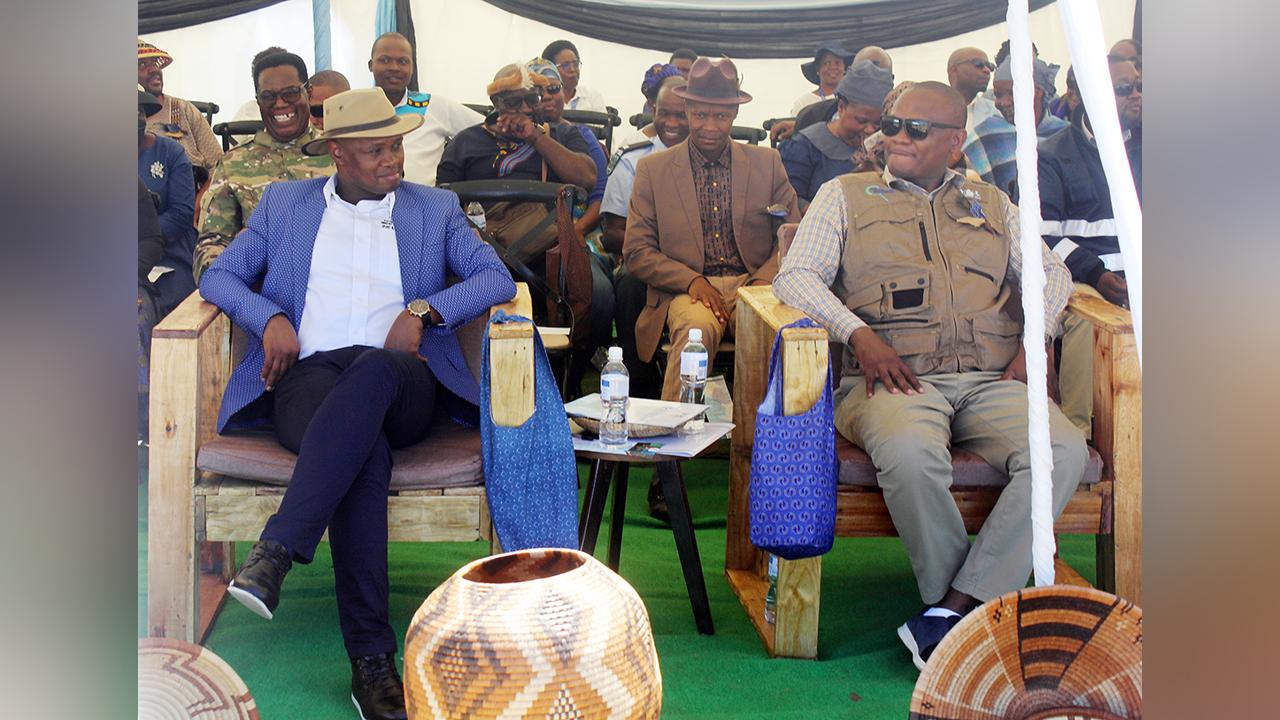
“It is evident that language indeed is a glue that holds society together and it starts from the moment a person is born throughout one’s lifespan. To a great extent language and culture are intertwined hence the observation that language mirrors the culture of a society,” says Minister of Youth, Gender, Sport and Culture, Mr Tumiso Rakgare.
He was speaking on the occasion of National Languages Day commemoration in Mmathethe on Saturday.
Language, Mr Rakgare said, played an integral part in education and learning, value systems, transmission of living heritage and all other forms of communication critical in sustainable human relations, associations and socio-economic activities.
“Language is also key in all forms of human survival such as legal matters, interpreting policies, trade, human rights, among others,” he said.
Mr Rakgare as a way of reinforcing the language drive for social inclusion of all, the ministry recently signed a Memorandum of Understanding with the University of Botswana (UB) with the view to opening opportunities for research in local languages.
Previous language research collaborations between UB, the ministry and community organisations led to a number of ethnic groups developing their standard orthographies and learning materials as means of transmission and safeguarding languages in the country, he said.
That, he said, was a step in the right direction in building a nation.
He pointed out that Botswana was a signatory to the 2003 convention on the safeguarding of the Intangible Cultural Heritage, an instrument that acknowledged the use of local languages as critical in transmitting and enacting intangible cultural heritage elements.
Minister Rakgare said Vision 2036 acknowledged that culture represented unique, dynamic and irreplaceable body of values, traditions and languages.
He said government had put in place a National Policy on Culture, which presented language as a mirror of society’s culture and acted as a symbol of national unity and identity.
“The policy stipulates that valuable heritage must be preserved and developed in order to foster a sense of national identity, pride and unity,” he said.
Turning to the Revised National Policy on Education, he said it recognised that early stage learning capabilities required cultural context as a base for knowledge building in which an indigenous language was an important component.
The minister said the planned introduction of indigenous languages at pre-school and early primary levels had a double advantage as it would enhance interaction between learners and teachers as well as the quality of education.
Minister Rakgare said it was necessary to reformulate cultural values and valuing processes in order to better understand the Setswana culture and its meaning in material objects.
“To this end, dress as one of the valuable material culture objects is essential for signifying and expressing subtle cultural value and social relationships,” he said.
For his part, Mmathethe/Molapowabojang MP, Dr Edwin Dikoloti thanked Minister Rakgare said the greatest wisdom was to love and respect languages.
He concurred with other speakers that languages needed to be preserved so that they would not lose value and gist.
“It is imperative to go back to the crossroads so as to intensify use of local languages,” he said.
For More News And Analysis About Botswana Follow Africa-Press