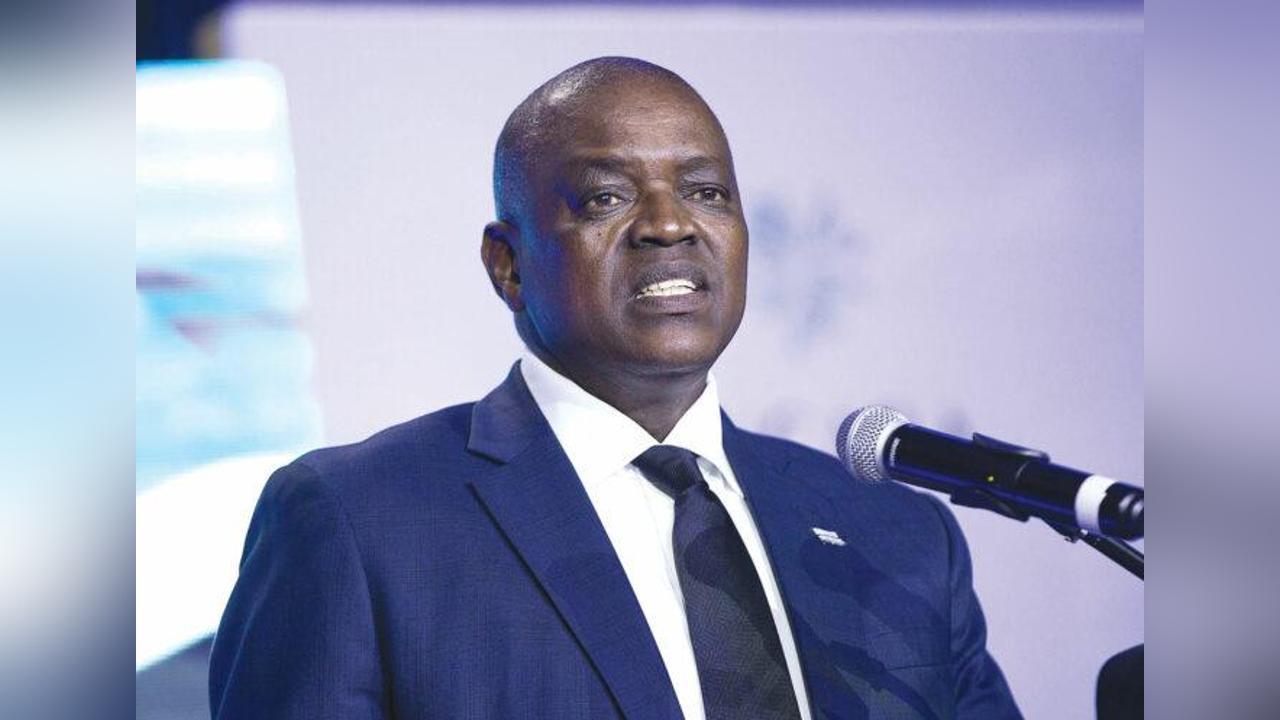
Africa-Press – Botswana. President Dr Mokgweetsi Masisi join the Botswana Defence Force (BDF) members and multitudes of Batswana as the men and women in uniform reflect on the rich history of their existence in a colourful military parade at the National Stadium today (Saturday).
President Masisi will be part of the main event as Commander-in-Chief of the armed forces.
In an interview, BDF protocol and public affairs director, Colonel Magosi Moshagane said the BDF Day celebrations were suspended in the past two years owing to COVID-19 containment measures.
Expecting a bumper crowd following a two year hiatus, Col. Moshagane said the celebrations would be live on Botswana television and Radio Botswana and thus urged Batswana to consider watching from home.
A much fancied event locally, the BDF used the commemoration to showcase its military might and state of the art hardware and technology in its quest to defend territorial integrity and borders of Botswana.
Through numerous displays like mock battles, dog displays and obstacles, BDF had demonstrated that they were not spared from ravages of illicit regimes in some war torn nations.
Other entertaining events lined up for today include the civilian participation drill, assault course, BDF Day presentation and horse display. The crowd will be kept alive by the ceremonial band that usually boosted the troop’s morale during their military engagements.
In its 46 years of existence, the BDF had effectively restored law and order where internal security and peace were threatened, the latest being the deployment of troops to a joint international military operation, the Southern African Mission in Mozambique (SAMIM), a SADC military operation in Mozambique to bring peace and stability in the region.
In December 1992, Lieutenant Colonel Thulaganyo Masisi led the first ever external mission of the BDF when his contingent of 300 soldiers flew into Somalia to be part of the UN peacekeeping and humanitarian mission. Codenamed Operation Restore Hope, the UN military outfit included forces from the US and Britain amongst others.
From 1993 to 1994, a team of BDF officers participated in a UN peacekeeping mission in Rwanda as observers. In the same period, BDF took part in a peacekeeping mission in Mozambique as well as in the SADC military intervention in Lesotho in 1998.
The last decade (2007-2017), had seen BDF establish a defence command and staff college, adopt a brigade grouping structure, enroll female non-commissioned officers and introduce special entrant officer cadet programme.
In 2007, women officers were inducted into the BDF rank and file while 2015 saw the inclusion of the first ever women recruit privates. In 2012, BDF established the defence command and staff college which provided professional military and academic education, training and development.
At the time of its formation, the BDF prevailed over challenges in the midst of apartheid regimes in the sub Saharan region in the 1980s. The indigenous people were involved in liberations struggles against colonisers in neighbouring countries.
At the centre of such countries was Botswana, a landlocked country which had just gained independence from Britain in 1966 when there was relative peace in Botswana but the liberation struggles were much felt here.
Down south, a bitter struggle against the oppressive apartheid regime was raging in South Africa while on the eastern and northern borders Zimbabwe (South Rhodesia) and Zambia (North Rhodesia) were involved in decolonisation struggles of their own.
To the west, Namibia under the rule of South Africa’s apartheid regime, was also fighting their own liberation struggle.
All the upheavals posed a real security threat to Botswana which at the time did not have a military force but only dependent on a small paramilitary Police Mobile Unit (PMU).
Some 11 years after independence, the BDF was formed from the PMU and had the late Lt Gen Mompati Merafhe as its first commander.
The immediate past, President Lt Gen Dr Seretse Khama Ian Khama, then a 24-year-old Brigadier in the army ranks, became its deputy commander.
Perhaps the most fatal incident in the history of the organisation was the infamous Lesoma ambush.
In February 27, 1978 about 15 members of a year old inexperienced BDF met their demise during an ambush by the then Rhodesian Armed Forces at the Lesoma Sand Ridge.
The brave soldiers’ ultimate sacrifice happened in the midst of the regional turmoil of the Zimbabwean Chimurenga war.
The Lesoma incident is still recalled and commemorated at the annual National Heroes Day.
For More News And Analysis About Botswana Follow Africa-Press