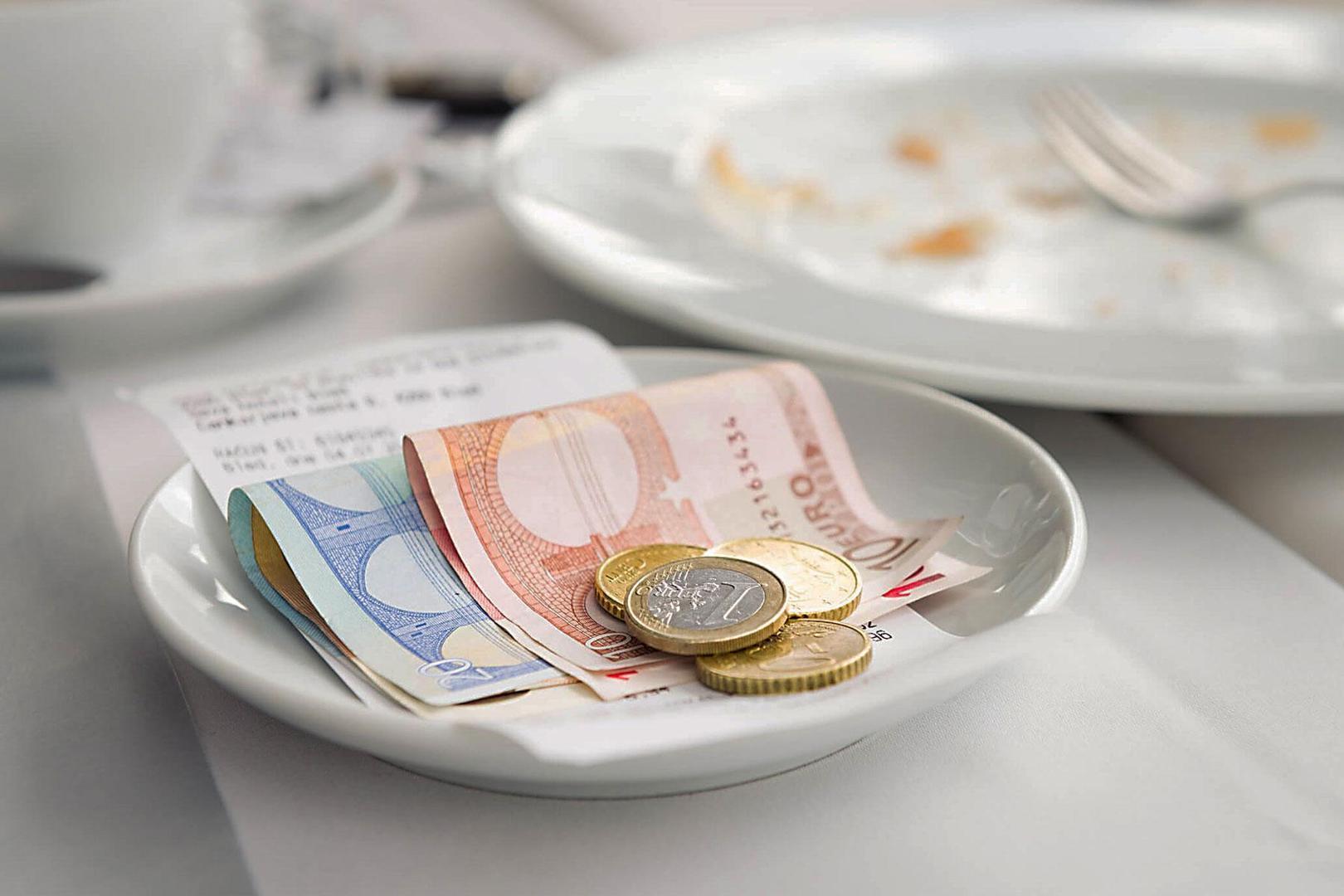
Africa-Press – Botswana. Received wisdom is that the reason for giving a tip is to show appreciation for excellent customer service. However, the real wisdom may lie in knowing that if that reason is genuine, health professionals, who save lives, would bag the most generous tips. The real intent of tipping, which has attracted a substantial amount of serious scholarly attention, can be discerned in its history.
Time magazine explained this history in an article titled: “‘It’s the Legacy of Slavery’: Here’s the Troubling History Behind Tipping Practices in the U.S.” In its current form, tipping is said to have evolved from a tradition that wealthy Americans in the 1850s and 1860s discovered on vacations in Europe. This was during the slave era.
In medieval times, a servant would receive extra money for having performed superbly well and “wanting to seem aristocratic, these individuals began tipping in the United States upon their return.” When the constitution was amended after the Civil War, black people, who had been recently freed from bondage, were limited in their job choices. Most ended up working as servants, waiters, barbers and railroad porters. “For restaurant workers and railroad porters, there was a catch: many employers would not actually pay these workers, under the condition that guests would offer a small tip instead,” says the Time article, adding that “restaurateurs soon realized that they stood to benefit from the opportunity to subsidize a worker’s pay with guests’ extra money.”
The latter point is aptly summarised by Saru Jayaraman, co-founder and president of Restaurant Opportunities Centers United: “It’s the legacy of slavery that turned the tip in the United States from a bonus or extra on top of a wage to a wage itself.” This explains why restaurants are able to take on (not employ) whole platoons of waiters. They don’t have to pay them, customers are expected to.
This was the business model that high-end restaurants in Botswana have adopted. The mostly young people who work as waiters at these restaurants, which are either part of hotels or stand-alone entities, depend not on their meagre salaries (and that is where they are paid salaries) but on tips to make ends meet. They actually say so themselves and obviously thinking of a tip as a right, some can be quite aggressive in how they get it. Decades of children’s rights organisations telling children everything about their rights and nothing about their responsibilities have produced the type of waiter who sees no relationship between tipping (a supposed right) and good customer service (a responsibility).
In today’s Botswana, tipping has become par for the course at high-end restaurants and waiters typically blacklist non- or bad tippers. In extension of the racism in the history of this practice, “blacklist” can actually take on a literal meaning. In explication of the latter point, press has published an article about how waiting staff at some old Gaborone hotels practise a perverse sort of racism through which they punish not just bad tippers but the race they come from.
There is folksy Setswana (“moeng-o-etetse-mang?” which literally means “Visitor, whom are you here for?”) that describes a situation when someone who is supposed to be a host snubs a visitor. A bad many waiters at some hotels are rigorous enforcers of an unofficial “moeng-o-etetse-mang?” policy which, ironically, is directed at black patrons. This is based on belief that black customers either don’t tip or don’t tip well.
Oddly, black Americans, who as westerners working in Botswana, are very well-resourced, are also victims of the “moeng-o-etetse-mang?” policy. Earlier this year, the writer observed a waitress prioritise a white customer over a black woman who turned out to be American at a high-end restaurant at the Gaborone CBD. The woman complained to the manager and was assertive enough to vociferously point out the racial aspect of the customer service. However, black Americans are exempted from the “moeng-o-etetse-mang?” policy when waiters know that they are westerners.
Of late, tipping is evolving into naked extortion. In addition to tip-getting antics that most waiters engage in, some restaurants now require customers to tip at least 10 percent of a post-tax bill. Officially, customers are not forced to tip – just put under pressure to do so and made to feel cheap if they don’t want to. There is also tip that is tricked out of customers in the form of a charity donation. Where the tip subsidises the wage bill, the charity donation funds the CSI programme of these restaurants. Resultantly, these restaurants – and not the actual donors, get credit for this generosity.
Tipping is laden with layers of irony and the thread that run through all is that it disadvantages the same people it is supposed to benefit.
Firstly, it doesn’t incentivise waiters to offer good service and practically all expect to be tipped even when they know that they have provided sub-standard service. Secondly, one too many male-customer-to-female-waitress tips come with strings attached. A manager at a Gaborone restaurant says that he insists that his waitresses should “look nice” – which in one respect takes the form of the latter wearing tight-fitting clothes. When a waitress looks nice and gets an overly generous tip from male customers, that tip has strings attached to it and in some cases, that can lead to the waitress compromising her moral integrity over and over again. Thirdly, tipped remuneration supplants salaried remuneration and doesn’t afford one the benefits that workers should enjoy in the workplace. While a salaried worker qualifies to apply for a bank loan and buy goods on hire purchase terms, a tipped one doesn’t even if s/he gets much more than the former.
Part of the problem is that a very important player is missing in action – the government. In the US, tipping is regulated but that is not the case in Botswana.
For More News And Analysis About Botswana Follow Africa-Press