Africa-Press – Botswana. A potentially high risk of contamination has spurred UNESCO members to recommend setting aside even more of the Okavango Delta, the world’s largest wetlands, for conservation.
The Okavango Delta took center stage at UNESCO’s World Heritage Committee annual meeting in Riyadh, Saudi Arabia, in September, with the committee expressing its “utmost” concern for the potential risk of oil and gas exploration to this protected wetland.
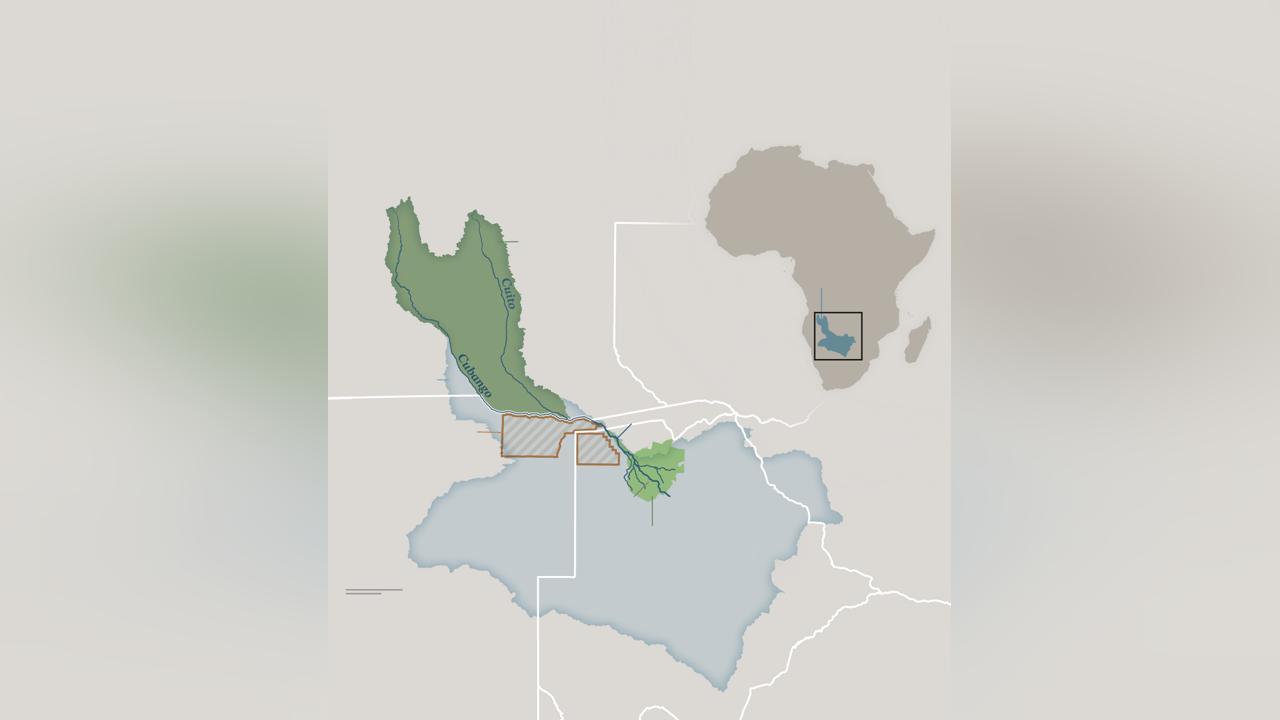
The Okavango Delta, a UNESCO World Heritage Site, is home to the largest group of endangered African savanna elephants on the continent, as well as endangered African wild dogs, cheetah, and threatened birds such as the slaty egret. The ecosystem is part of the broader Okavango watershed that supports hundreds of thousands of people across Angola, Namibia, and Botswana.
Canadian company Reconnaissance Energy Africa (ReconAfrica)’s exploration for oil and gas in the region “may pose significant risks to the interconnected water system and the ecosystem,” the committee said. The company currently has rights to prospect for oil across 13,200 square miles of the watershed and has so far drilled three wells in Namibia. As of June 2023, its drilling operations have been paused in Namibia.
New research supports this concern. An October 2023 study in the journal Physics and Chemistry of the Earth suggests the risk of pollution to the Okavango Delta and its watershed from ReconAfrica’s drilling could be high. Though it could take between three and nearly 24 years for contaminated groundwater from oil lease areas to reach the delta, in a worst-case scenario, it could be as little as four days.
The study authors recommend prohibiting oil exploration and production “until future studies can determine the impacts of hydrocarbon extraction with greater certainty.”
The Okavango Delta took center stage at UNESCO’s World Heritage Committee annual meeting in Riyadh, Saudi Arabia, in September, with the committee expressing its “utmost” concern for the potential risk of oil and gas exploration to this protected wetland.
The Okavango Delta, a UNESCO World Heritage Site, is home to the largest group of endangered African savanna elephants on the continent, as well as endangered African wild dogs, cheetah, and threatened birds such as the slaty egret. The ecosystem is part of the broader Okavango watershed that supports hundreds of thousands of people across Angola, Namibia, and Botswana.
Canadian company Reconnaissance Energy Africa (ReconAfrica)’s exploration for oil and gas in the region “may pose significant risks to the interconnected water system and the ecosystem,” the committee said. The company currently has rights to prospect for oil across 13,200 square miles of the watershed and has so far drilled three wells in Namibia. As of June 2023, its drilling operations have been paused in Namibia.
New research supports this concern. An October 2023 study in the journal Physics and Chemistry of the Earth suggests the risk of pollution to the Okavango Delta and its watershed from ReconAfrica’s drilling could be high. Though it could take between three and nearly 24 years for contaminated groundwater from oil lease areas to reach the delta, in a worst-case scenario, it could be as little as four days.
The study authors recommend prohibiting oil exploration and production “until future studies can determine the impacts of hydrocarbon extraction with greater certainty.”
Protecting this watershed is becoming even more important in the face of climate change, as this region has faced persistent and severe drought that will likely worsen in coming years.
The committee also adopted a resolution that the Okavango ecosystem needs more protection, noting that there were donors ready to fund the necessary studies to support the expansion of the site.
A shared resource
For more than 50 years, the UNESCO World Heritage Convention has given individual countries the legal backing to help enforce conservation of more than a thousand natural and cultural resources worldwide.
To formalize the expansion of the Okavango World Heritage Site, the member countries must complete a formal application process, and then the 21-nation committee must vote on that application at the annual meeting, which will occur in 2024. (Also read: “Is World Heritage status enough to save endangered sites?”)
It is now up to the three countries, along with UNESCO and other partners, to hammer out a plan they can all agree upon to extend the site, present it to the committee, and have it legally adopted.
Joseph “Jay” Haikera, a farmer and tour guide from Gumare, Botswana, in the western part of the Okavango Delta, is excited by the prospect of extending protection for this wetland that he and his family depend upon for survival, he told National Geographic in June.
“If we join these three countries together,” he says, it will be “possible to safeguard the wonders and joys of our shared resource.”
nationalgeographic
For More News And Analysis About Botswana Follow Africa-Press