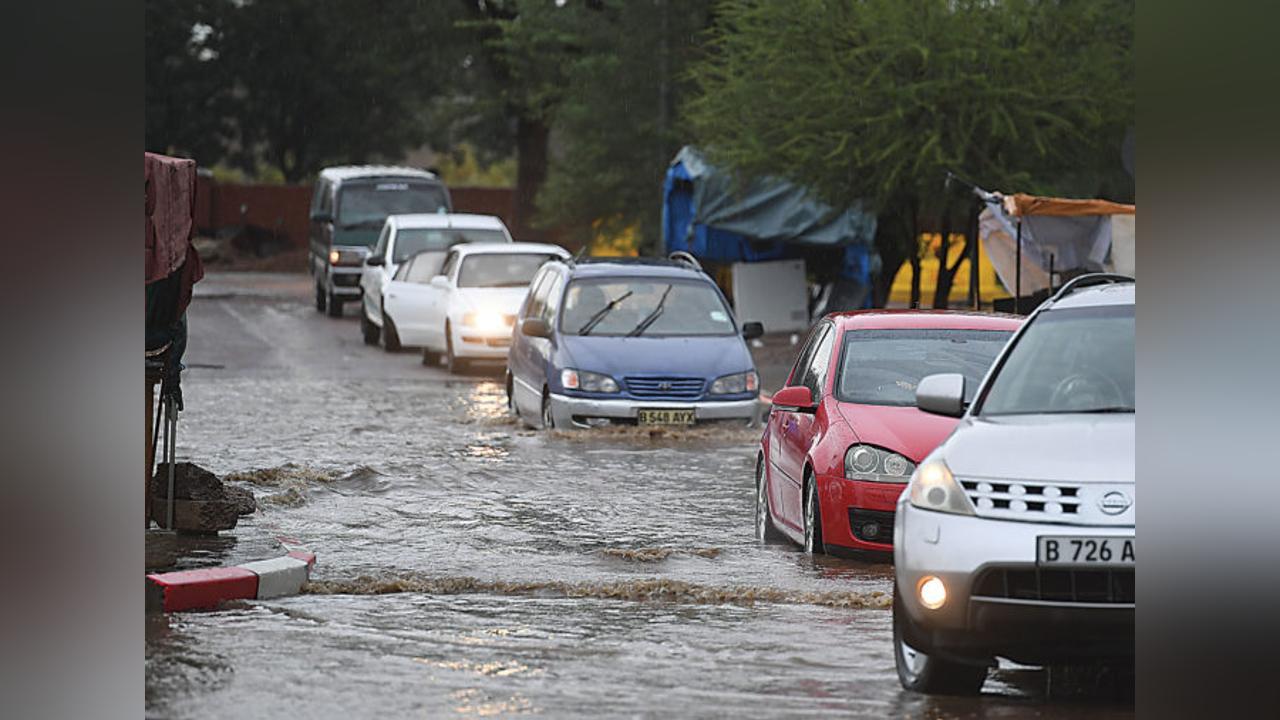
Africa-Press – Botswana. Residents of Gaborone are jittery about the impending rainy season and the incessant problems brought on by overflowing storm drains, which have a negative impact on the environment, infrastructure, and economic activity. This comes after Crisis24 issued a warning about significant flooding and localised disruptions during Botswana’s annual rainy season, which spans from November to March.
In their assessment, Crisis24 notes that the incoming rainy season in Botswana which begins in a fortnight will exacerbate business disruptions and the flood hazard. “Southern Africa will experience periods of heavy rainfall during the annual rainy season through March. Affected countries include Angola, Zambia, Zimbabwe, Botswana, Namibia, South Africa, Lesotho, and Eswatini,” states Crisis 24, adding that “There are a few areas where the rainy season is unlikely to have a major impact, including the Northern and Western Cape provinces of South Africa, the desert regions of western Namibia, and the Makgadikgadi Pan Desert of Botswana.”
Crisis24 is a security firm that monitors global threats and disruptions with the mission of saving lives.
Residents in Gaborone and other cities across the country continue to contend with the havoc brought on by extensive rainfall and floods which frequently causes flooding in the city’s drainage system causing infrastructure loss and immobility.
Crisis24 also warns vulnerable communities near the edge of watercourses. “Floodwaters and debris flows will likely render some bridges, rail networks, or roadways impassable, impacting overland travel in and around affected areas, especially in rural areas, where infrastructure is already of a poor standard,” states Crisis24.
In addition, Crisis24 notes that: “Floodwater ponding events might persist in low-lying areas over the coming weeks and months. Even relatively low amounts of precipitation can trigger flood events in locations where dry, compacted soil cannot absorb runoff. Landslides and mudslides could occur in hilly or mountainous areas, including the Drakensburg (South Africa, Lesotho, and Eswatini) and Witwatersrand mountain ranges (South Africa and Botswana)”.
More worryingly, countries in southern Africa are being cautioned about the increased threat of disease outbreaks during the rainy season. “Backflow from drains mixed with floodwaters can become trapped in open areas when inundations recede. These stagnant pools often become a breeding ground for mosquitoes and bacteria, increasing the incidence of insect- and waterborne diseases. Exposure to contaminated water from inundated industrial sites, sewer systems, and septic tanks also poses a significant health threat,” states Crisis24.
According to the World Health Organisation (WHO), stormwater removal is an essential environmental health intervention for reducing disease. “In areas where drainage and sanitation are poor, water runs over the ground during rainstorms, picks up faeces and contaminates water sources. This contributes significantly to the spread of diseases such as typhoid and cholera, and may increase the likelihood of contracting worm infections from soil contaminated by faeces,” says WHO – the UN’s specialised agency in charge of global public health.
Some experts say there is need for the Council to survey the country’s aging stormwater drainage systems, which are sometimes strained to capacity by record rainfall.
For More News And Analysis About Botswana Follow Africa-Press