Africa-Press – Botswana. Botswana on Monday joined fellow SADC states; Namibia, South Africa, Tanzania, Zambia and Zimbabwe in collectively lobbying against the British Parliament passing the Hunting Trophies (Import Prohibition) Bill.
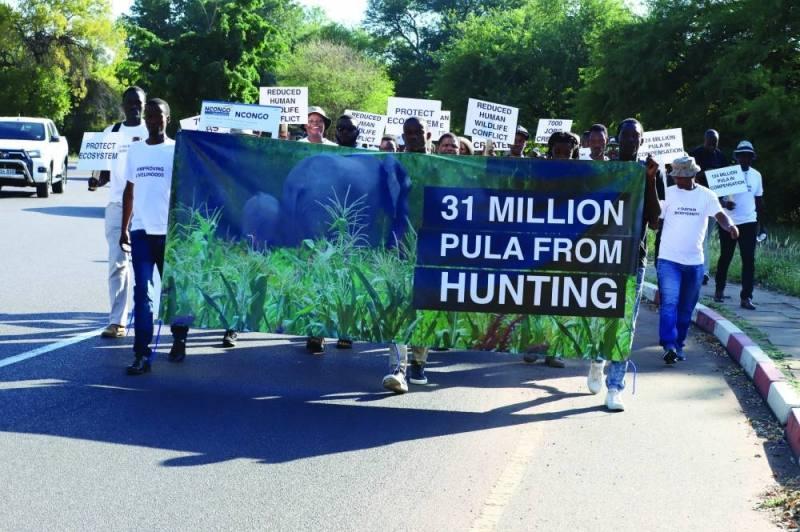
Government officials, civil society representatives and traditional leaders from communities subsisting around wildlife conservation areas in Botswana and Southern Africa converged in London, the British capital to intensify ongoing lobbying against the bill.
The Minister of Environment, Wildlife and Tourism Mr Dumezweni Mthimkhulu was invited to speak to a select group of British legislators at the Westminster Houses of Parliament in Central London on Monday before the bill goes for a second reading later this week.
Kgosi Tawana II of Batawana in Ngamiland, some dikgosi from villages affected by human-wildlife conflict and leaders of non-governmental community trusts also lobbied against the bill.
The Hunting Trophies (Import Prohibition) Bill seeks to ban the importation into the United Kingdom of hunting trophies (body parts of a hunted animal, such as the horn, skin or entire carcass) of various species covered by the Convention on International Trade In Endangered Species (CITES).
Initially proposed by the governing Conservative Party as a 2019 election manifesto pledge, as part of an Animals Abroad Bill that promised tough measures to support global conservation, the bill was abandoned in 2022.
It resurfaced in 2023 as a private members bill sponsored by two Conservative legislators this time with support from the official opposition Labour Party.
During a briefing of Botswana stakeholders hosted at the Botswana High Commission in London on Sunday, it was revealed that the ban would lead to a substantial loss of revenue for community trusts; intensified human-wildlife conflict and an unsustainable onslaught on biodiversity that would be detrimental to the animals themselves.
There is strong scientific merit against the passing of the bill, Kgosi Tawana said, since Botswana, for example, has had an enviable record of animal conservation and controlled hunting has not posed a threat to protected animal numbers, which continue to increase.
Research conducted by Dan Challender of the British Department of Biology alongside the British Animal Conservation Research Unit in 2023 to assess likely impact of the bill if passed into law, concluded that it had failed to adequately consider the benefits of trophy hunting to local communities, particularly its role in sustaining livelihoods.
Noting that trophies from 115 of the listed species were imported into the UK between 2000 and 2021, but cumulatively presented just one per cent of trade in CITES-listed species, the report found the concerned animal populations to be ‘stable, increasing or abundant’ as opposed to endangered.
Without controlled hunting or other regulatory measures, increased animal herd could have an adverse effect on the environment, the research concluded, and ‘the proposed UK Hunting Trophies Bill may cause more harm than good to the species it is intended to protect’.
Furthermore, the British researchers surmised that ‘trophy hunting was not found to be a major threat to any of the species imported into the UK since 2000; conversely, it has the potential to provide significant environmental and social benefits, including better biodiversity plus income and employment for local communities.”
For More News And Analysis About Botswana Follow Africa-Press