Africa-Press – Botswana. The catastrophic drought in Botswana, which followed a poor rainy season, has not only left hundreds of thousands of people on the verge of starvation, but it is also jeopardising the region’s great biodiversity as wildlife die due to lack of water and forage.
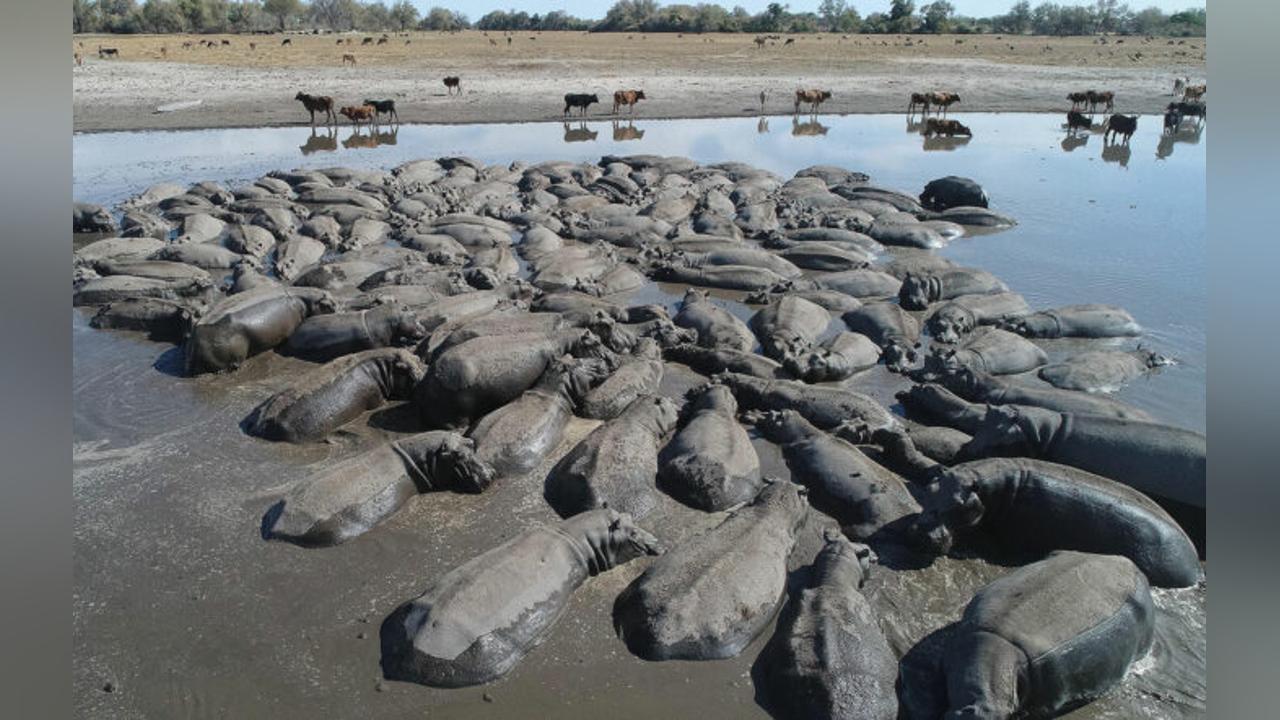
Fresh reports indicate that the Chobe River is drying up and has low water levels, endangering animals like hippos by leaving them trapped. Reports also indicate that some sections of the Okavango and Thamalakane River are already dry.
A report released by the United Nations Office for the Coordination of Humanitarian Affairs (OCHA) for the month of February notes that: “A record mid-season dry spell of over 30 days has affected vast parts of the region including, Angola, Botswana, DRC, Malawi, Mozambique, Namibia, Zambia, and Zimbabwe. These areas have received the lowest rainfall for the late January/February timeframe in at least 40 years. The ongoing El Niño is forecast to continue until April 2024.”
Permanent secretary of the ministry of environment and tourism, Grace Muzila, previously stated that many wild animals are dying from dehydration, hunger, and exhaustion after making lengthy journeys in search of food and water. “Wild animals get stuck in the mud desperately looking for water and they die. The experience is heart-breaking,” Muzila is quoted as saying to Xinhua News Agency.
Hippos require at least sixteen hours of submersion in water each day as they graze at night. However, because of the extremely low water levels in rivers—some of which are even dry—hippos are haplessly congregating, which makes it easier for them to become stuck.
Some videos that surfaced on X, formerly Twitter, appear to depict waterholes without any water, including the Mabua waterhole in the Kgalagadi Transfrontier Park. “The dire need of water in Mabua is critical. None of the taps in the whole of Mabua has a drop of water,” says a man video graphing what appeared to be a wild animal’s desperate search for water. The man goes on to say that it is critical if anyone knows a Botswana MP who may fast-track this matter since it is a priority to get these pumps operating so that we can supply water to man and animals.
The continuing drought and drying up of rivers in Ngamiland is also driving wild species like elephants, hippos and crocodiles to new places in quest of water. The drought has also forced species out from their natural habitats and into human settlements, raising the danger of human-wildlife conflict (HWC). Despite efforts by the Department of Wildlife and National Parks (DWNP) to address the issue, some communities say that more still needs to be done to address these problems.
The El Niño which brought high temperatures and below-average rainfall to Botswana and other southern African countries from November through to March, has also significantly affected agriculture in Botswana.
For More News And Analysis About Botswana Follow Africa-Press