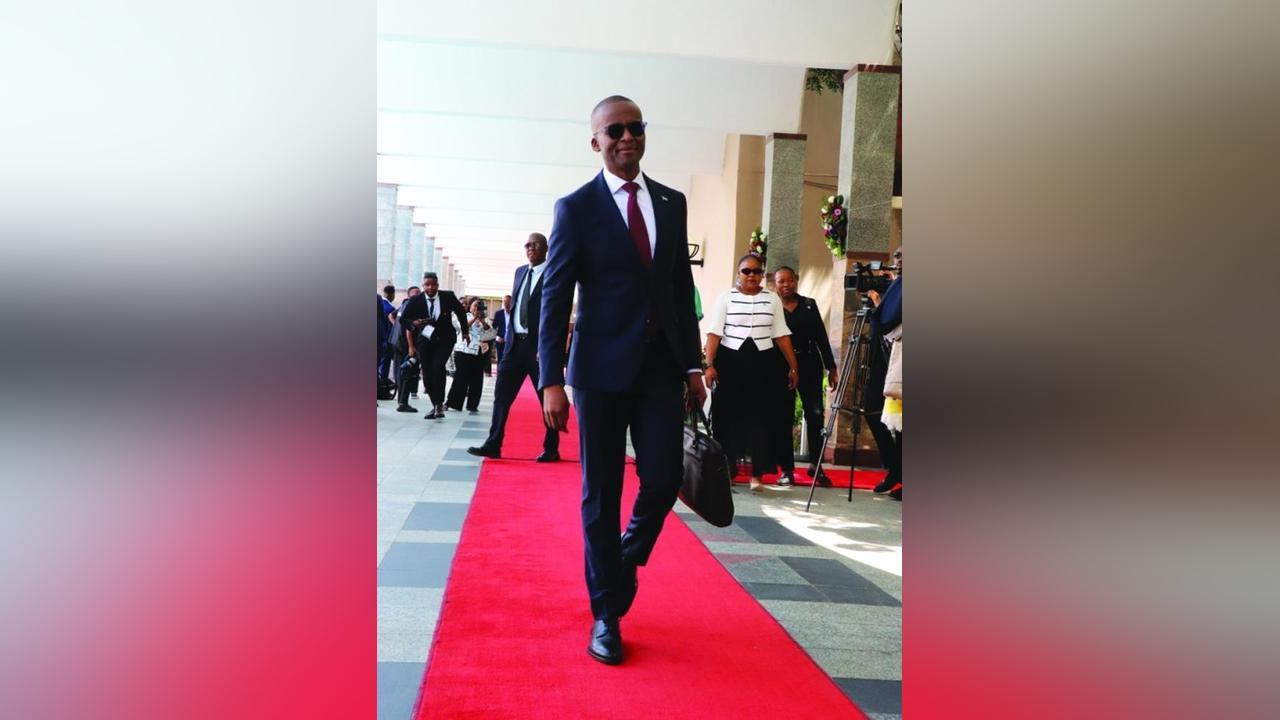
Africa-Press – Botswana. A data deep-dive into the 2026-27 Expenditure Estimates reveals millions are still flowing into travel and overtime claims despite calls for a moratorium. Vice President Ndaba Gaolathe emphasised this week that government wants to tighten the purse strings by clamping down on internal and external travel and reining in ballooning overtime payments.
“Further expenditure containment has been achieved through the implementation of a travel moratorium covering both domestic and international travel alongside tighter controls on overtime payments,” he said on Monday when delivering his second Budget Speech as Finance Minister.
“These measures underscore the tangible impact of disciplined expenditure management.”
But a perusing the 2026-2027 Estimates of Expenditure tells a more complicated story. Across ministries, allocations for travel, subsistence, overtime, and hospitality remain hefty and in some cases are climbing.
Office of the President, for example, has not trimmed down its travel budget despite calls for austerity. The estimates show that for the 2026-27 financial year P40 million has been budgeted for external travel alone, excluding internal travel and overtime. Overtime Allowances for the 26-27 financial year are P4, 717, 150.
By the end of March 31, 2025, actual expenditure for overtime was P7, 388,30,4 surpassing the P2, 000,000 authorised for 25-26. This demonstrates that even with calls for restraint, overtime remains firmly budgeted.
The department’s total budget increases from P165, 638,410 (2025/26) to P179, 866,780 (2026/27 estimate), an increase of over P14 million.
For the Ministry for State President, Defence & Security, the big picture the entire ministry moves from P12,547,724,010 (2025/26) to P13,050,492,660 (2026/27 estimate), and this is an increase of over P502 million.
Within this ministry, however sit high-travel, high-mobility institutions like Botswana Defence Force (BDF), Botswana Police Service (BPS), and Directorate on Intelligence and Security (DIS).
Although security operations naturally require movement, the broader push for a moratorium raises questions about how deep the cuts will truly go.
Under the Parliament budget, travel and overtime are still costly, and the estimates show that transportation of over P8.6 million has been budgeted for travel and subsistence alone in one department. Over time, Parliament has an estimated allocation of P1, 849, 880.
The estimates also show that overtime remains a persistent drain across departments. A closer look at the numbers reveals that overtime remains deeply embedded in government communication machinery.
The overtime culture at the departments of Broadcasting & Information Services has been known for many years.
Even with the call for a moratorium on overtime, the 2026-27 Estimates show that media arms of the State, being the Department of Broadcasting Services (DBS) and the Department of Information Services, continue to allocate spending and allocate millions toward overtime.
At the DBS, under the 2026-27 draft estimates, the Department of Broadcasting Services has an estimated allocated overtime allowances of P5, 262,000.
This department had shockingly spent P31, 772,615 by the end of March last year despite having been authorised to spend only P4, 666,900 for the 24-25 year.
The Department of Information Services estimated allocated overtime allowances for 26-27 is P7, 461,990. Information Services spent P11, 679,667 on overtime by the end of March 2025, having been authorised to spend only P15,559,940.
The contradiction now is that the government has stated its intention of tightening control on internal and external travel and overtime payments, but these estimates show that multi-million pula allocations for travel remain intact, with overtime continuing to command significant funding.
Now, critics who have seen the estimates question whether the government is serious about fiscal discipline and if indeed the treasury can enforce stricter approvals. With travel and overtime still flying high, “tightening controls” becomes a phrase without measurable impact.