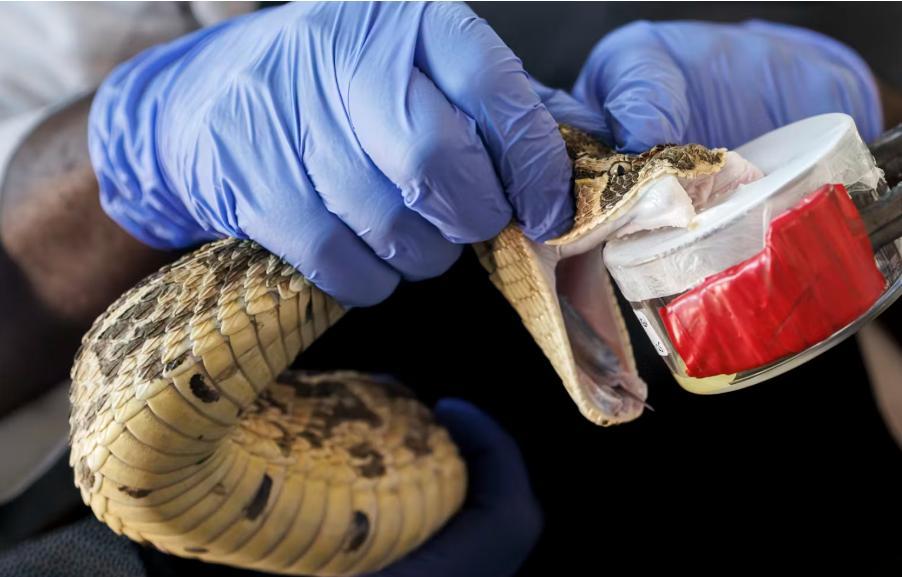
Africa-Press – Botswana. Imagine walking into tall grass or working barefoot in a field… and suddenly feeling sharp pain on your foot. You’ve just been bitten by a snake. This is more than a moment of shock; it could be the beginning of a dangerous medical emergency.
Not all snakebites involve venom, since less than 20% of snake species in the world are considered of medical importance, and even venomous snakes don’t always inject venom. But when venom enters the body, the consequences can be dramatic and life-threatening.
I am a biologist with an interest in snake venom function and composition, as well as antivenom evaluation and development. I am currently involved in the development of next generation antivenoms.
During my time studying snake venoms, it has become clear to me that a snakebite shouldn’t be viewed as just another accident: it has deep social and economic consequences across Africa. The venom from a single bite can cause very diverse and severe symptoms including bleeding, paralysis, necrosis, or death. Many survivors suffer long-term injuries, including severe wounds and amputations, especially in rural communities. Therefore, the suffering often extends beyond the hospital bed, affecting families, livelihoods and agricultural productivity.
In 2017, the World Health Organization added snakebite envenoming to the category A of neglected tropical diseases in an effort to increase visibility and support from institutions, governments and international NGOs. Each year, over 4 million people are bitten by snakes worldwide, leading to up to 2 million cases of envenoming and more than 80,000 deaths. In sub-Saharan Africa, over 300,000 people are envenomed each year, leading to over 7,000 deaths and almost twice as many amputations. The real numbers are likely even higher, as many victims never reach a hospital, which means that their cases are never officially recorded.
In Nigeria, snakebite is a major public health threat. About 20,000–30,000 serious envenomings are estimated to occur annually, mostly caused by the carpet viper (Echis ocellatus), cobras (Naja sp.) and puff adders (Bitis arietans). A cobra is said to have bitten a Nigerian singer, Ifunanya Nwangene, who died on 31 January.
But snakebite is preventable and treatable, and some simple precautions can reduce risk. Most critically, expanding access to effective antivenoms, training healthcare workers, and strengthening health systems in rural areas could save thousands of lives every year.
Differences
Development of a snakebite depends on the snake that caused the bite, whether venom was injected, how much venom entered the body, and how fast help is reached. It is always recommended to go to the hospital after a snakebite, even if no clear sign of envenoming is visible.
In general, venomous snakes can be divided in three groups:
Vipers: These venoms often disrupt the blood’s ability to clot, causing internal bleeding, shock and severe swelling. The carpet viper’s venom, for example, can cause incoagulable (non-clotting) blood, and can lead to massive bleeding and shock if untreated. Snakes in this group include carpet vipers, puff adders and other snakes from the genera Bitis and Echis.
Elapids: These venoms include neurotoxins that attack the nervous system. Bites from cobras or mambas (another highly venomous group found across Africa) can bring on paralysis, starting with drooping eyelids, progressing to difficulty breathing, and sometimes leading to death if breathing muscles are affected. Snakes in this group include cobras, mambas and other snakes from the genera Naja and Dendroaspis.
A bite from either group of snakes can also lead to necrosis (death of tissue), which might require surgery or even amputation.
Colubrids: Although most snakes in this group are not dangerous to humans, bites by the boomslang (Dispholidus typhus) can cause severe envenoming including disruption of blood coagulation.
According to the WHO, the following snake species from Nigeria are considered of primary (Category 1) or secondary (Category 2) medical importance: Category 1: Dendroaspis jamesoni, Naja haje, Naja nigricollis, Bitis arietans, Bitis gabonica, Echis ocellatus. Category 2: Atractaspis irregularis, Dispholidus typus, Thelotornis kirtlandii, Naja katiensis, Naja melanoleuca, Naja senegalensis, Pseudohaje goldii, Pseudohaje nigra, Atheris squamigera, Bitis nasicornis, Echis leucogaster.
Protection
The first line of protection against snakebite is prevention.
Simple actions that everyone can take can reduce the risk of snakebite:
avoid walking barefoot, especially at night
check sleeping areas before sleep
clear areas around houses where snakes could hide
block holes that snakes could use to get into a house
discuss possible routes and means of transport to the nearest medical facility before a snakebite happens.
If someone is bitten by a snake, getting them to a medical facility and applying the correct antivenom is crucial. Research has shown that in some cases, a one-hour delay in antivenom administration can increase the risk of death by 1%, while a whole day’s delay can increase this risk by 23%.
What to do, and what not to do
1. Remain calm and seek help immediately
Yes. Keep calm and start the trip to a medical facility immediately. The bitten person should remain as still as possible during transportation.
Do not cut the bite area and attempt to extract the venom. This does not work. It will cause more damage to the affected area, and can promote infections and bleeding.
Remove constrictions and clean the bite
Take off anything tight from the bitten limb/area (bracelets, watches, rings, belts) so the swelling doesn’t cut off circulation. Gently rinse the wound with clean water if available.
Do not apply a tourniquet (a tight binding), since this will cut circulation and increase chances of amputation. Do not apply unknown substances, herbs, or chemicals to the area.
When possible, identify the snake
If possible, take a photo from a safe distance and bring it to the hospital for identification. Only do this if it is fast and safe.
Do not attempt to capture or kill the snake, since this often leads to a second bite and wastes precious time.
Get to a hospital for antivenom and treatment
The application of specific antivenom is the only proven treatment that neutralises venom. It must be given in a hospital by trained personnel, and it should be specific to the snake that caused the bite. Antivenom dramatically improves survival chances; studies have shown a reduction in mortality rates of carpet viper bites from 16% to less than 2% with the advent of antivenom.
Sadly, many health centres struggle with antivenom shortages, high costs and lack of trained staff. These barriers often delay treatment or force families to travel long distances, increasing the risk of severe outcomes. Identifying the closest health centres in your region and asking in advance if they stock antivenom can save precious time.
Do not apply antivenom from unverified providers. Application of low-quality antivenom can lead to life-threatening adverse reactions.
theconversation