Africa-Press – Botswana. Government has activated a P97 million national emergency response to prevent the spread of Foot and Mouth Disease (FMD) from South Africa and Zimbabwe into Botswana, with intensified border patrols, fence repairs and community mobilisation in high-risk areas such as Bobirwa.
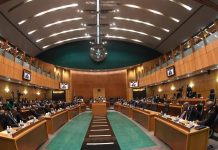
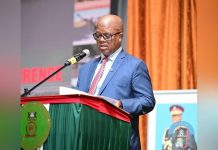
Answering a question in Parliament recently, acting Minister of Lands and Agriculture, Dr Edwin Dikoloti said the transboundary animal disease posed a serious threat with the potential to escalate into a national disaster, hence the approval of a Presidential Directive to fund immediate and short-term control measures.
Dr Dikoloti said the budget would support logistical operations for agencies involved in disease control, including border surveillance, de-bushing, livestock movement control and the repair of damaged cordon fences.
Regarding maintenance of cordon fence, he said ,the ministry had adopted a partnership model with border communities due to limited resources caused by the economic downturn.
“Whilst this still falls far short of the actual requirement, I am convinced that this is a more sustainable approach compared to the traditional approach where government solely bears the burden,” he said.
He noted that more than 240 personnel had been deployed to FMD outbreak zones 3c and 6b, while surveillance continued in FMD-free zones such as Zone 7 in line with the national disease monitoring plan, adding that the Botswana Police Service had also set up camps along the border to reinforce the ministry’s efforts.
He said following a request by the Member of Parliament for Mmadinare, the ministry had authorised the use of Mmadikgaka veterinary camp for the deployment of additional police officers and mephato to strengthen operations.
“A total of 11 mephato camps are currently working along the border fence from the Mabolwe border to Gobe cattle posts. Plans are underway to establish more camps to cover the stretch from the Robelela/Dikgatlhong area to Motlhabaneng,” he said.
Dr Dikoloti commended communities across the country, including those in Morolong, Kgatleng, Gamalete, Kgalagadi, Serowe, Tonota and the North East, for mobilising mephato to assist with patrols and maintenance of both border and inter-zonal fences.
“The revival of mephato in Bobirwa demonstrated how cultural structures could be harnessed to address modern cross-border security challenges and protect the country’s livestock industry,” he said.
At regional level, he said Botswana was using existing bilateral platforms to strengthen cooperation on animal disease control.
“Through the Botswana-South Africa Binational Commission, the two countries were working to enhance collaboration on cross-border security, poaching and FMD control,” he said.
Dr Dikoloti further said the Department of Veterinary Services was expected to undertake benchmarking visits with KwaZulu-Natal authorities, while further discussions were planned with North West provincial officials in Mafikeng.
“Botswana is also engaging Zimbabwe through the Joint Permanent Commission on security matters to combat stock theft and control the spread of FMD,” he added.
As part of the regional response, he said, Botswana continued to supply vaccines to its neighbours. He said the Botswana Vaccine Institute (BVI) provided 4.9 million doses to South Africa and 1.1 million to Zimbabwe last year.
Member of Parliament for Bobirwa, Mr Taolo Lucas, had asked the minister to outline the measures being implemented to prevent the spread of FMD from neighbouring South Africa and Zimbabwe into Botswana.
Mr Lucas also asked the minister to state what the ministry was doing with respect to cordon fences, deployment of personnel and other resources, the work of mephato and engagement with South Africa and Zimbabwe.