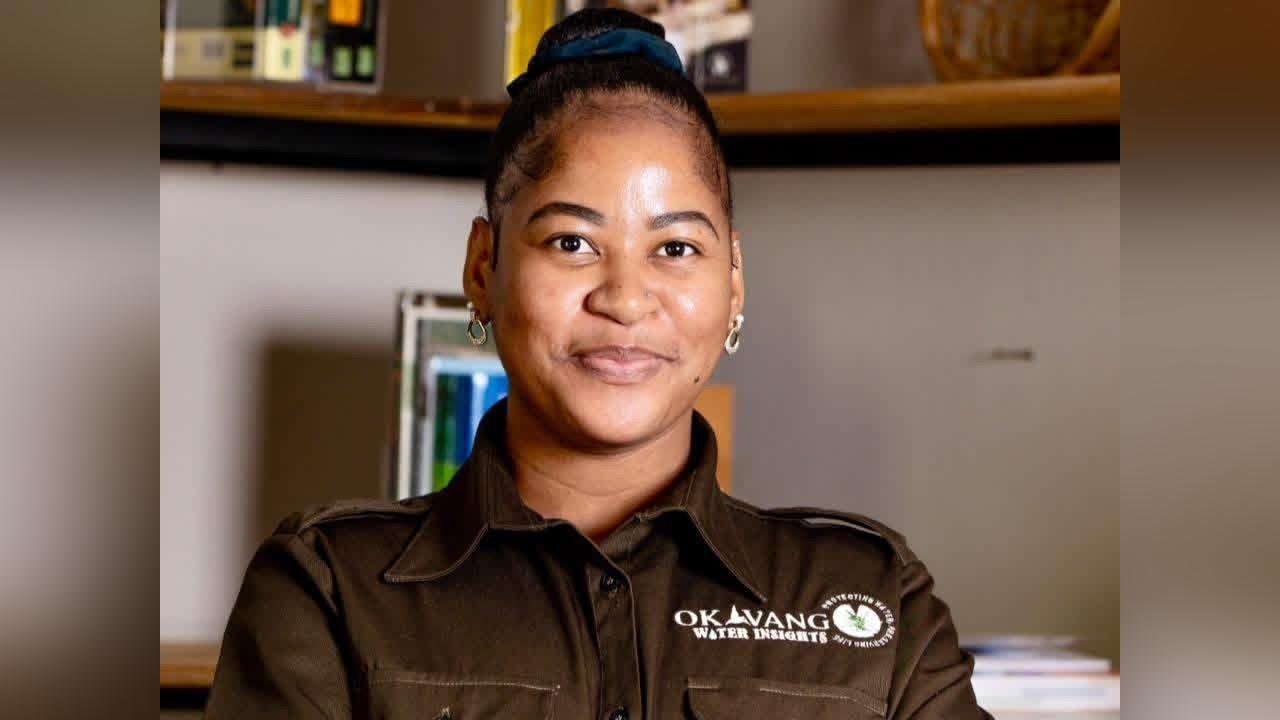
Africa-Press – Botswana. Dr. Goabaone Ramatlapeng has earned global recognition for her work in water science and environmental protection. The Ramsar Convention on Wetlands Secretariat recently named her among twelve women worldwide in the 2026 Women Changemakers cohort. This honour celebrates women who drive meaningful change in the protection and sustainable management of wetlands. Dr. Ramatlapeng stands out as a scientist whose work bridges research, conservation, and community knowledge. Her journey from a childhood marked by water shortages to international recognition reflects determination, curiosity, and a strong commitment to protecting vital ecosystems.
Dr. Ramatlapeng grew up in Kopong in Botswana where water scarcity shaped daily life. Long interruptions in water supply were common and often left families struggling to access safe water. As a young girl she constantly questioned why water disappeared from taps and why it often returned with a salty taste. These questions sparked a deep curiosity about water systems and environmental processes. At the time she could not imagine becoming a scientist because she saw no women around her working in that field. Despite the lack of visible role models her curiosity continued to grow and eventually guided her toward a career in water science.
She later pursued hydrogeochemistry which studies the chemical composition of water and how it interacts with rocks, soil, air and ecosystems. Hydrogeochemists investigate water quality, groundwater movement and environmental changes that affect water resources. Their work helps communities understand how to manage water safely and sustainably. Entering this field required persistence because hydrogeochemistry has long been dominated by men. Few women work in the discipline and African women remain even more underrepresented. Dr. Ramatlapeng moved forward despite these barriers and focused on building expertise that could help solve real water challenges.
Mentorship played a key role in her academic development. Dr. Loago Molwalefhe from the Botswana International University of Science and Technology supported her early academic progress and encouraged her to continue in scientific research. Later she continued her studies at the University of California Davis in the United States where she pursued a doctorate in Earth and Planetary Sciences. During that period renowned scholars Dr. Eliot Atekwana and Dean Estella Atekwana mentored her research and academic growth. Their guidance helped her refine her scientific approach and strengthen her focus on water systems and environmental protection. These experiences prepared her to conduct research that connects science with community needs.
Today Dr. Ramatlapeng works as a hydrogeochemist at Nkashi Trust in Maun where she conducts research in the Okavango Delta. The delta represents one of Africa’s most important wetland ecosystems and supports wildlife, tourism and local communities. Her work focuses on understanding water systems while supporting conservation strategies that protect the delta. She emphasizes that science alone cannot explain the full complexity of wetlands. Communities living in the delta hold generations of knowledge about flood cycles, seasonal water changes and fish behaviour. By combining scientific data with indigenous ecological knowledge her research creates a more complete understanding of how the ecosystem functions.
Dr. Ramatlapeng describes her recognition as a Women Changemaker as deeply personal. The honour reflects years of persistence and dedication during moments when the path forward seemed uncertain. It also represents a broader message about opportunity and representation in science. She believes young people across Botswana and Africa must see examples that prove they can pursue careers in research, engineering and conservation. She encourages young girls to trust their curiosity and pursue their questions without fear of stereotypes or limitations. Her message focuses on seeking mentors, committing to learning and entering spaces where women’s voices remain underrepresented.
Her journey also highlights a larger need across the African continent. Many ecosystems require strong local scientific leadership and research capacity. Dr. Ramatlapeng believes African nations must invest more resources in research institutions, laboratories and scientific training. Supporting African scientists ensures that those closest to these environments lead the work to protect them. Local researchers often understand cultural contexts, community needs and environmental realities in ways outside researchers cannot fully capture. Strengthening this infrastructure will help secure the future of critical ecosystems such as wetlands, rivers and groundwater systems.
Dr. Goabaone Ramatlapeng’s story reflects the power of curiosity, perseverance and community driven science. From a child questioning the taste of water in her home village to a globally recognised wetland protection advocate, her path demonstrates what determination can achieve. Her work continues to support conservation in the Okavango Delta while inspiring a new generation of African scientists. The recognition from the Ramsar Convention on Wetlands reinforces the importance of inclusive leadership in environmental protection. It also sends a clear message that young African women belong in science and can shape the future of conservation and water security across the continent.