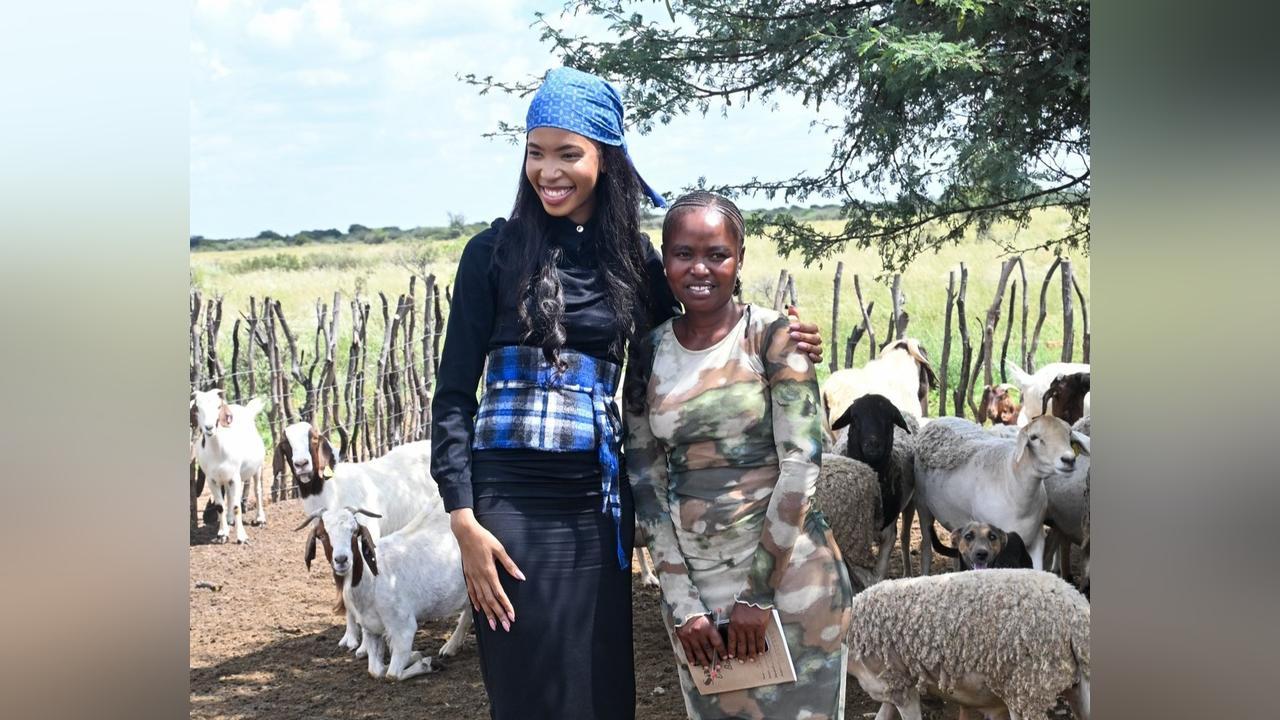
Africa-Press – Botswana. Botswana’s agricultural sector continues to offer strong opportunities for youth empowerment, yet it also exposes persistent structural challenges that require urgent attention. During her recent visit to Thankane, Hon. Lesego Chombo took time to engage directly with beneficiaries of the Youth Development Fund, gaining insight into their progress and daily realities. Her interaction with Ms Pono Lenyatso and Mr Ruddy Olebile Koto highlighted both the promise and pressure faced by young farmers working to build sustainable businesses. These engagements are important because they move beyond policy discussions and focus on lived experiences. They provide a clear picture of how government support translates into real outcomes on the ground. The visit reinforced the importance of strengthening support systems that enable youth to succeed in agriculture.
Ms Pono Lenyatso’s journey in small stock farming shows what steady commitment can achieve when supported by targeted funding. Since starting in 2020, she has grown her livestock from an initial 30 goats to more than 100, while also maintaining a flock of 20 sheep. Her business now supplies several butcheries in Jwaneng, creating a stable income stream and contributing to local food supply. This level of growth demonstrates how youth-led agricultural ventures can scale when given the right foundation. However, her progress has not come without obstacles that threaten future expansion. She raised concerns about limited access to land, which restricts her ability to increase production and meet growing demand.
Water scarcity remains one of the most pressing challenges affecting her operations and those of other farmers in the area. With only one borehole serving multiple farmers, competition for water is high and reliability is often uncertain. This limitation directly affects livestock health, productivity, and overall business sustainability. Access to consistent water supply is essential for maintaining and expanding agricultural output. Without it, even well-managed farms struggle to reach their full potential. Her concerns point to the need for targeted infrastructure investment that supports agricultural growth at community level.
Mr Ruddy Olebile Koto’s experience as a cattle farmer further illustrates the opportunities and barriers within the sector. As a fellow Youth Development Fund beneficiary, he has established himself as a supplier to the Botswana Meat Commission, which provides a structured market for his livestock. His ambitions extend beyond local supply, as he aims to expand his herd and access the European Union market. This goal reflects a forward-looking approach that aligns with global trade opportunities. However, he also identified water shortages as a major constraint that limits his ability to scale production. Like many farmers, he faces the challenge of balancing current output with long-term expansion plans.
Koto remains optimistic about meeting European Union export standards, particularly with the support of veterinary services and assistance in navigating application processes. Achieving compliance with these standards requires strict adherence to health, safety, and quality regulations. Support from relevant authorities can help bridge the gap between local production and international market requirements. His progress highlights the importance of technical support in unlocking higher-value markets. It also shows that young farmers are willing to invest effort into meeting global benchmarks when given the right guidance. This ambition contributes to the broader goal of positioning Botswana as a competitive agricultural exporter.
Both Lenyatso and Koto emphasized that farming demands full-time commitment, discipline, and passion. Their experiences show that agriculture is not a fallback option but a serious business that requires consistent effort and strategic planning. They called for improved access to critical resources such as land, water, and technical support to sustain their growth. Strengthening these areas would not only benefit individual farmers but also enhance the overall agricultural value chain. Their voices reflect the broader concerns of many young people trying to build careers in agriculture. Addressing these challenges is essential for ensuring long-term sustainability and sector growth.
The visit by Hon. Lesego Chombo to Thankane underscores the importance of direct engagement between leaders and beneficiaries of development programs. It provides an opportunity to assess impact, identify gaps, and refine support strategies based on real needs. The progress made by these young farmers demonstrates that targeted funding initiatives like the Youth Development Fund can deliver meaningful results. At the same time, their challenges highlight the need for continued investment in infrastructure and support systems. By addressing these issues, Botswana can strengthen its agricultural sector and empower more young people to participate in it. The experiences of Lenyatso and Koto offer a clear path forward for building a more inclusive and productive agricultural economy.