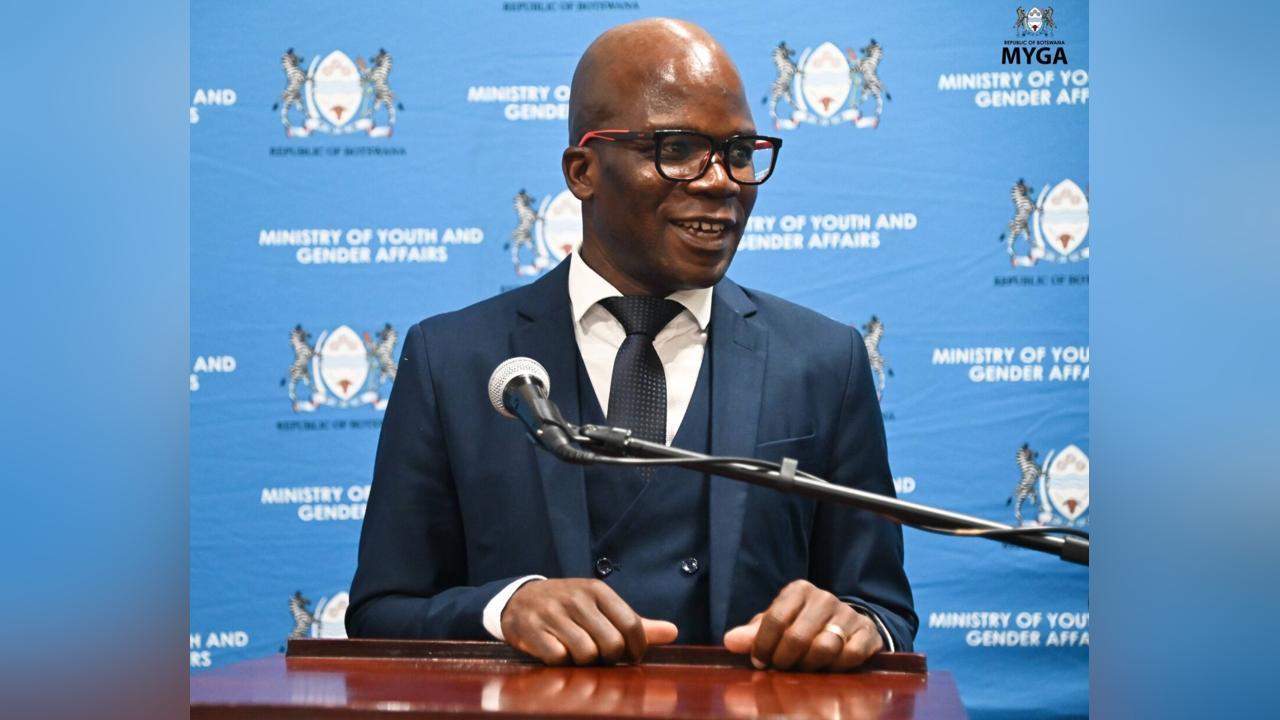
Africa-Press – Botswana. The second day of the High-Level Stakeholder Meeting on Youth Participation and Engagement in Policy, Programming and Civic Engagement focused on how young people can play a stronger role in shaping public decisions. The Deputy Representative of UNICEF addressed participants and stressed the importance of realistic expectations between youth and stakeholders. He highlighted that government budgets face clear limits and that youth should understand these constraints when engaging in policy discussions. He encouraged young people to meet stakeholders halfway instead of placing the full responsibility for implementation on institutions alone. His message centered on balance, shared responsibility, and practical engagement that can be sustained over time.
He further explained that youth participation often weakens when young people do not receive feedback after sharing their views. This lack of response creates frustration and reduces motivation to stay involved in policy processes. He urged stakeholders to improve communication and ensure that young people see how their input influences decisions. At the same time, he encouraged youth not to withdraw from engagement but to continue presenting their concerns in clear and solution-focused ways. He emphasized that constructive participation, where young people also propose workable ideas, increases the chances of real impact in policy development.
The Deputy Representative also stressed the need for inclusivity in all youth programmes. He pointed out that many young people living with disabilities still face barriers that limit their participation in civic and policy spaces. He called for practical measures such as sign language interpretation and braille materials to ensure equal access to information. He noted that inclusivity should not be treated as an optional addition but as a core requirement in programme design and implementation. He also urged stakeholders to respond faster to the lived realities of young people so that policies remain relevant and effective.
He concluded by calling on government and development partners to increase investment in youth-focused programmes. He expressed concern over a steady decline in funding for Youth and Gender Affairs in recent years. He noted that allocations stood at 971.1 billion in the 2023/24 financial year and are projected to drop to 686.6 billion in the 2026/27 financial year. He warned that reduced funding could limit progress in youth development and participation initiatives. He reinforced the need for stronger financial commitment to ensure that young people are not left behind in national development priorities.
For More News And Analysis About Botswana Follow Africa-Press