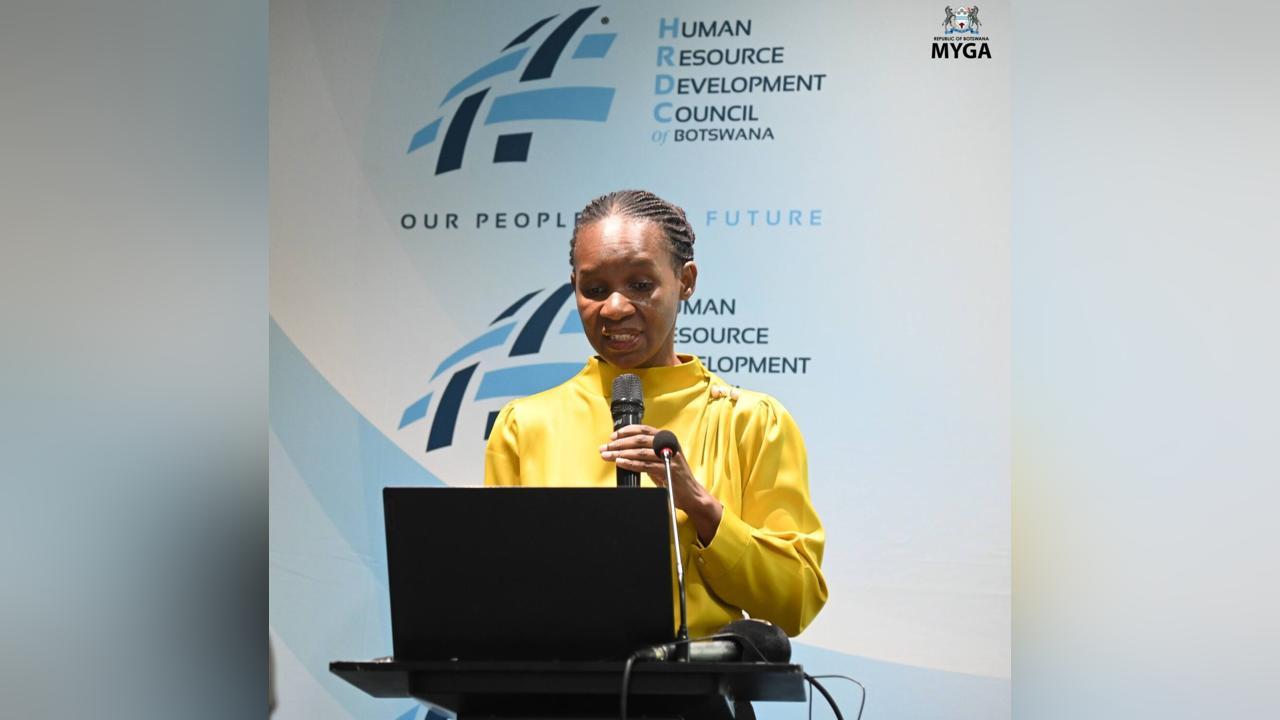
Africa-Press – Botswana. The Ministry of Youth and Gender Affairs recently took part in a youth consultative meeting focused on reviewing the implementation of the National Human Resource Development Strategy covering the period 2009 to 2022. The purpose of the engagement was to assess progress made and identify gaps that must be addressed in a new and more transformative strategy. This updated framework is expected to guide the National Capital Agenda and strengthen Botswana’s long term ambition of achieving high income status by 2036. It will also align with national priorities under NDP 12 and BETP implementation. The meeting placed strong emphasis on building a skills driven economy that responds to current and future labour market demands.
Young people were placed at the center of the discussion because they represent the largest share of the country’s productive future. The strategy recognizes that youth are not only beneficiaries of education and training systems but also key contributors to national development. Their participation in shaping policy is essential for creating a system that reflects real economic conditions and social needs. Education, skills development and employment pathways were highlighted as critical areas that must work together more effectively. The overall goal is to ensure that young people transition smoothly from learning institutions into meaningful economic participation.
The review highlighted several achievements recorded under the 2009 to 2022 strategy period as reported by HRDC. Poverty levels showed improvement, declining from 23 percent to 13 percent over the implementation period. Primary school enrollment reached 85 percent, reflecting improved access to basic education. Gender parity achieved a balanced index of 1.0, indicating equal participation between boys and girls in education. Digital access also expanded significantly from 8.7 percent to 73.5 percent, showing progress in connectivity and information access. These outcomes demonstrate important gains in human capital development across the country.
Despite these achievements, the strategy review also identified persistent challenges that continue to affect economic transformation. Youth unemployment remains high, estimated between 33 percent and 40 percent, which places pressure on social and economic systems. Skills mismatch between training institutions and industry needs continues to limit job absorption rates. The economy still shows strong dependence on natural resources, especially diamonds, which restricts diversification efforts. There is also low demand for high level skills in parts of the private sector, which affects graduate employment outcomes. Many young people also leave institutions without sufficient practical experience required by employers.
Youth participants raised important concerns during the consultation, particularly around the accuracy and relevance of existing statistical data. Questions were asked about whether reported figures on skills development and employment truly reflect the lived reality of young people. Some participants expressed concern that outdated or inconsistent data may influence planning and resource allocation. Another key issue was the inclusion of young people in rural areas, where access to training and employment opportunities remains limited. They emphasized that development strategies must be inclusive and ensure equal access regardless of geographic location.
The consultative process highlighted the importance of integrating youth experiences, expectations and aspirations into national planning frameworks. Their input is seen as essential for building a responsive and future focused human resource development strategy. A stronger alignment between education systems, labour market needs and economic planning is required to address current gaps. The success of the new strategy will depend on how effectively it supports skills development, employment creation and economic diversification. With meaningful youth participation, Botswana can strengthen its path toward a more inclusive and high income economy by 2036.
For More News And Analysis About Botswana Follow Africa-Press