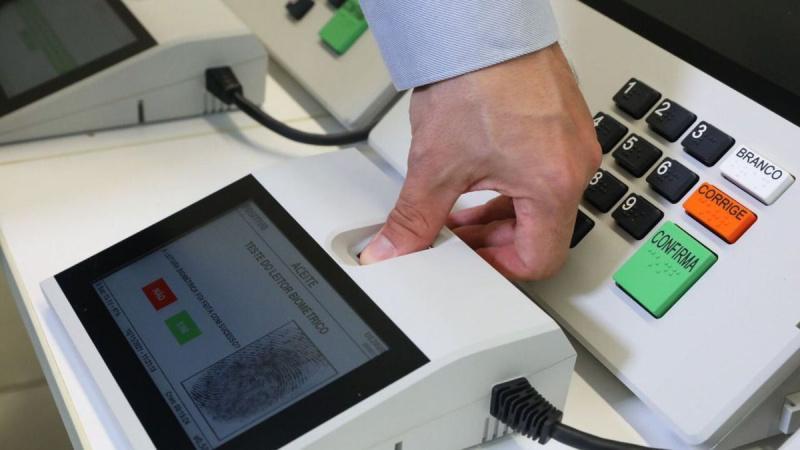
Africa-Press – Cape verde. The Minister of Justice, Joana Rosa, reiterated the Government’s commitment to moving forward with the modernization of the electoral process in Cape Verde. Although she acknowledged that the ideal conditions for the immediate implementation of the desired changes do not yet exist, the Minister assured that efforts will continue to implement electronic voting in 2026.
Joana Rosa made this statement today, within the scope of the opening of the Workshop “Implementation of Electronic Voting: Practices and Perspectives”, within the scope of the 12th Euro-American Conference on Telematics and Information Systems (EATIS 2024), at the University of Cape Verde.
As the minister reiterated, the Government’s objective is to work to implement electronic voting in the 2026 elections.
However, the governor acknowledged that there is still a long way to go before this becomes a reality.
“There is a discussion taking place around the technological basis, the issue of security, the guarantee of access to the electoral process for all voters, the issue of data protection, transparency throughout the process, and the reliability of the electronic electoral system itself,” he explained.
Joana Rosa said that the modern world is moving towards the digitalization of the electoral process as well” and that several challenges continue to persist even in regions that should be more advanced in this debate.
“We need to discuss the fact that we are islands, our archipelagic condition, whether or not we have the conditions to introduce mobility voting. The issue that has to do with electronic registration, which is also on the agenda,” he added.
Although the Government is determined and committed to moving forward with the necessary changes, Joana Rosa states that the implementation of electronic systems requires detailed auditing and supervision work.
“We are working to ensure that the electoral management and information system can move forward. We have to carry out audits of the system, of the electoral system as a whole, always counting on the supervision of the National Electoral Commission itself, and all the work is being done,” he specified.
“We are not in a position to implement either electronic registration or electronic voting at this time, because we need to make changes to the Electoral Code. However, we will move forward and will not wait for the legal framework to be approved,” he stressed.
It should be noted that in November 2022, Joana Rosa announced that the General Directorate for Support to the Electoral Process (DGAPE) was developing an electronic voting system, in partnership with UNI-CV, and that the challenges and next steps would be analyzed.
The workshop aims to explore in depth two fundamental aspects of implementing electronic voting: strategies for implementing pilot experiments and essential security and privacy measures.
The Government described the event as an opportunity for DGAPE to present the needs and context of Cape Verde’s electoral process.
For More News And Analysis About Cape verde Follow Africa-Press