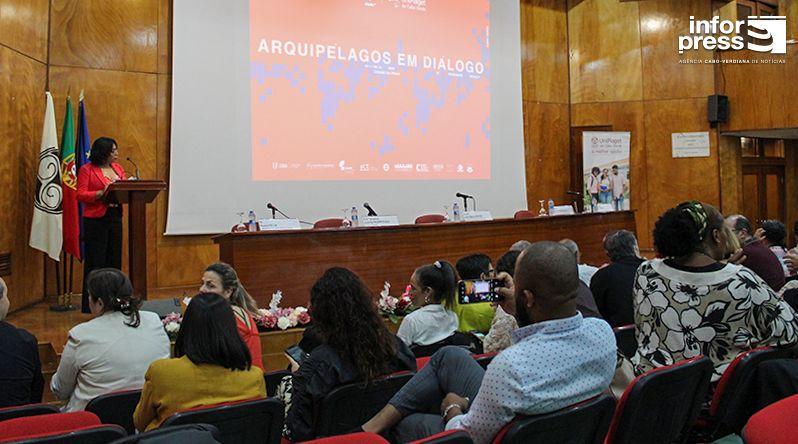
Africa-Press – Cape verde. UniPiaget is hosting the 6th AEAULP Seminar for three days, bringing together representatives from architecture schools in Portuguese-speaking countries to discuss urbanism, heritage, sustainability, cultural identity, and academic cooperation.
The 6th Seminar of the Academy of Architecture and Urbanism Schools of Portuguese Language – “Archipelagos in Dialogue” – brings together institutions from Portugal, Brazil, Angola, Mozambique, Cape Verde, and Macau, and also aims to strengthen cooperation networks and propose solutions to the contemporary challenges of cities.
The director of AEAULP, Pedro Rodrigues, emphasized that the initiative reinforces the network’s role as an instrument for scientific and cultural dissemination, providing a common understanding of the city through the Portuguese language.
“It is a network of Lusophone schools, in which the Portuguese language is the common element. Architecture and urbanism are parts of the culture and gain a unique dimension when observed from this common matrix,” he said.
The director also highlighted the importance of involving municipalities and local partners, such as the Order of Architects of Cape Verde, to bring academic reflection closer to the lives of communities.
The objective is to reinforce the understanding of “the common good that is the city” and to promote fairer and more sustainable ways of living.
The choice of Cape Verde to host the seminar, he explained, is a result of its geographical and symbolic position in the Atlantic, between Brazil and Portugal, and the desire to strengthen the network’s presence on the African continent.
In turn, the vice-president of AEAULP, Hugo Farias, reinforces that the event plays a decisive role in the creation of international research networks, bringing together professors, students, and institutions.
“Knowledge today is built in networks. This meeting enriches everyone, opening doors for partnerships, projects, and new research,” he emphasized.
Farias also stressed that architecture today assumes an “essential role” in responding to global problems: sustainability, climate resilience, social inclusion, and inequality.
For Freitas, the seminar allows not only learning from the experience of other countries, but also valuing and sharing positive and negative local practices that help enrich the discipline.
The Cape Verdean architect César Freitas highlighted the importance of the event for the country, which, according to him, is internationally recognized as a privileged space for dialogue.
“Cape Verde offers ideal conditions for transcontinental reflection. We need to study, but also apply knowledge to respond to climate change and current challenges,” he said.
For More News And Analysis About Cape verde Follow Africa-Press