
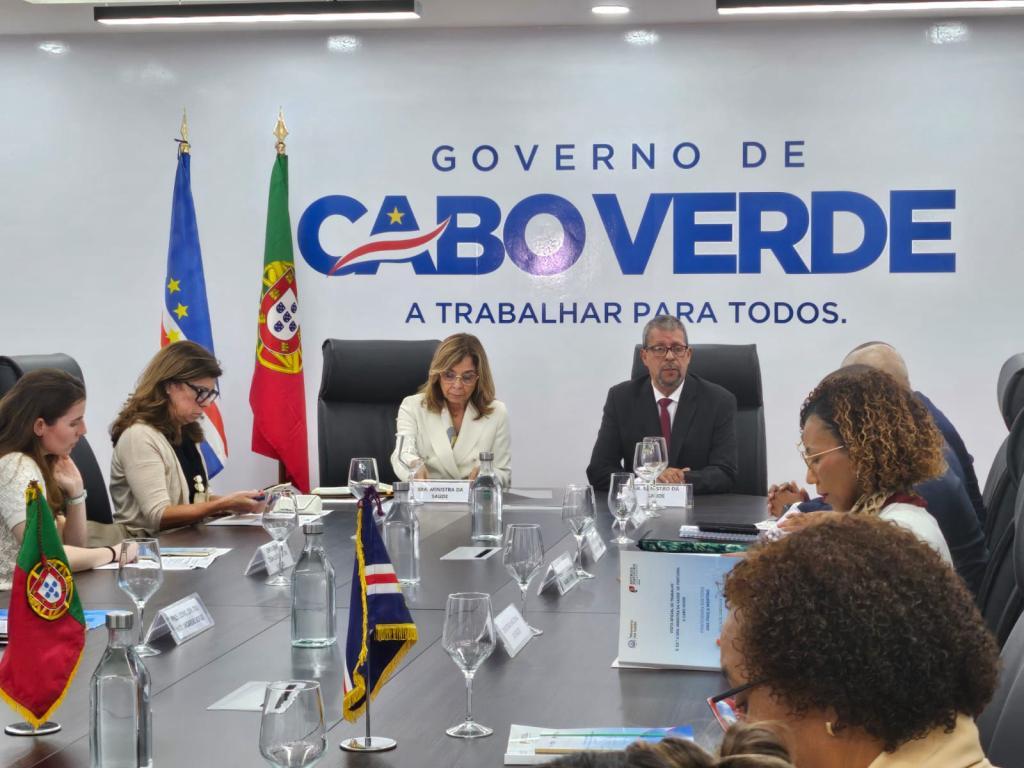
The information was given by the coordinator of the Medical Entomology Laboratory of the National Institute of Public Health (INSP) and principal researcher of the project in Cape Verde, Silvânia Leal, on the sidelines of the official closing ceremony.
According to the manager, the identified species, known as *Sergentomyia fallax* and *Sergentomyia squamipleuris*, belong to the group of phlebotomine sand flies, vectors associated with the transmission of pathogens.
“We identified a new species of phlebotomine sand fly, associated with the transmission of parasites and viruses. However, the species found in Cape Verde is not linked to the transmission of infectious agents,” she clarified.
Although it does not represent, for now, a direct risk to public health, Silvânia Leal considered that the discovery constitutes a relevant advance in scientific knowledge about the vectors existing in the archipelago.
“This type of identification allows for improved surveillance and anticipation of potential risks,” she emphasized.
In her view, the ONESVEC project also contributed to strengthening the national capacity for entomological diagnosis and surveillance.
“The country was empowered in terms of human resources and the installation of laboratory capacity for the diagnosis of mosquitoes, ticks, and sandflies,” she said.
Developed within the framework of the integrated approach of the “three healths”—human, animal, and environmental—the project involved studies on vectors, the human population, and domestic animals.
“We worked in an articulated way on human, animal, and environmental health,” explained the researcher.
ONESVEC had the technical support of the National Institute of Health Dr. Ricardo Jorge, in Portugal.
“All the necessary technical support was provided to strengthen local capacities, through close collaboration between the two institutes,” indicated Silvânia Leal, adding that the total funding was approximately €240,000. The project took place between 2022 and 2025.
Despite the formal closure, the person in charge guaranteed the continuity of the actions. “The project ends, but continuous surveillance, sustained by the gains obtained, continues,” she stressed.
Also present at the ceremony, the principal researcher of the National Institute of Health Dr. Ricardo Jorge, Rita Sousa, emphasized that entomological surveillance in tropical countries like Cape Verde is essential to mitigate risks and control potential outbreaks.
The specialist also highlighted the completion of a seroepidemiological survey of the Cape Verdean population as a contribution to public health.
“The study allowed us to assess the population’s exposure to viruses such as dengue and Zika and to support the definition of surveillance and intervention strategies,” she explained.
Rita Sousa observed that the island of Santiago has the highest exposure to these viruses.
“It is the island with the highest prevalence of antibodies, which coincides with the history of recorded outbreaks,” she concluded.
In her speech, the Portuguese Minister of Health, Ana Paula Martins, said that the ONESVEC’s main legacy was the strengthening of national capacities for vector-borne disease surveillance, the improvement of the integrated public health response, and the training of more than 120 professionals in different areas.
“This sustainably reinforces local skills and significantly increases the knowledge of health professionals in both countries,” she said.
Ana Paula Martins recalled that vector-borne diseases currently account for more than 17% of infectious diseases worldwide, responsible for more than one billion cases and more than one million deaths per year, in a context where rapid urbanization and migration favor the expansion of vectors.
“Investing in research in this area means anticipating scenarios, preventing outbreaks, protecting the most vulnerable populations, and strengthening health security,” she said.
In turn, the Minister of Health, Jorge Figueiredo, stressed that ONESVEC translated the One Health approach not as a concept
.
Abstract, but as a practice applied to the territory, the islands, and concrete realities.
Jorge Figueiredo stressed that cooperation in public health between Cape Verde and Portugal is not limited to projects, but builds systems, trains people, transfers knowledge, and leaves installed capacity, as was evident during the pandemic response.
“This project produced useful knowledge for political decision-making and action on the ground,” he said, adding that Cape Verde will continue to count on Portugal as a strategic partner.
A phlebotomine sand fly is a very small insect, similar to a mosquito, also known as a sand fly or sand mosquito. It bites people and animals to feed on blood and can transmit diseases, mainly leishmaniasis.
It lives more in warm, humid places, with vegetation, organic waste, or animals nearby, and usually bites at dusk and at night.