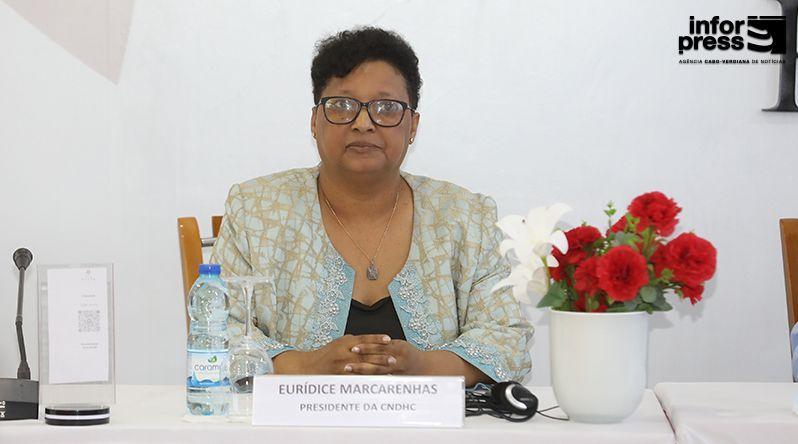
Africa-Press – Cape verde. The president of the National Commission for Human Rights and Citizenship (CNDHC) said this Wednesday that the book “50 Years of Human Rights in Cape Verde” is a plural portrait of the country’s trajectory, symbolizing resilience and hope in a process of challenges and resource limitations.
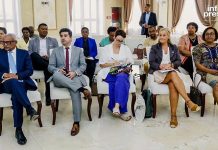
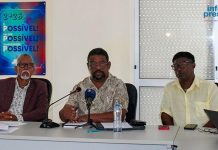
The president of the National Commission for Human Rights and Citizenship (CNDHC), Eurídice Mascarenhas, made these statements to the press during a meeting with the authors of the publication, professors Pedro Andrade Matos and Mirtes Aparecida dos Santos, from the University of Cape Verde, and Anderson Barbosa Moreno, from the University of Santiago, to share conceptual aspects that guided this collective work.
During the meeting, Eurídice Mascarenhas explained that the book began to be prepared about a year ago and that its completion was possible thanks to the trust and persistence of the coordinating team.
“It was a difficult birth, but possible,” she said, emphasizing that the idea arose within the context of the commemorations of the 50th anniversary of national independence, with the aim of taking stock of the gains and challenges in the area of human rights.
“We felt it was necessary to go into the field and begin to have a more concrete and objective vision,” she said, emphasizing that the work covered all municipalities, neighborhoods, and islands of the country, also involving the diaspora.
The president of the CNDHC also highlighted that the book collects testimonies from ordinary people, institutions, activists, academics, and political representatives, in an approach that covers the period between 1975 and 2025.
In turn, the coordinator of the work, Pedro Matos, announced that the book will have three versions – printed, digital, and audio – to allow greater inclusion and access throughout the national territory.
He revealed that the research allowed them to identify a country proud of its democratic trajectory, but where fears still persist when it comes to human rights.
“People feel afraid to talk about issues related to their own human rights,” he said, adding that many interviewees avoided answering for fear of reprisals.
“We asked them what they understood by human rights, and many people responded: ‘It’s better if I don’t speak. I could be harmed’,” he reported.
The researcher also warned that many Cape Verdeans continue to associate access to education and health only with financial availability, without fully recognizing these sectors as rights guaranteed by the Constitution.
In turn, Professor Mirtes Aparecida considered that the publication could serve as a reference for jurists, professors, magistrates, and policymakers, arguing that the book helps to understand “the voices that spoke and declared their intuitions about human rights.”
The professor emphasized that the work incorporates testimonies from vendors, fishermen, and other citizens interviewed, allowing for the construction of a narrative based on the reality lived by the people.
In turn, Professor Anderson Moreno highlighted the inclusive nature of the publication and stated that the team decided from the first meeting that the book “should belong to the people.”
According to Anderson Moreno, the work allowed for “discovering or rediscovering a new Cape Verde,” more diverse and with different perceptions of human rights.
The book will be publicly presented this Friday, the 10th, at the National Assembly, in the José Filomeno International Conference Room, after the organizers changed the initially planned location due to the forecast of strong winds.
The publication brings together 60 authors and collaborators and is structured around the 30 articles of the Universal Declaration of Human Rights, crossing the vision of civil society, the political class, and academia on each theme.
The criteria used for the creation of the work were the perspective of Cape Verdeans in the country and in the diaspora, gender, inclusion of women in politics, academia, civil society, and proximity.
For More News And Analysis About Cape verde Follow Africa-Press