Africa-Press – Cape verde. The president of PD Consult, Paulino Dias, argued this Thursday that Cape Verde must define “anchor values” and strengthen its economic resilience to face global unpredictability, driven by geopolitical tensions, climate change, and technological advances.
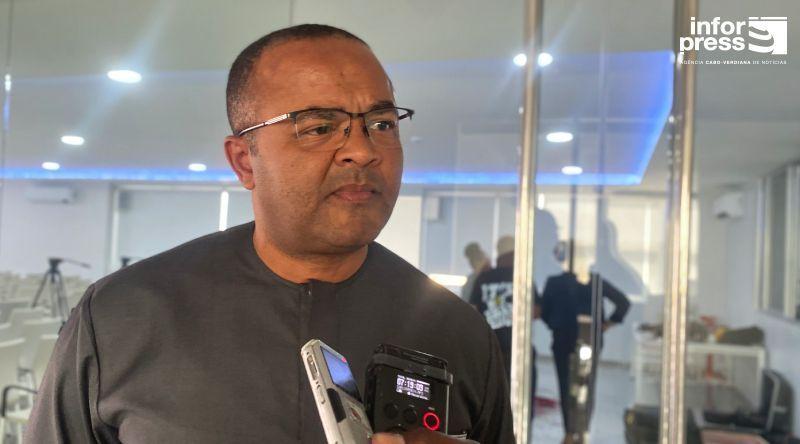
Paulino Dias was speaking to the press moments before leading the panel “Business Sciences in a World of Unpredictability” at the III International Congress on Business Sciences, held at the University of Santiago.
In his analysis, the current global scenario is characterized by multiple sources of instability, the first being geopolitical tensions on an international scale, which “directly influence economic dynamics and markets.”
He explained that states are increasingly asserting their values, strategic interests, and priorities, in a complex interaction that is reflected in global economic decisions and trade flows.
A second unpredictable factor pointed out by the economist is climate change, whose effects, including rising ocean temperatures, increased sea levels, and the intensification of extreme events, directly influence the economy, business activity, and productive structure of countries.
For Paulino Dias, the third transformative force is the acceleration of technological changes, focusing on artificial intelligence and other emerging technologies, which are redefining production processes, business models, and the very way of teaching and learning in universities.
Given this scenario, he considered that, being Cape Verde a small, open economy highly dependent on the outside world, it becomes essential to clarify its “anchor values” on the international stage, particularly in the field of human rights, pointing to the United Nations Charter as a guiding reference for the country’s positioning in the external scenario.
“A country that lacks the capacity to impose its will should avoid behaving like a ship in a rough sea without an anchor,” he warned, emphasizing that the clear definition of guiding principles allows for greater coherence and predictability in foreign policy.
Domestically, he urged greater economic resilience, warning of the country’s vulnerability to external shocks, especially in food security, noting that Cape Verde imports about 80 percent (%) of what it consumes.
Regarding the recent instability in the Middle East and its impact on oil prices, the businessman warned that, despite signs of decline, the value chains associated with energy are complex and the effects of shocks can extend for weeks or months.
For the expert, the current context demands greater articulation between universities and companies, with curricula adjusted to a volatile world, preparing professionals capable of managing risks and leading economic transformation.
The III International Congress on Business Sciences, which runs until Friday, the 10th, is being held at the University of Assomada and brings together academics, students, and professionals to discuss the challenges of management and the economy in highly complex scenarios, focusing on the Cape Verdean reality and the need to strengthen the adaptive capacity of institutions.
For More News And Analysis About Cape verde Follow Africa-Press