Africa-Press – Cape verde. It is necessary to discover whether, in the revision of the Penal Code published in February 2021, there was an intention or not to benefit certain personalities, allegedly involved in cases of corruption and influence peddling. There are those who believe so, but the minister Joana Rosa hides herself in a “material error” that resulted in the reduction of the statute of limitations for crimes of passive corruption, active corruption and influence peddling from 15 to five years.
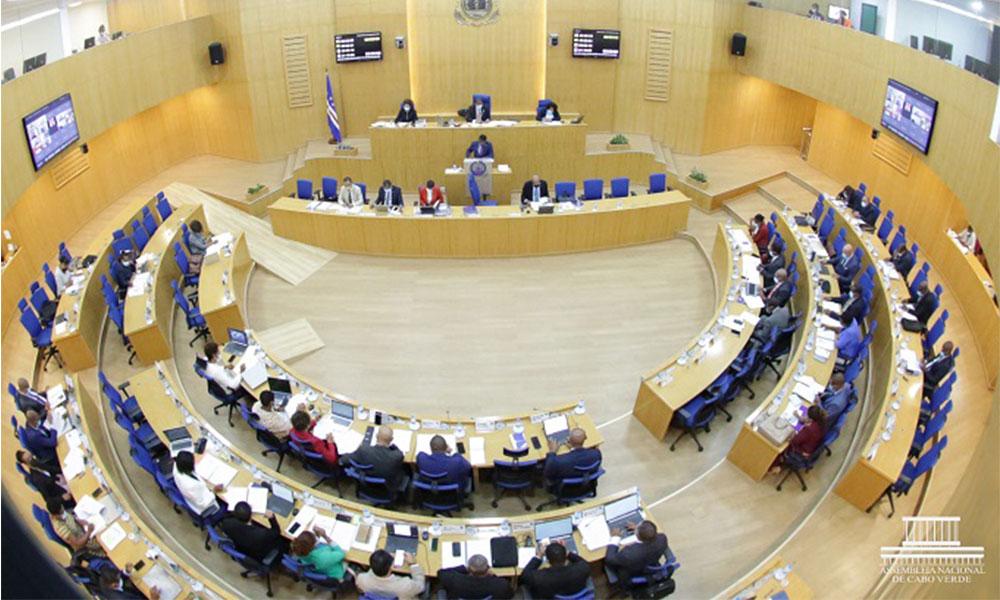
The Government has put Parliament in a race against the clock to prevent the Penal Code (CP) from causing further damage after its revision in February 2021.
At issue are the statute of limitations for criminal proceedings and penalties, more specifically, for crimes of passive corruption, active corruption and influence peddling.
More than a year after the approval of the last revision of the Penal Code (CP) and the Penal Procedure Code (CPP), at the time, by unanimous vote of the deputies, the Executive reintroduced, as a matter of urgency, in Parliament, these two diplomas for one more review.
At stake crimes of corruption and influence peddling
This time to correct an alleged “material error” or “lapse” that resulted in the reduction of the statute of limitations for criminal proceedings and penalties, an error that was only detected after its publication in the Official Gazette.
This change in the CP, according to a magistrate contacted by A NAÇÃO, resulted in “authentic legislative surgery” and, apparently, “was not the work of chance”. In this, there are also those who speak of “legal acrobatics” no less deliberate.
The initial proposed version was submitted to all legislative procedures, that is, subject to all opinions, approved in Parliament and promulgated by the President of the Republic.
Having detected the anomaly, according to a parliamentary source, one of the substantive issues has to do, precisely, with the moment when the diploma was tampered with.
“The diploma was not changed in Parliament, neither in the general discussion nor in the specific discussion”, guarantees our source.
“The diploma was correctly enacted and was correctly promulgated by the President of the Republic”.
Our interlocutor believes that the change took place with the sending of the diploma to the Government for publication. And that is why, in this context, responsibility for what happened must be ascertained, taking into account the seriousness of the situation, which leaves Parliament, the Government and the President of the Republic in a situation of real embarrassment.
PAICV requests opening of investigation process
In fact, in view of this, Deputy Démis Almeida (PAICV) told A NAÇÃO that it will be necessary to initiate an investigation process to find out at what moment, in fact, the diploma was changed.
“We were all convinced that the deadlines had been increased and not reduced”, he says.
Demís Almeida also understands that the second question is whether there were people who benefited from this “material error”, since “there is the principle of non-retroactivity of criminal laws, but there is the principle of retroactivity of criminal laws that are more favorable to the defendant. And the possible reduction of the statute of limitations for a crime is a more favorable criminal law for the accused”.
But, if there is a material error, it is also necessary to know if this is likely to give the defendants the right to invoke the institute of retroactivity of the most favorable criminal laws.
“In our understanding, no, because, in fact, this was not the legislator’s will. Although there was a material error that resulted in the letter of the law in an apparent reduction of the statute of limitations, the fact is that this was not the will of the legislator”.
Given the seriousness of the matter, Démis Almeida makes it known that the PAICV Parliamentary Group asked the President of the National Assembly to launch an independent process of investigations to find out when the diploma was tampered with, in order to convey the idea that there was a reduction of prescription periods.
Joana Rosa says she believes in “material error”
In the presentation of the draft law that makes the fifth amendment to the Penal Code, which was generally approved at this month’s plenary session, the Minister of Justice, Joana Rosa, began by saying that the revision made to article 108, in February 2021, aimed at complying with the binding international provisions of the State of Cape Verde, including torture among imprescriptible crimes and crimes of active, passive corruption and influence peddling, “thus avoiding its statute of limitations in a short period of time”.
“It so happens that in the final version of the proposal sent for publication there was a material error, we understand it to be a material error, not detected at the time, dictating that number 6 of article 108 should exclude articles 363, 364 and 365, which refer to the active and passive corruption and influence peddling”, admitted the minister.
This “material error”, not rectified within the legal period of 90 days, “caused the review to go against all the guidelines of the United Nations convention against corruption”. According to Joana Rosa, it is urgent to correct this “material error”, with the Government open to discuss this situation, because “if there are consequences of this material error in our legal order, together with the deputies, we must seek ways to solve this problem”.
legal acrobatics
Material error, or not, there are those who suspect that the amendment introduced, by stealth, in the last revision of the Penal Code, was nothing more than a “fraudulent scheme”, to benefit a specific group of individuals in the grip of justice.
“There are people, there are processes and there are public cases that can benefit from this so-called material error”, says a magistrate heard by A NAÇÃO.
Consequences of the alleged “material error”
Another thing, as we have also heard, has to do with the consequences of this “material error”.
As there was no material change to these rules by the competent sovereign body (Parliament), and, as there was no enactment of this change by the competent sovereign body (President of the Republic), our interlocutor considers that “there is no rule” and the reduction limitation period “is legally non-existent”.
That is, “it suffers from the most serious legal value that exists and, therefore, no one can gain rights. There cannot be the possibility of anyone or any process benefiting from more favorable retroactive penal rules”.
Prescription periods increased from 15 years to five years
Thus, in the opinion of our interlocutor, it was an “authentic legislative acrobatics” when sending the diploma for publication: a “pseudo legislator”, in hiding, betting on the distraction of the various legislative subjects, decided to “tamper” the approved version. in Parliament and promulgated by PR.
As a result, the statute of limitations for active and passive corruption and influence peddling crimes, which should have been 15 years, increased to five years.
“Now, at first glance, we might think that we would have here a classic problem of applying the law in time, to be solved by article 2 of the CP, which orders the application of the law most favorable to the defendant and, in this case, it would be the law that establishes a deadline shorter statute of limitations, that is, the published version of the law”, says the jurist who considers, however, that, in this case, it would be an overly “simplistic” reasoning, which would encounter an “insurmountable” obstacle.
“The published version does not correspond to the one that was approved by Parliament and promulgated by the PR”, therefore, “the published version was not approved and promulgated and the legal sanction for the lack of promulgation of legislative acts is the legal inexistence, according to article 138º , 1, of the Constitution of the Republic”.
Changes to the law to “benefit a well-identified group”
According to a document by a jurist, which A NAÇÃO had access to and which was addressed to the President of the National Assembly, the author says he has discussed the entire preambular note of the aforementioned Law nº 117/IX/2021, of 11 February, which introduced amendments to the Penal Code, and that this reading did not come across “a single reference to the change in the statute of limitations for criminal proceedings and penalties for the identified crimes of passive corruption, article 363, active corruption, article 364 and influence peddling, article 365, a fact that was confirmed by one of the members of the review committee to the Penal Code that there was no change in this regard”.
Suspicions about Penal Code review commission
“As is public knowledge”, the same complaint also reads, “a criminal case is pending with much repercussion in the national and international media, in which several eminent public figures, including politicians, businessmen and , civil servants, etc. to which a number of serious crimes are attributed, including passive corruption and active corruption, given that the person who presided over the review committee of the Penal Code and, at the same time, appeared as a lawyer for one of the defendants in the same process”.
According to the same source, for crimes of passive corruption, active corruption and influence peddling, regardless of the abstract criminal framework, the statute of limitations for criminal proceedings and the penalty was 15 years.
Defendants will no longer be tried for corruption crimes
However, with the changes introduced by Law No. 117/IX/2021, of 11 February, the deadlines are reduced to 10 and 5, given the abstract criminal framework.
“The amendments introduced, surgically, to the statute of limitations for criminal proceedings and punishment clearly aim to benefit certain people, given that none of the defendants accused and prosecuted in the aforementioned process will be tried for the crimes of passive corruption and active corruption, due to the statute of limitations of the procedure. criminal offense, because in the case of active corruption the statute of limitations is five years and in passive corruption it is 10 years, but in both cases these periods have already passed”, he claims.
For More News And Analysis About Cape verde Follow Africa-Press