Africa-Press – Eritrea. Eritrea’s rich historical and cultural heritage continues to attract tourists and academic researchers from around the world, captivated by its diverse national culture, breathtaking landscapes, and profound history. Among them is Ms. Francesca Custodi, an Italian academic researcher currently in Eritrea studying Eritrean forms of resistance to Italian colonization. Eritrea Profile invited her to reflect on her research and her experiences in the country.
Ms. Francesca, could you begin by introducing yourself?
My name is Francesca Custodi, and I am from Domodossola, a small town in northern Italy. I am a Ph.D. candidate in Contemporary History at the University of Pisa. My current research focuses on the various forms of Eritrean colonial opposition during the early period of Italian colonization. I am pleased to say that everything is progressing very well so far.
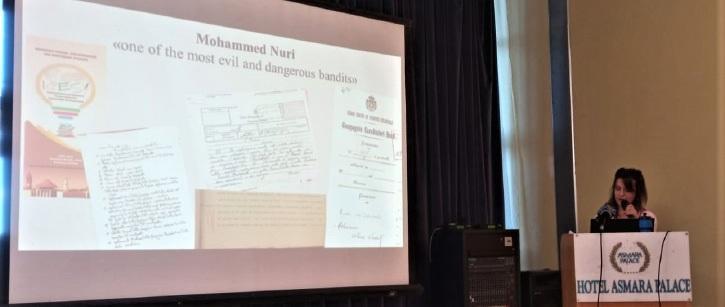
Ms. Francesca Custodi
What are your reflections on Eritrea and its people?
Since July 2024, I have made three memorable visits. Before arriving, my knowledge was largely limited to the early period of Italian colonial history. However, from the moment I set foot here, I was constantly surprised. I am captivated by the diverse culture, the flavorful modern and traditional dishes, the beautiful landscapes, and the historic architecture.
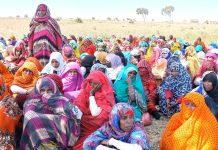
Yet, above all these beauties, the people’s hospitality is this country’s most precious asset. Everyone I meet is welcoming, kind, open-minded, and resilient. Whenever I walk through the streets, I learn more about the nation’s traditions. This vibrant culture is what attracted me most and motivates me to conduct my research with joy. I have attended marriage ceremonies and community festivals called Ngdet, where I sensed a profound level of love, unity, and respect. It truly feels like a “home away from home.”
As you spend most of your time in Asmara, how would you explain its beauty?
Asmara is like a living museum. From the history behind its name to its streets and architectural landmarks, the city reflects the valuable norms that constitute Eritrea’s national identity. As a UNESCO World Heritage site, Asmara is simply magnificent—a place where history and nature exist in harmony.
How would you define history and its significance for a nation?
History is like a double-edged sword that determines a people’s progress or decline. It aids us in comprehending our current situation and directing our future course. It allows a people to understand and take pride in their identity, develop a clear vision, and avoid repeating past mistakes. Ultimately, history safeguards a nation’s collective identity and destiny. Therefore, a careful record of history is significant for any nation to achieve progress; otherwise, the consequences could be disastrous.
Let’s talk about your research. What is the theme of your thesis?
My Ph.D. research examines the diverse nature of Eritrean resistance against Italian colonialism from 1890—the establishment of the colony— until 1907, the end of Ferdinando Martini’s governorship. I am working to uncover “hidden” expressions of dissent, such as speeches, letters, and specific policy oppositions, alongside the well-known resistance led by figures like Dejazmach Bahta Hagos, and others.
What motivated you to study this specific topic?
Many Italians are not very knowledgeable about Italian colonialism in Africa, including in Eritrea. There is a significant research gap on this topic in our academic circles. Filling this gap is vital for both Italian and African historiography.
Last year, you presented an abstract at the International Conference on Eritrean Studies. What is the significance of such conferences?
Organizing such conferences has many impacts: it awakens research interest among citizens, attracts global scholars, enriches national knowledge, and expands the audience for Eritrean history. For me, it was an amazing experience. Presenting my work alongside both Eritrean and foreign scholars allowed me to receive constructive feedback and questions that have been incredibly helpful to my research.
What message would you like to deliver to foreign tourists or researchers who wish to visit Eritrea?
I can witness to the fact that Eritrea is a country with a rich history and culture worth exploring. The enchanting landscapes, conducive climate, and magnificent coastline with its beautiful islands will captivate any visitor. Most importantly, you will feel at home due to the kindness of the people. It is a “peace island” with abundant treasures waiting to be discovered.
Do you have any final messages?
I want to express my deepest gratitude to the Eritrean people for their hospitality. I also want to thank Azieb Tewolde and the Research and Documentation Center (RDC) for their invaluable support, as well as my research advisor, Professor Massimo Zaccaria, a specialist in African history at the University of Pavia.
Ms. Francesca, thank you for your time, and we wish you great success in your research.
shabait