What You Need to Know
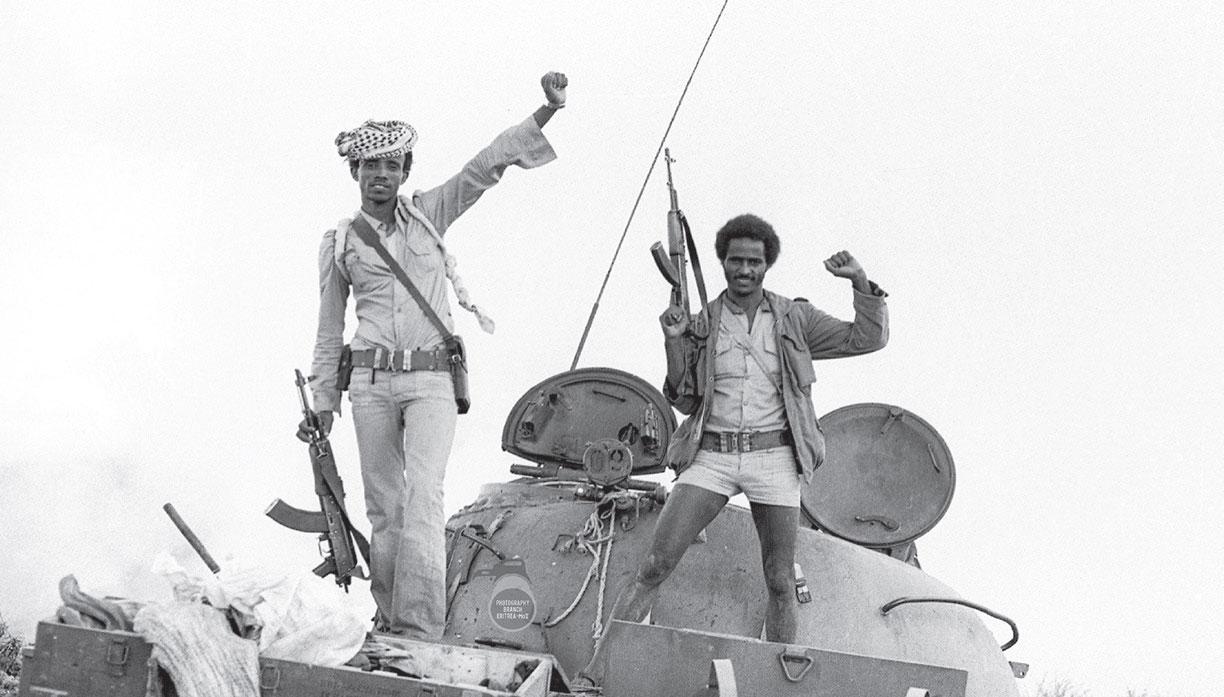
The Battle of Afabet in March 1988 marked a decisive turning point in Eritrea’s liberation struggle against Ethiopian forces. The Eritrean People’s Liberation Front (EPLF) launched a coordinated offensive that resulted in the destruction of the Nadew Command, leading to significant losses for Ethiopia and shifting the momentum in favor of Eritrean independence.
Africa-Press – Eritrea. The modern history of Eritrea is inseparable from one of the longest and most complex liberation struggles of the twentieth century – a war forged in isolation, sustained against overwhelming odds, and shaped by the shifting tides of the Cold War. The armed struggle began on 1 September 1961, when the Eritrean people’s unremitting peaceful attempts to ascertain their rights of decolonization by redressing the wrongs meted to them to mollify the “overriding geopolitical interests” were utterly shattered.
What started as scattered guerrilla attacks soon grew into a full-scale national liberation movement, drawing in an entire population and hardening into a decades-long war against successive foreign-backed Ethiopian regimes.
For thirty years, Eritrean fighters battled not only a regional power but a revolving cast of global actors. From the imperial rule of Haile Selassie to the military junta of Mengistu Haile Mariam, Ethiopia’s war effort was sustained by extensive foreign backing – first from the United States and its allies, and later from the Soviet Union and its partners. (In fact, at different points, Ethiopia was receiving different forms of support from both sides, which, within the context of the period, was a staggering development.) Despite this, the Eritrean resistance evolved from a small insurgency into a disciplined and resilient force capable of withstanding massive offensives and prolonged sieges.
After the strategic withdrawals in the lates 1970s, the war had reached a brutal stalemate. Ethiopian forces, bolstered by Soviet arms and troops or materiel from other countries, sought to crush the Eritrean People’s Liberation Front (EPLF), which had entrenched itself in the mountainous stronghold of Nakfa. Repeated large-scale offensives failed, draining Ethiopia’s military strength and morale while allowing the EPLF to regroup, adapt, and slowly reclaim the initiative.
It was in this context, after years of attrition, failed campaigns, and shifting momentum, that an important battle would alter the course of the war. In March 1988, the Battle of Afabet would not only shatter one of Ethiopia’s most fortified military positions but also mark a decisive turning point in Eritrea’s long struggle for independence.
After withstanding the devastating force of Operation Red Star and several subsequent large-scale offensives, the EPLF began to change its approach. From its stronghold in the Sahel, the movement regrouped, reorganized, and gradually seized the military initiative. A series of calculated advances followed, signaling a shift in momentum. Meanwhile, the Ethiopian army, worn down by repeated failures and mounting losses, was increasingly demoralized and overstretched.
On the eve of the decisive confrontation, EPLF commander Gebrezgiabhier Gebremariam addressed his forces with striking confidence. “We have come here,” he declared, “to participate in the burial ceremony of Nadew Command.” The statement captured both the strategic clarity and the psychological resolve with which the EPLF entered the battle.
This growing imbalance came to a head at the Battle of Afabet, then a critical regional headquarters for Ethiopian military operations. Between March 17 and 19, EPLF forces launched a carefully coordinated offensive, infiltrating and severing Ethiopian defensive positions along the vital road linking Afabet to Keren, effectively isolating the remnants of the Nadew Command. As Ethiopian units attempted a southward withdrawal, they were funneled into a deadly trap between the Mashalit and Ad Sharum passes. What followed was not simply defeat, but collapse.
In the space of days, thousands of Ethiopian troops were killed, wounded, captured, or dispersed. At the same time, vast quantities of armored vehicles and military supplies, including dozens of tanks, were seized or destroyed. Entire formations, among them some of the regime’s best-trained units, were effectively annihilated. The destruction of the Nadew Command marked one of the most devastating battlefield losses suffered by Ethiopia during the war.
The scale and intensity of the battle quickly drew comparisons to some of the most consequential engagements of the twentieth century. Often described as the largest battle on the African continent since the Second Battle of El Alamein, it has also been likened to the Battle of Dien Bien Phu and the Battle of Kursk, conflicts in which decisive victories reshaped broader wars. Such comparisons underscore not only the magnitude of the confrontation but also the strategic consequences that followed.
Located roughly 60 miles north of Asmara, Afabet became the decisive ground upon which decades of struggle began to tilt firmly in Eritrea’s favor. The EPLF demonstrated a level of coordination and tactical sophistication that stunned its adversaries, dismantling entrenched positions and collapsing entire Ethiopian divisions in rapid succession. As one EPLF spokesperson declared in the immediate aftermath:
“It took about 48 hours to annihilate 20,000 Ethiopian troops. The ramifications of this major victory are beyond anybody’s imagination. We have broken the backbone of the Ethiopian Army in Eritrea.”
While the statement was striking in tone, it reflected a broader reality. The Ethiopian military did not simply lose ground. Rather, it suffered a structural blow. Entire formations were destroyed, and the massive stockpiles of weapons intended for a planned decisive offensive, which were designed with Soviet assistance, fell into EPLF hands. In a profound reversal, preparations for an Ethiopian victory became instruments of its defeat.
The consequences were immediate and far-reaching. In an effort to stabilize collapsing frontlines, Ethiopian forces were compelled to withdraw from key garrisons in Barentu and Agordat, ceding further ground to the advancing EPLF. The psychological and strategic impact of the victory was unmistakable. Even subsequent attempts by Mengistu Haile Mariam to regain the initiative, including renewed offensives that briefly recaptured positions such as the Mes’halit Pass, failed to reverse the broader shift set in motion at Afabet.
The shock of the defeat reverberated far beyond the battlefield. For the first time in nearly a decade, Mengistu publicly acknowledged the scale of the war. In a televised address later that month, he admitted that the immense resources consumed by the conflict could have funded major national development projects, even as he called for renewed national mobilization with the stark declaration that “from now on, everything to the battlefront.”
In its aftermath, the balance of the war shifted irreversibly. The Ethiopian army, shaken and diminished, struggled to recover its footing, while the EPLF emerged emboldened, better equipped, and increasingly confident in its ability to secure total victory. What had once been a protracted and uncertain struggle now moved with unmistakable momentum – marking not only the beginning of the end of Ethiopia’s hold on Eritrea, but also foreshadowing the demise of the Dergue regime itself.
Eritrea’s modern history is defined by a prolonged liberation struggle that began in 1961, fueled by a desire for decolonization and self-determination. The conflict evolved from guerrilla warfare into a full-scale national movement, facing formidable opposition from successive Ethiopian regimes supported by global powers during the Cold War. The Battle of Afabet became a critical moment in this struggle, showcasing the EPLF’s tactical prowess and resilience against a well-armed adversary. The defeat of Ethiopian forces at Afabet not only marked a significant military victory for Eritrea but also heralded a shift in the overall dynamics of the war, leading to eventual independence.