What You Need to Know
The Southern Red Sea Region’s Assembly convened its 22nd regular meeting on March 30 in Assab. Chairman Ali Nur Ali praised members for their past efforts and urged continued participation in socio-economic programs. Reports highlighted achievements in agriculture, health, education, and water supply, with discussions leading to new recommendations for further improvements.
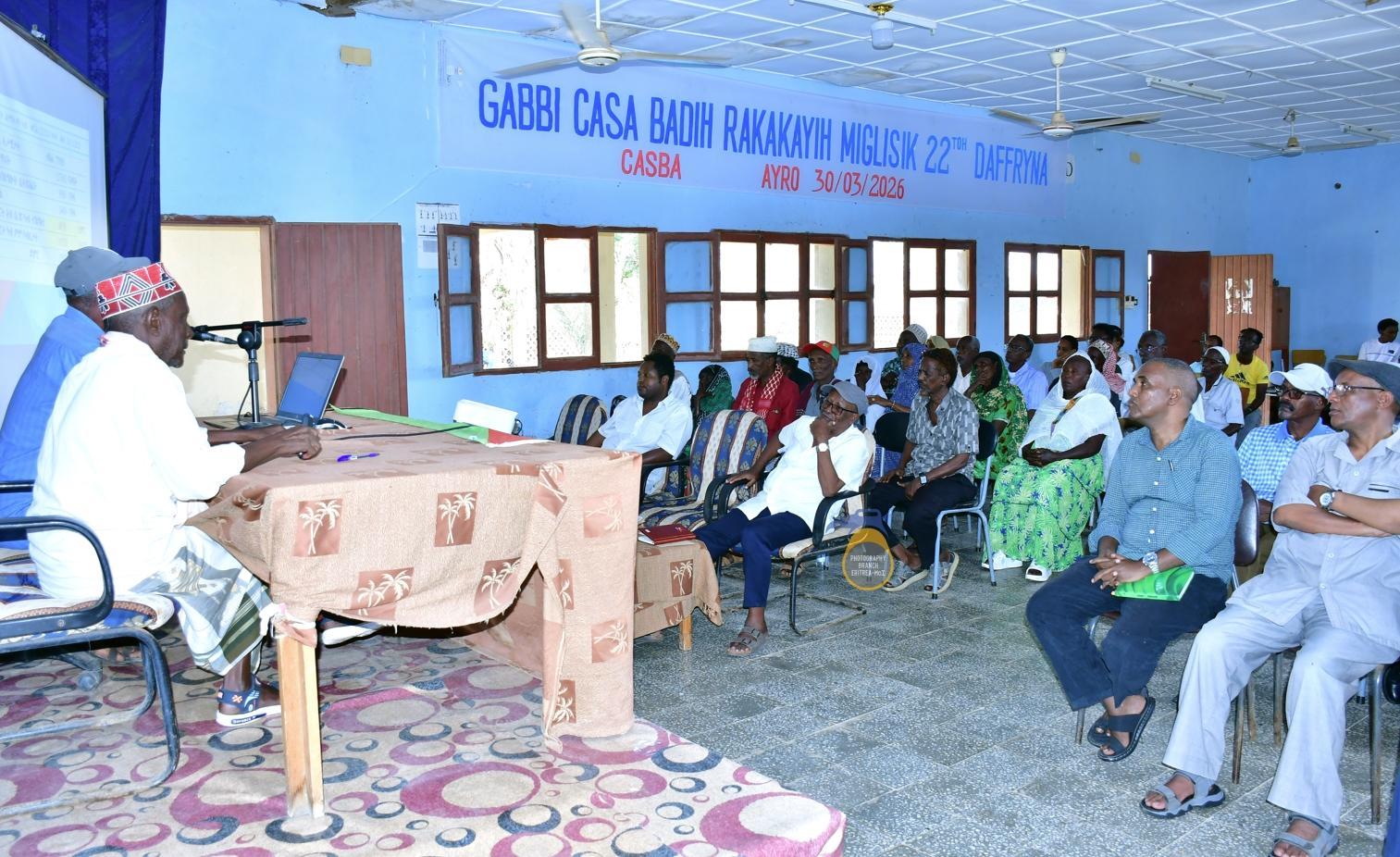
Africa-Press – Eritrea. The Regional Assembly of the Southern Red Sea Region conducted its 22nd regular meeting on 30 March in the port city of Assab.
Commending the members of the Assembly for their implementation of the recommendations and resolutions adopted at its 21st meeting, Mr. Ali Nur Ali, Chairman of the Assembly, called for similar participation in the implementation of the set-out programs.
At the meeting, reports were presented focusing on implemented socio-economic programs, including agricultural, marine resources, health, and educational activities, as well as potable water supply and social welfare.
According to the report presented, commendable activities were carried out in 2025, including water and soil conservation, construction of maternity waiting rooms, construction of additional classrooms, as well as encouragement for teachers and health practitioners. Livestock vaccination programs aimed at ensuring the health of livestock, along with strong measures to control deforestation, were also implemented.
The participants conducted extensive discussion on the reports presented and adopted various recommendations and resolutions.
Speaking at the occasion, Ambassador Mohammed-Seid Mantai, Governor of the region, called for integrated efforts to eradicate harmful practices, as well as to ensure maternal and child health.
The Southern Red Sea Region has been focusing on socio-economic development through various programs aimed at improving health, education, and agricultural practices. The Assembly plays a crucial role in implementing these initiatives, which are essential for the region’s growth and sustainability. Recent efforts have included enhancing water supply and educational facilities, reflecting a commitment to community welfare and development. The region’s challenges, including deforestation and livestock health, are being addressed through targeted programs and community involvement.