What You Need to Know
Eritrea’s government delegation addressed the 47th Session of the African Committee of Experts on the Rights and Welfare of the Child, showcasing the country’s commitment to child rights. They reported on legal reforms, health improvements, and educational access, highlighting significant progress in child welfare and community engagement.
Africa-Press – Eritrea. Eritrea Reaffirms Steadfast Commitment to Child Rights
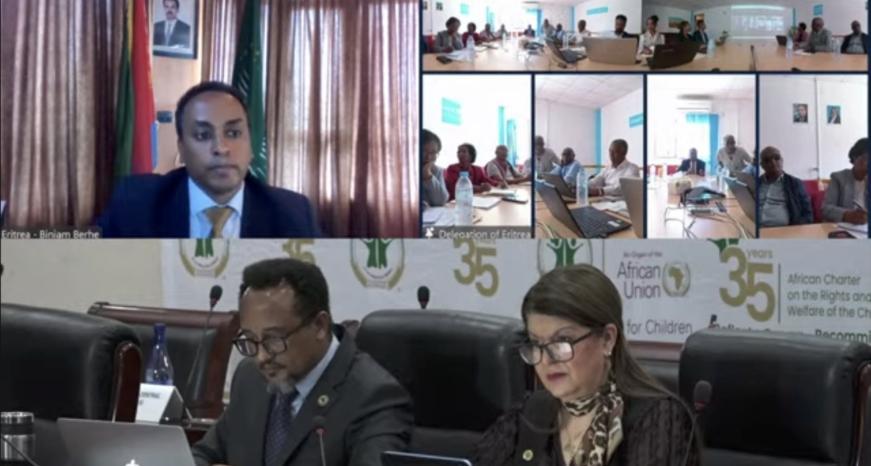
A multi-sectorial delegation of the Government of the State of Eritrea today, 21 April 2026, addressed the 47th Session of the African Committee of Experts on the Rights and Welfare of the Child (ACERWC). The delegation presented a comprehensive progress report, detailing the nation’s successful integration of modern legal protections with community-based social practices to safeguard the rights of children.
The 15-member delegation led by Mr. Mehreteab Fesshayae, Director General of Social Welfare at the Ministry of Labour and Human Welfare, was composed of officials from the Ministries of Labour and Social Welfare, Education, Health, Foreign Affairs, Justice; National Union of Eritrean Women; and the Embassy of the State of Eritrea in Ethiopia and Permanent Mission to the African Union and UN Economic Commission for Africa.
§ A Restorative Justice Model
The delegation highlighted a transformative shift in the national legal framework, prioritizing Community Conciliation Councils. These councils, composed of respected community members, emphasize mediation over adversarial litigation. This approach is specifically designed to resolve disputes such as family and inheritance disagreements in a manner that preserves social cohesion and prevents the psychological trauma often associated with formal court proceedings. Eritrea’s legal framework strictly prohibits all forms of violence against children.
§ Enhanced Institutional Coordination
The delegation elaborated that coordination of implementation and reporting of child protection and social protection programmes at the national, zonal, sub-zonal and administrative districts levels was delivering more efficient and effective results in the undertaking of safety measures that look after the rights of women and children. In this regard, in addition to the already existing national coordinating committee, six zonal, 67 sub-zonal and 701 administrative districts committees have been established and they have been instrumental in the implementation of the African Charter on the Rights and Welfare of the Child (ACRWC). Youth representatives are actively included in sub-zonal Women and Child Rights Committees, ensuring that children’s perspectives are reflected in local decision-making processes. Public awareness initiatives have been widely implemented. In 2025 alone, over 739,000 individuals participated in seminars and workshops on issues related to the rights and welfare of children.
§ Sustained Progress in Child Health, Nutrition and Survival
The delegation reported significant milestones in public health, noting a decline in the under-five mortality rate from 39.1 per 1,000 live births in 2020 to 33.8 in 2025. Eritrea continues to lead the region in immunization, maintaining a 97% coverage rate for Penta3 and 99.5% for measles vaccines. Eritrea has met the criteria for the elimination of mother-to-child transmission of HIV, with positivity rates among pregnant women dropping to a record low. The introduction of the Hepatitis B birth dose vaccine in 2025 marks a new phase in the nation’s journey toward the total elimination of vaccine-preventable infections.
The Delegation explained that these health gains were underpinned by strong primary health care, financial protection and community-based programmes. Approximately 80% of the population now resides within five and ten kilometers, respectively of a functioning health facility and services for major communicable and key non communicable diseases are provided free of charge.
Addressing the holistic needs of the child, the delegation highlighted that 95% of the urban population and 79% of the rural population now have access to safely managed drinking water. Innovations such as the Minimum Integrated Household Package (MIHAP) and local aquaculture programs in new dams are diversifying diets and ensuring food security.
§ Education Reform: Quality and Access
Education remains the cornerstone of Eritrea’s national development strategy. The delegation informed that the Education Sector Plan (2026–2030), aimed at ensuring that every child completes high-quality primary education while substantially increasing national literacy. Net Enrolment Rate at the elementary level has reached 81.7%, while youth literacy (ages 15–24) has reached an impressive 93.3%. In 2025-2026 academic year the Government opened 1,800 new pre-primary schools and deployed 5,000 newly recruited teachers to staff them. Through these strategic pillars of access, equity, and quality;Eritrea continues to build a resilient education system capable of meeting the challenges of the future.
§ Eliminating Harmful Practices and Supporting the Vulnerable
The delegation reported steady progress in social and cultural shifts. A 2025 community mapping exercise revealed that 45.6% of the surveyed villages have successfully eradicated Female Genital Mutilation (FGM), with four sub-zones declaring entirely free of the practice. This achievement is attributed to sustained community engagement and the promotion of positive social norms.
For children with disabilities, the government has translated the “Comprehensive National Policy for Persons with Disabilities” into local language to ensure broad public awareness. Strategic focus is currently being placed on improving livelihoods and providing mobility aids to ensure full integration into the secondary school system.
In conclusion, the Eritrean delegation reaffirmed its unwavering commitment to the African Charter. Eritrea is building a justice system and a social safety net that is not only a function of the state, but a living social practice rooted in the safety and well-being of all children, the delegation stated.
The delegation provided detailed responses and explanations for the questions and requests for clarifications raised by the members of the African Committee of Experts on the Rights and Welfare of the Child (ACERWC).
At the end of the session, the Chairperson of the Committee of Experts commended the progress Eritrea has registered in the promotion and protection of the rights of children, as enclosed in the report; and expressed gratitude to the delegation for an active and constructive engagement.
Eritrea has made strides in child welfare since its independence in 1993, focusing on integrating modern legal frameworks with community practices. The establishment of various committees at different administrative levels has enhanced the implementation of child protection programs, aligning with international standards such as the African Charter on the Rights and Welfare of the Child. This commitment reflects Eritrea’s ongoing efforts to address the needs of its youth and ensure their rights are upheld.