Africa-Press – Eswatini. Admittedly, I am not sure if the headline should read, ‘our judiciary’ or just ‘the judiciary’.
This is purely because of the meaning that can be drawn from both; ‘our’ in this case being the shared responsibility, if not the actual ownership of the judiciary itself in the country, distinct from the rest of the world’s case of the judiciary.
And given our challenges with the judiciary in this country since we had issues with that man who unleashed the might of the judiciary upon many of us in this country, it is important to draw attention to the two, because even a primary school going child will tell you that no one has confidence in the judiciary in this country.
The reasons for this are plenty, and perhaps the subject of today’s column. I have been promising myself to tackle this elephant in the judiciary room for months (if not the whole year) but each time there appears to be something more pressing, more relevant, more important.
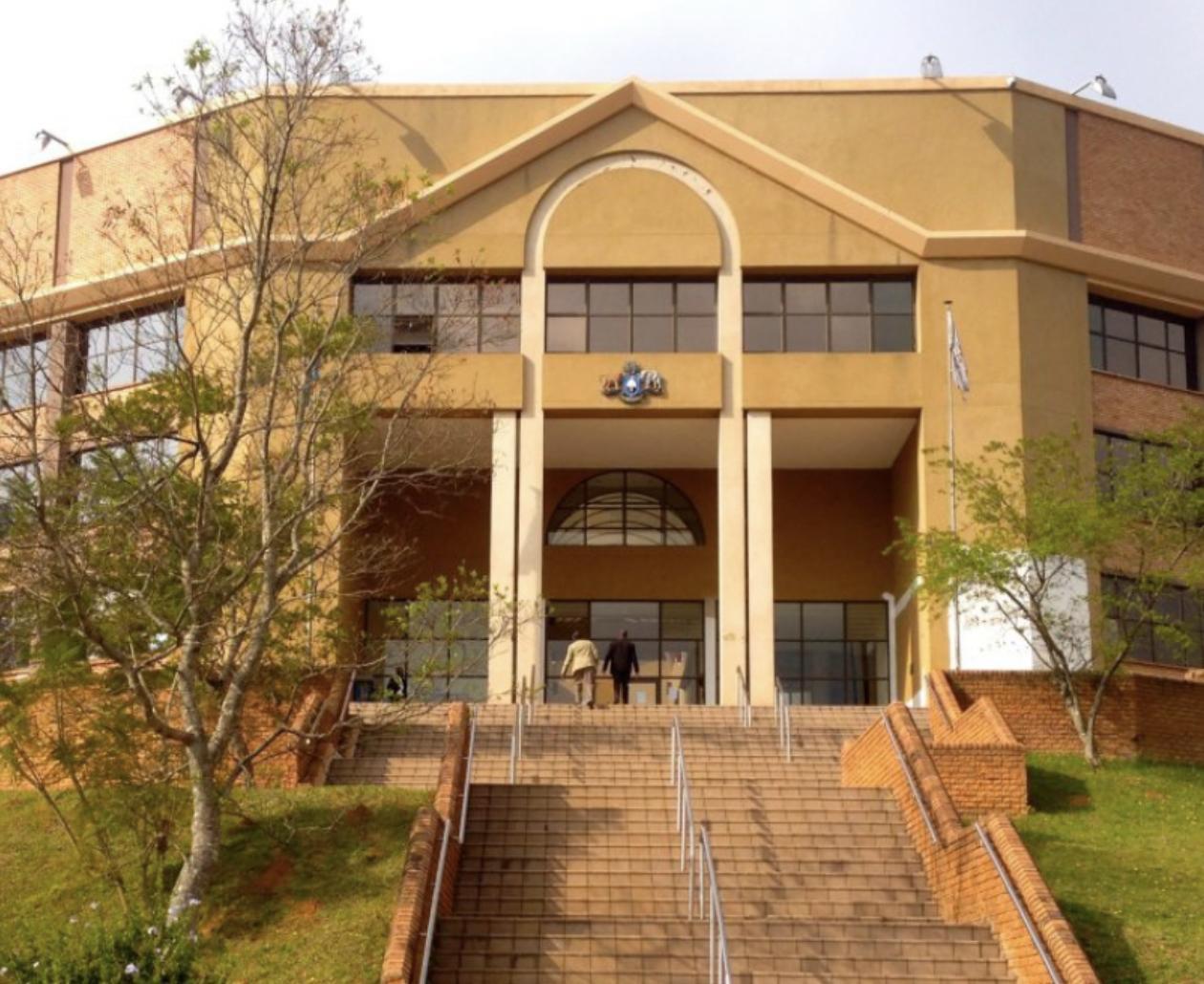
Otherwise it is an open secret that there is a lot wrong at Hospital Hill, more than meets the eye, and that we are owed a conversation around the administration of the judiciary – in particular, since the current chief justice assumed the high office.
Independent
Perhaps one should go back to 20 years ago when events of November 28 – a dark day from which we emerged with a better commitment and political will to always ensure the judiciary remained independent and how important it was for this country to uphold the rule of law.
Yet, November 28 these days passes by without much of a reminder of where we come from and how easily we could have been thrown into a dark place when the then prime pinister vowed that the country would not recognise two judgments of the Court of Appeal.
Soon after that statement was made, the entire bench of the Supreme Court walked out on this country, and back then all the judges were foreign judges appointed to come in specifically to hear appeal cases. Subsequently, High Court judges also went on a protest and refused to work.
This was obviously unprecedented, and brought about chaotic sets of events that thrust the country firmly on the spotlight as a country that had told the world it had no regard for the rule of law.
It is based on this incident that I thought it was ironic that we are here today, once again being forced to revisit the importance of the three arms of governance and in particular the independence of the judiciary.
One would have said that we have all learned from the past, especially the collapse of the judiciary a few years later when once more the judiciary took centre-stage for how it was administrated and how the power that the once-powerful chief justice Michael Ramodibedi found himself above the law and too powerful to be held accountable.
He started growing an insatiable ego. His head grew too big. His shoes I am certain became a size bigger. His office was beyond reproach and to all those at the High Court, he was a god. He was untouchable and made the mistake to pronounce this to all those who cared to listen – because he was ‘Makhulu baas’ and we all came to affectionately refer to him.
He decided which judge would try which cases. He even decided some cases. Justice started to be for sale. The highest bidders won. This newspaper prides itself in the role it played to bring this bad man down, for he ruined too many lives.
New Dawn
Yet, it’s been more than six years since he was shoved out of the country after he famously locked himself in his room, refusing to come out to face his demons.
Many of us proclaimed a new dawn when he eventually fell. Those of us who care about the rule of law and how it is fundamental to this country – in order for it to achieve what it seems to become – thought that the country had turned the corner, and so hoped that the appointment of Bheki Maphalala would herald another new dawn.
When I was mulling over this topic, it struck me, for a second how the judiciary has not moved on since this period. It is safe to say that we are still stuck in the era that we want to forget and there is no indication (in fact, you can be hard pressed to find anyone who would couch for our judiciary at this present moment) that we have made gains since ‘Makhulu Baas’ was dropped off at the Oshoek Border to hitch-hike home.
For argument’s sake, Judge Qinisile Mabuza, seen by many as the face of the future of the judiciary we aspire to be, for her fairness, honesty and independence, is in fact, nowhere to be seen. You don’t have to be a rocket scientist to figure out that there is something wrong at the High Court, judging by how she has been absent from all the cases of note or that require a fair and liberal mind.
I know that this on its own is a delicate thing to say, for perhaps it will get her into trouble or will see her being pushed even further, simply because someone is stating an obvious. This on its own tells its own story, not least the fact that she has not been appointed to the Appeal Court or the Supreme Court, yet with each month, new judges are appointed to the highest court of the land, with very little or minimal experience.
Media
In fact, to illustrate this point or stretch the point further, judges are being asked to recuse themselves in cases because of the apprehension of bias, or that they have been alleged to have been involved at one stage or the other in cases.
This has tainted the judiciary; has damaged the judiciary into disrepute somewhat, and further entrenched the belief that the judiciary is once more not as independent as we want it to be. In future, I want to be able to write about the many cases being decided against the media, especially in the recent past, where the courts have taken a narrow view on the role of the media, in my view.
But, that is a subject for another day and hopefully the environment will allow for one to speak his mind on this issue, on how we are being silenced by the courts in what I have believed needs to be seriously addressed, otherwise the media has little room left to play in.
Anyway, this past week, public transport operators announced that they would once more ground this country to its knees – simply because they can. They have resolved, or resorted, or agreed to not get on the bus on Tuesday and for good measure, on Wednesday too.
The Eswatini Kombis and Buses Allied Workers Union and the Swaziland Transport Communications and Allied Workers Union have both agreed that buses should be parked on these two days to protest the arrest and trial of two Members of Parliament, Bacede Mabuza and Mthandeni Dube.
In fact, this is in protest against the trial and joins in the campaign for the two MPs to be freed – whether Tuesday or any day soonest.
This protest on Tuesday, therefore, brings into sharp focus the manner in which the judiciary is seen in this country in recent years, for why else would anyone in their right minds expect that someone on trial in a case would be released – on the say so of whomever?
When properly contextualised, there is a sentiment out there that this is a possibility, because after all, why not?
This is of course, likely to be misunderstood. One is not by any means saying the public should not protest or that Tuesday’s protest is misplaced. Not even so. I know too that in the context of the current political climate and the attacks on the status quo, the demand to free the two MPs may of course be for different reasons.
However, no one can run away from the fact that the status of the independence of the judiciary has a lot to do with people entertaining the thought, even if unimaginable, that they can expect people to be released from the clutches of the court system when there is a relentless protest.
It can only be that their vision of the judiciary has been impaired, and that perhaps they too will be successful.
It goes without saying, therefore, that there is more to Tuesday than just the public transport operators deciding that they are going to ground operations by not getting behind the wheels of the kombis and buses – no matter who says what.
By the way, there is a lot there is to say about this decision and the role of the public transport operators, but then again, not today. What is important is that the judiciary is on the spotlight more than the trial itself or the protest likely to be staged.
The judiciary is on the spotlight for how it is perceived and how it comes out of this difficult period of our history, 20 years on from the day that the significance of the rule of law was put firmly on the spotlight.
Perhaps, just as we were able to find our footing, lady justice will smile on this beautiful nation eventually. You get the sense, then, that this is a test of our judiciary.
For More News And Analysis About Eswatini Follow Africa-Press