
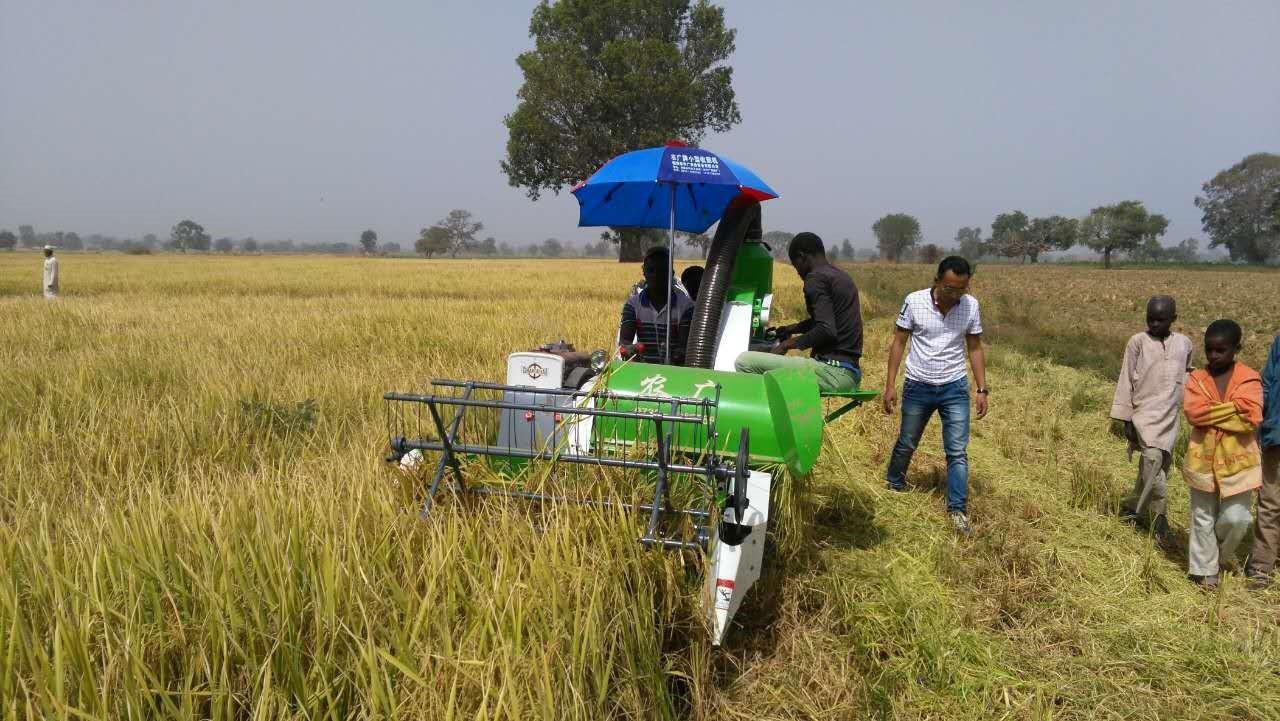
Africa-Press – Eswatini. The Kingdom of Eswatini and the Kingdom of Morocco have agreed to promote technical cooperation between the two countries in the field of agriculture.
The above agreement is among the several areas of cooperation that the two countries agreed upon during their meeting held last Wednesday at Hilton Garden Inn. The agreements between the two countries are carried in the proces verbal (a written report of proceedings) of the meeting of experts for the upcoming First Session of the Joint Commission of Cooperation (JCC). The Moroccan delegation was led by Brahim Bah, Head of Division of Central and Southern Africa, and the Eswatini delegation was led by Philomena Bawelile Simelane, International Cooperation Coordinator.
Representatives
The meeting was attended by representatives from both sides in the fields of: Agriculture, Health, Industry and Trade, Sports, Culture and Youth, Information, Communication Technology (ICT), Justice, Tourism and Environment. Both parties welcomed the expressed interest in promoting technical cooperation between the two countries in the field of agriculture. In this regard, the two parties agreed on implementing and developing; technical and technological support and capacity building of executives and technicians for the realisation of hydro-agricultural developments, in particular water collection works for agricultural use, irrigation and water control systems. They also agreed to implement accompaniment and technical support for the development of animal sectors, particularly poultry, red meat, dairy and food safety in Eswatini; accompaniment and technical support in the processing and development of agricultural products.
They also agreed to implement accompaniment and capacity building in agricultural education, research and vocational training: Organisation of study tours and training sessions for technical staff. They also agreed on the implementation of the agriculture development fund; aquaculture development. They further agreed to promote production and supply of fertilisers for Eswatini. The two parties further expressed their wish to foster industrial cooperation in the fields of industrial policy, support for micro small medium enterprises (MSEM), standardisation and quality, conformity assessment, accreditation and metrology, industrial property, trade and host industrial infrastructures.
Agreement
In this context, the two parties welcomed the signing of a bilateral protocol agreement on industrial cooperation on October 2020, in Rabat, setting a legal ground to the industrialisation efforts that the two countries are undergoing. As part of the implementation of this protocol agreement, the two parties have agreed to develop joint actions for the exchange of experiences, knowledge, and best practices, particularly in the areas of public policies and tools focused on strengthening and supporting the competitiveness of MSMEs and their productive developments in order to enhance their exports.
Similarly, the Moroccan side expressed its willingness to organise a working mission for a delegation from Eswatini including the organisation of visits to industrial projects and the presentation of Moroccan experiences in the industrial sector. Cooperation in the field of postal activities. The two parties agreed to strengthen their cooperation in areas affecting the postal sector as a whole in order to establish an effective partnership.
Cooperation
The two parties decided to develop areas of cooperation in mail services, financial postal services and banking, parcels, express mail and logistics services. They also agreed to strengthen this cooperation through the exchange of experiences, assistance and training in the various postal fields, as well as to strengthen communication and mutual support on decisions related to the Universal Postal Union and other international postal organisations. On trade cooperation, both sides reviewed the development of their bilateral trade and they shared the opinion that the existing level of bilateral trade does not reflect the traditions and quality of mutual relations as well as the real potential of their economies. In this regard, the sides pointed out that the scope for developing trade and economic cooperation between the countries was considerable and agreed to exert efforts to encourage further development of their trade on a mutually beneficial basis. As a result, both sides agreed mainly to; the exchange of trade information for an in-depth knowledge of their respective markets and of the existing potential on both sides.
For More News And Analysis About Eswatini Follow Africa-Press